Affiliate Commerce Ties Creator Payouts to Sales Instead of Reach
A flat-fee campaign costs the same whether it drives ten sales or ten thousand. Affiliate commerce scales spend with results, and changes which creators are worth booking.

Trusted by leading CPG brands










Most influencer marketing still runs on a flat-fee model: pay for a post, regardless of what it converts. Affiliate commerce inverts that. Creators earn based on what their content actually sells, not what it reaches.
Commission replaces the flat fee as the payout trigger
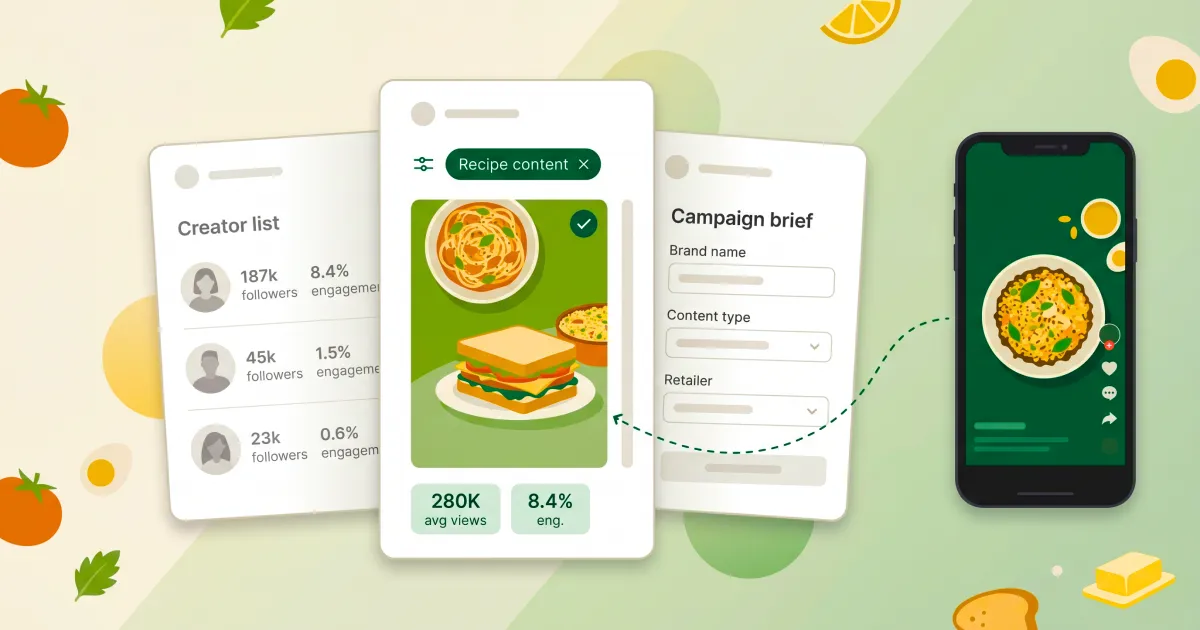
A creator features a brand's product in content, whether a recipe, a review, or a storefront listing. When a viewer completes a purchase traced back to that content, the creator earns a commission on that sale. High-performing content earns more automatically, with no renegotiation required.
This builds on the creator storefront model, where a dedicated page surfaces a sponsoring brand's product and payouts are tied to real activity rather than a flat rate.
Attribution decides what counts as a payable sale
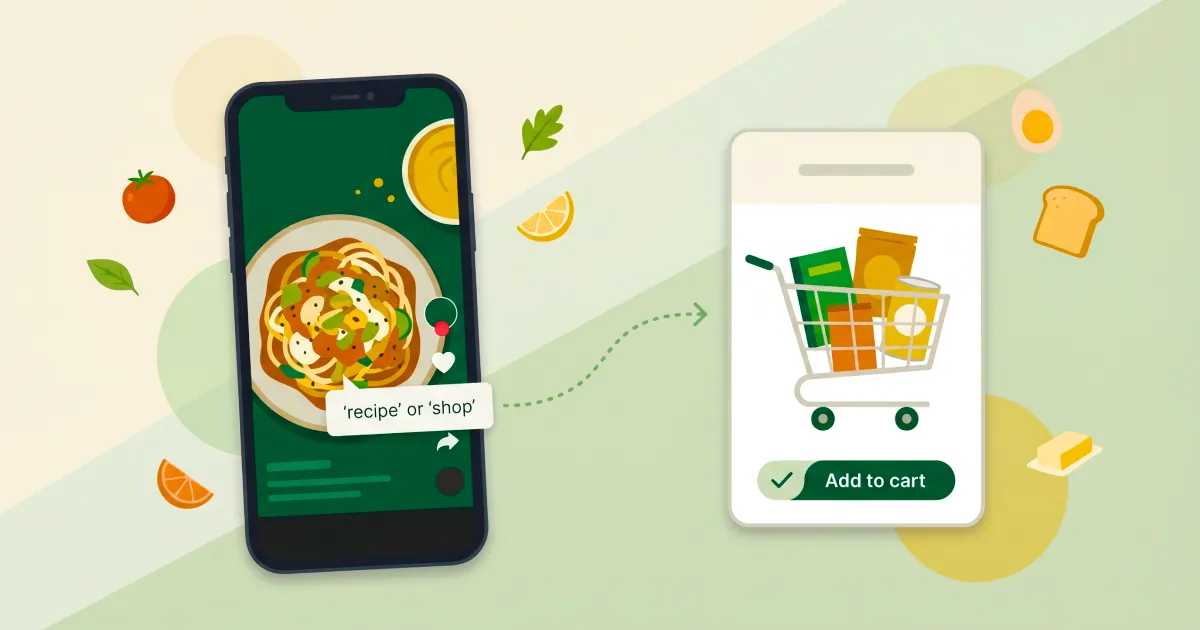
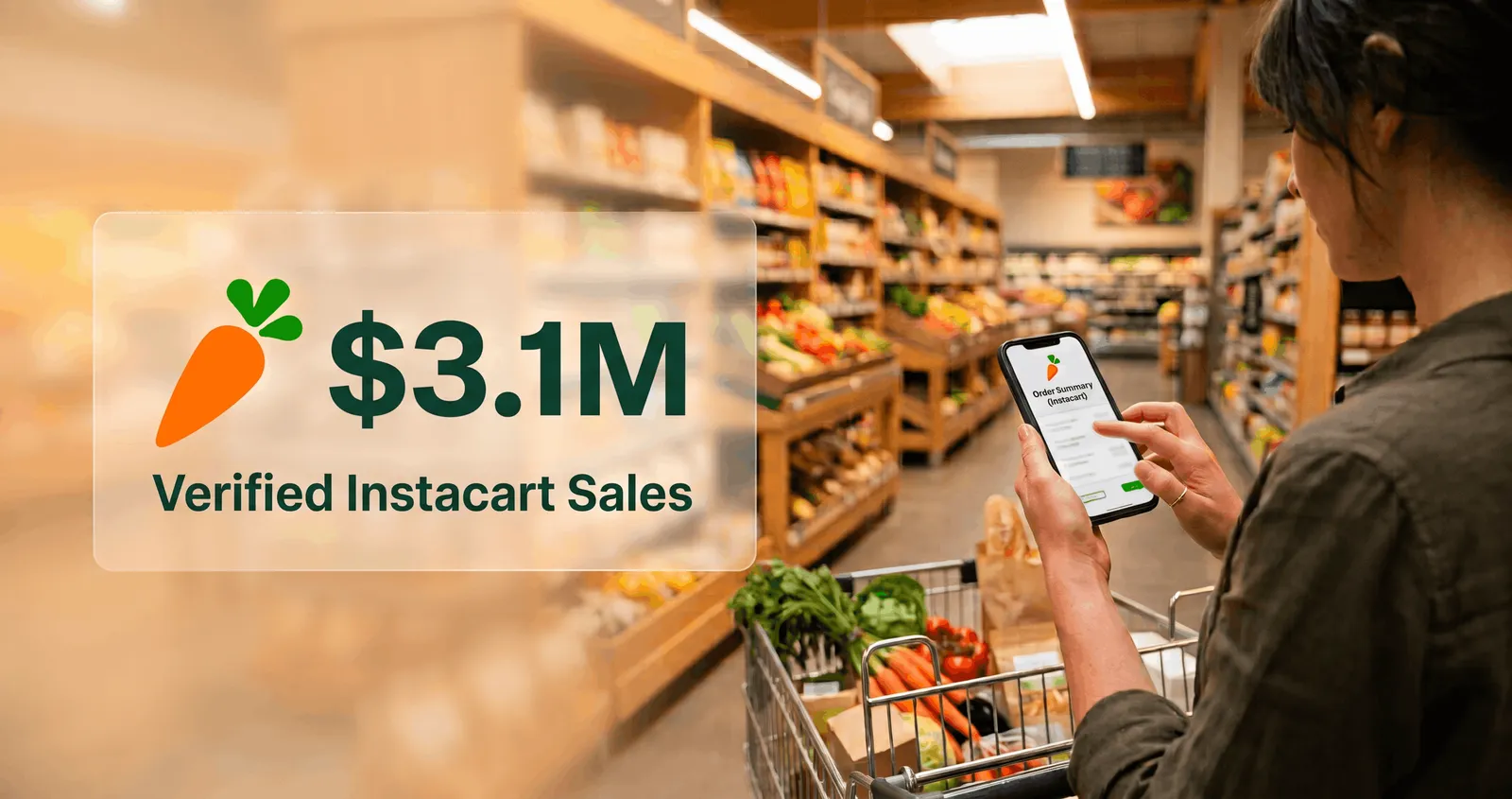
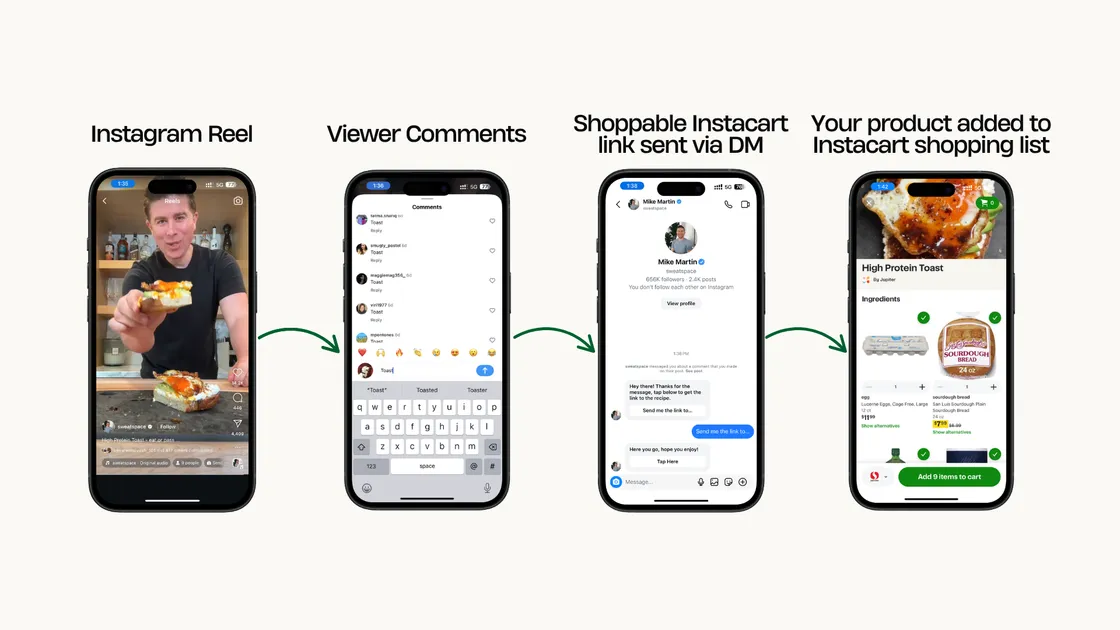
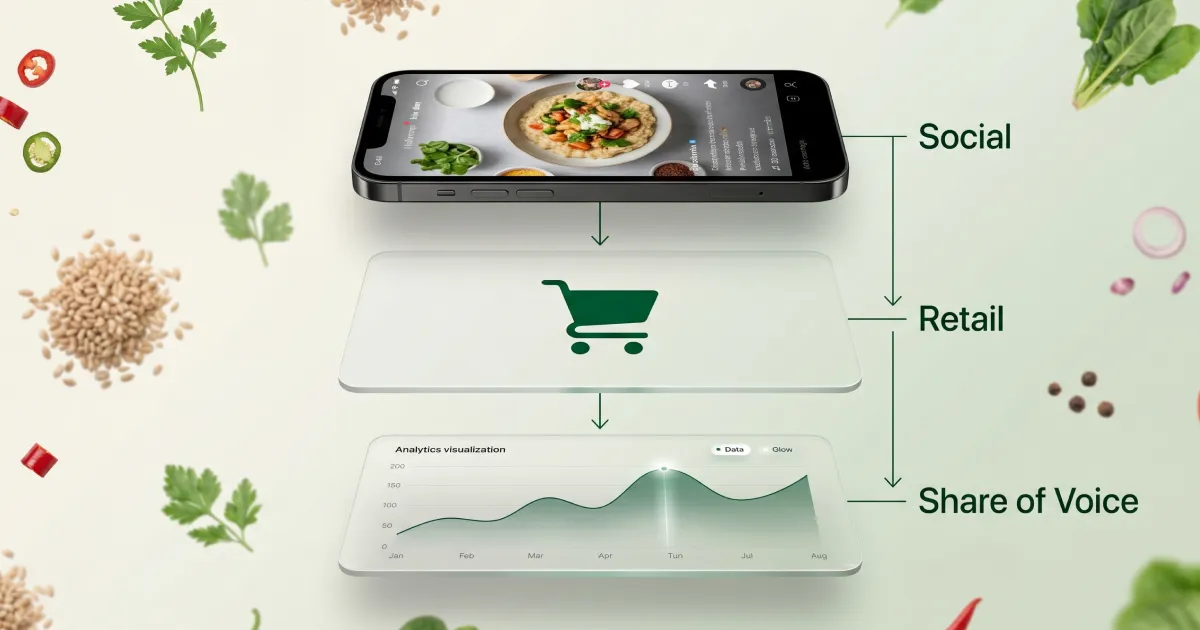
Tracking runs through the same mechanics used across the platform: Instacart cart adds via comment-to-cart links, and shop-click-to-purchase tracking on creator storefronts. A sale counts toward a payout only if it is traceable to the specific creator and content that drove it, not estimated or split evenly across a campaign.
Which signal you measure matters. Shop clicks are a cleaner indicator than raw add-to-cart counts, because a cart add can be abandoned while a shop click captures the specific moment a viewer moves toward purchase.

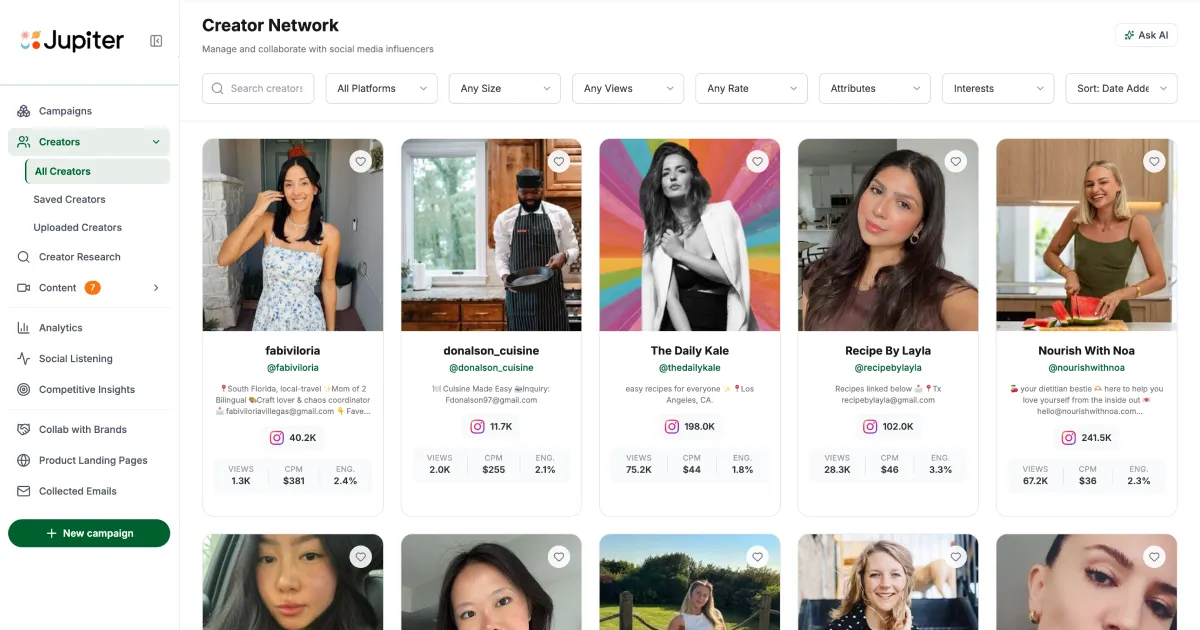
See tracked, creator-level sales attribution
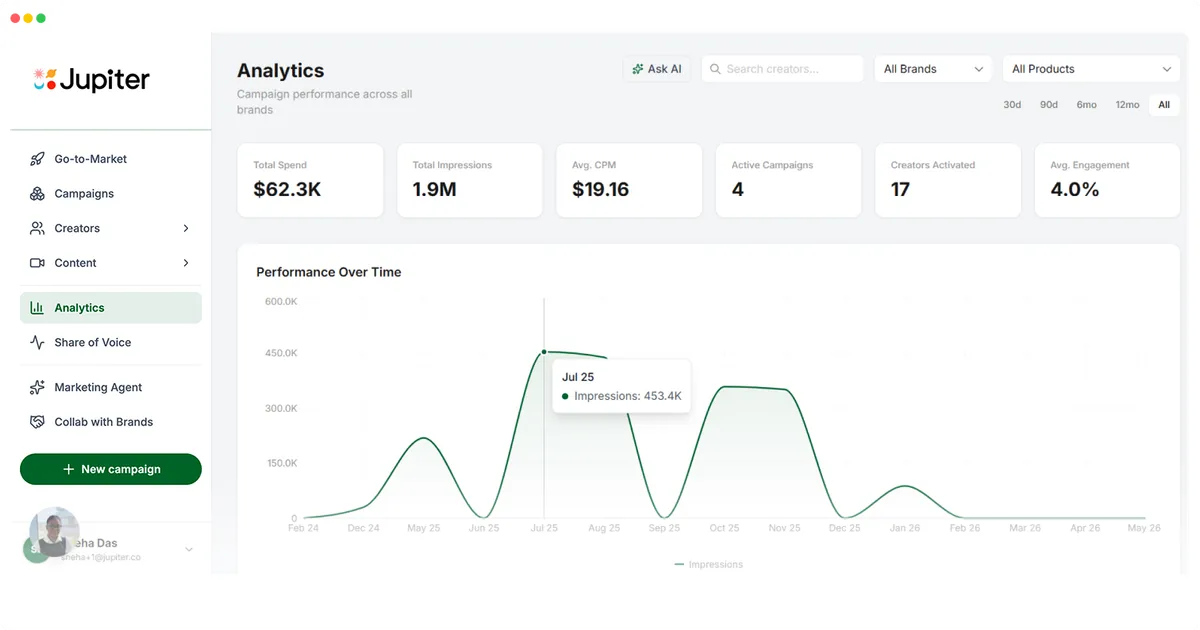
Every payable sale traced to the specific creator and post that drove it, with no manual reconciliation.
Performance-tied spend shifts risk away from the brand
A flat-fee campaign costs the same whether it drives ten sales or ten thousand. Affiliate commerce scales spend with results. A brand pays more only when a creator is genuinely driving revenue, and less for content that reaches an audience without converting. This shifts risk toward performance, and it also means creators are financially motivated to make content that sells rather than content that merely looks good.
For food and beverage brands specifically, the model needs adjusting from standard direct-to-consumer affiliate structures, which is covered in how influencer affiliate marketing works for CPG food brands.
Pay for outcomes, not impressions
Set commission terms per product or campaign and let tracking handle payout calculation automatically.
Follower count stops being the right selection signal
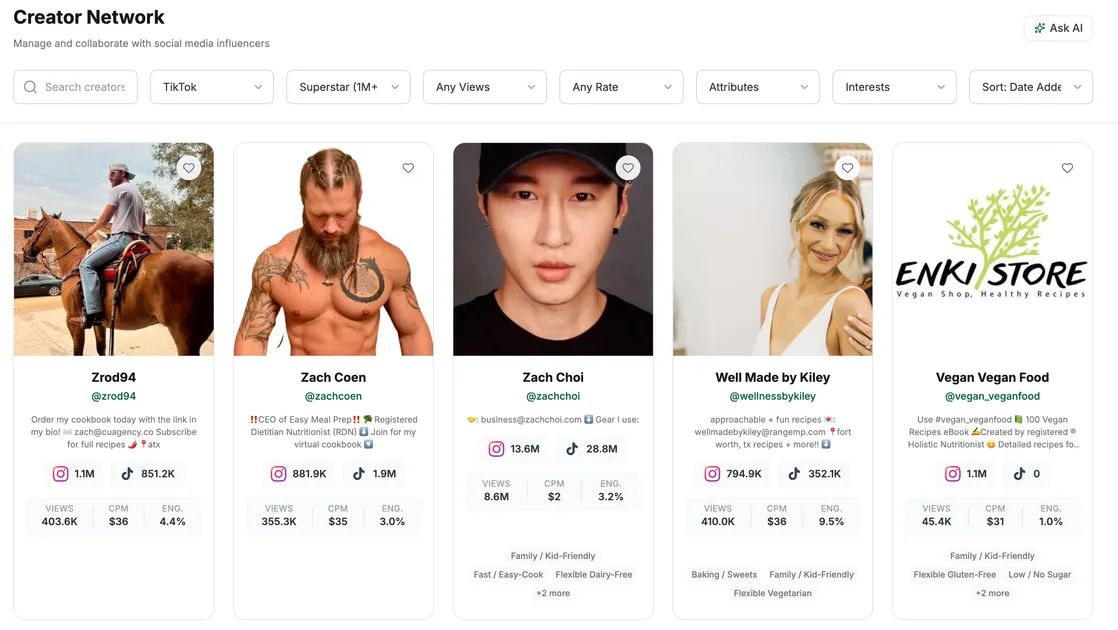
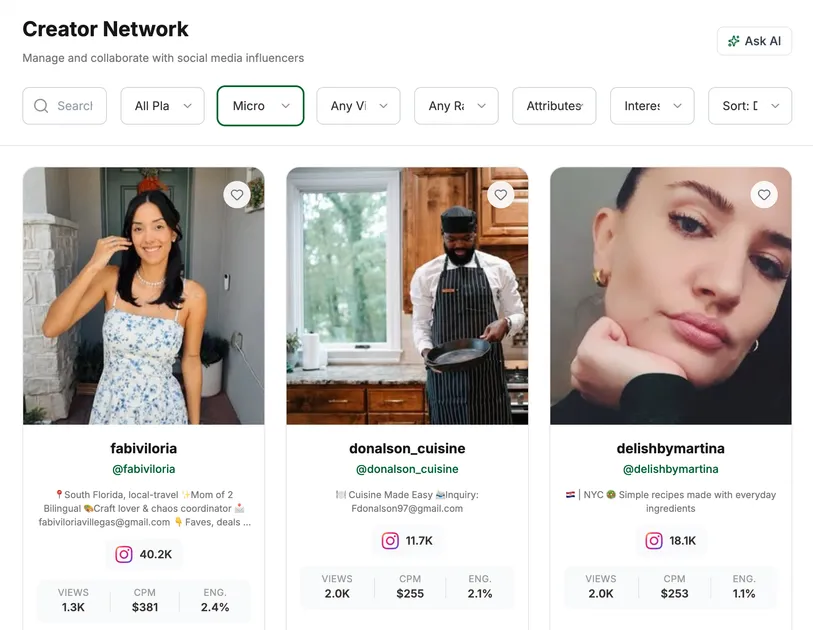
Under a flat-fee model, follower count and engagement rate are reasonable if imperfect proxies for value. Under affiliate commerce they stop being the right signal entirely. A creator with a smaller, more purchase-intent-driven audience can out-earn a larger creator whose audience engages but does not convert, because payout is tied to the sale rather than the reach.
That is consistent with what the data already shows about micro creators outperforming larger ones on cost per grocery sale. Affiliate commerce makes that gap visible in the payout structure rather than hidden inside a post-campaign analysis.
Setup is a commission decision, not an integration project
Brands set commission terms per product or campaign, and creators opt into affiliate arrangements alongside or instead of flat-fee deals. Tracking and payout calculation run automatically once a campaign is live, with no manual reconciliation of who drove what.
Build a creator program that pays for performance
Affiliate commerce, storefront payouts, and Instacart attribution built for food and beverage CPG brands.
FAQs
Quick answers to common questions.
How does affiliate commerce work for food and CPG brands?▼
Affiliate commerce pays creators a commission tied to sales their content actually drives, rather than a fixed fee for posting. A creator features a product in a recipe, review, or storefront listing, and earns when a tracked purchase results. For grocery brands the tracking runs through Instacart links and creator storefronts rather than a standard checkout pixel.
How does affiliate commerce cost compare to flat-fee creator payments?▼
A flat-fee campaign costs the same whether it drives ten sales or ten thousand, so the risk sits entirely with the brand. Affiliate commerce scales spend with results, meaning a brand pays more only when a creator is genuinely driving revenue. The tradeoff is that top-performing creators can earn considerably more than a flat rate would have paid them.
What counts as a trackable sale for affiliate commerce?▼
A sale that can be traced to a specific creator and a specific piece of content, through mechanisms like Instacart comment-to-cart links or creator storefront shop-click tracking. Estimated or evenly split attribution across a campaign does not qualify.
Does a creator need a large following to earn well through affiliate commerce?▼
No. Because payout is tied to sales rather than reach, a creator with a smaller but highly purchase-intent-driven audience can out-earn a larger creator whose audience engages without converting.
Can a brand run affiliate commerce alongside flat-fee campaigns?▼
Yes. Brands can set commission terms per product or per campaign, and creators can participate in affiliate arrangements alongside traditional flat-fee deals rather than choosing one model exclusively.
Why do discount codes work poorly for grocery affiliate programs?▼
Discount codes require a shopper to remember and correctly enter a code at checkout, which rarely happens mid-shop or on a delivery app. Most of that attribution is lost before it is recorded, which is why grocery programs need tracking built into the purchase moment itself.
Related Posts
Browse more from our blog.