Where CPG Brands Actually Find Vetted Food Creators
Not every tool that lists creators can actually run a campaign. Here is the real difference between an influencer database and an influencer marketplace, and which one a food CPG brand needs.
Trusted by leading CPG brands












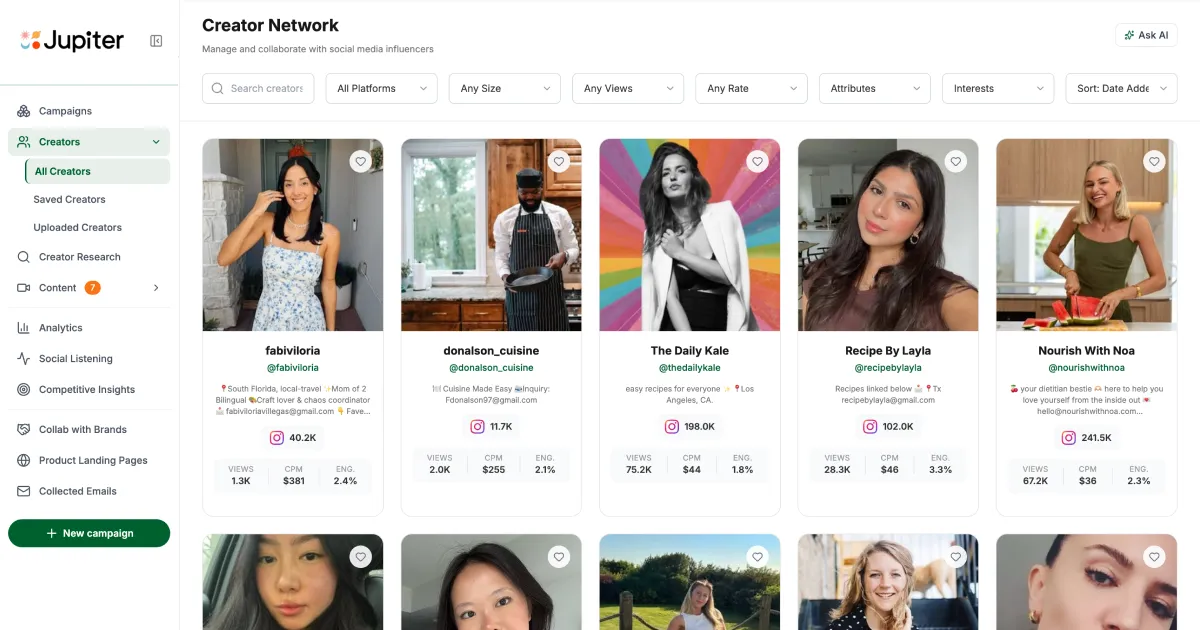
An influencer database is a searchable directory of creator profiles: follower counts, engagement rates, and contact information. An influencer marketplace is a database with a transaction layer built on top of it, letting a brand filter creators, send briefs, negotiate rates, and track campaign performance in the same system. The distinction matters because a food CPG brand searching "influencer database" is often actually looking for what a marketplace provides, and buying the wrong category of tool means paying for a directory and still doing the campaign work by hand.
Most confusion in this category comes from vendors using the terms interchangeably in marketing copy while building genuinely different products underneath. Knowing which one you are actually evaluating saves a brand from discovering the gap after the contract is signed.
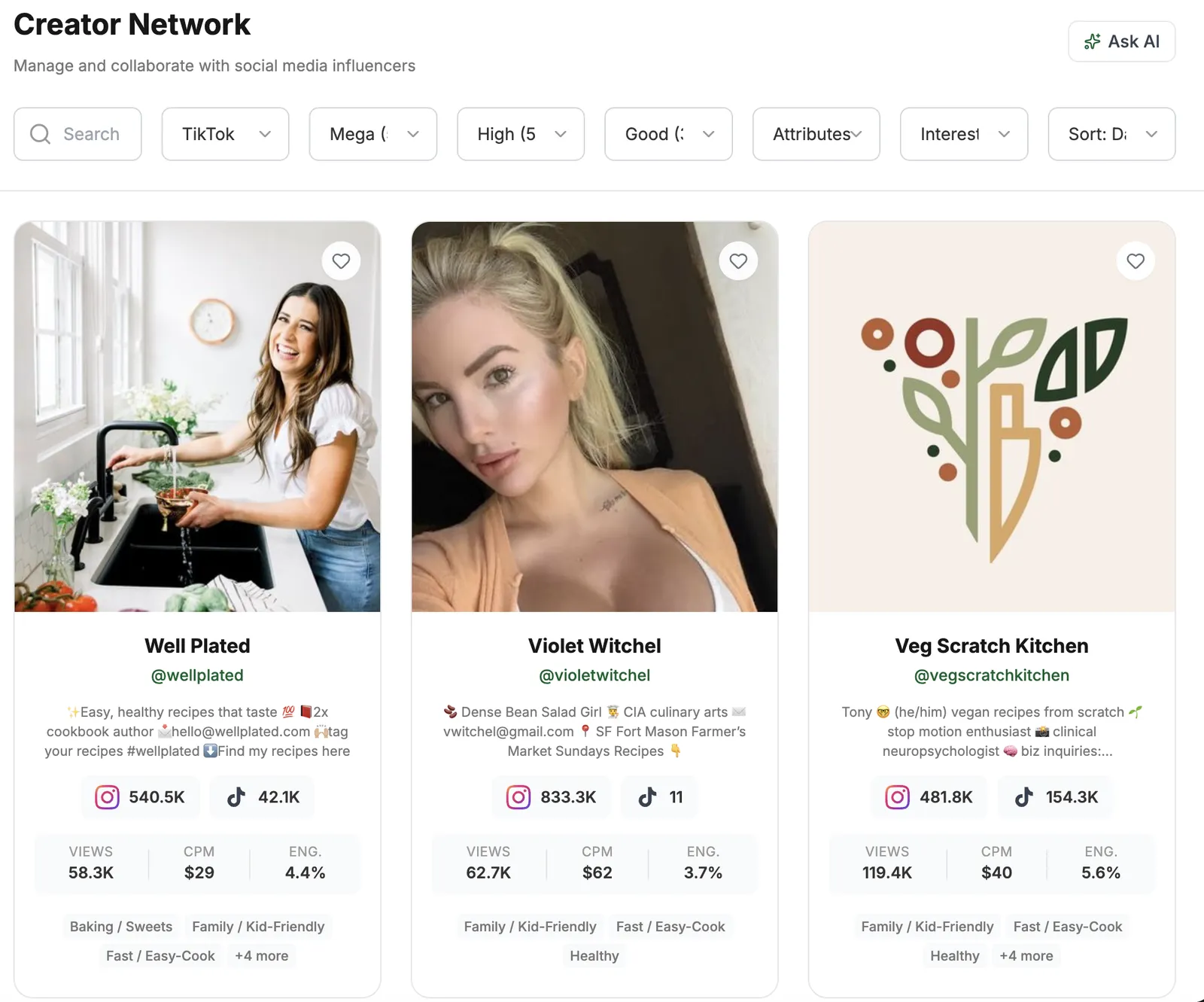
What a Database Actually Provides
A pure influencer database does one job: search and filter. A brand manager enters criteria, follower range, platform, sometimes a content category, and gets back a list of creator profiles matching those filters. The better databases layer in engagement rate, audience demographics, and sometimes an estimated cost per post. The weaker ones are closer to a scraped directory: a name, a handle, a follower count, and little else.
What a database does not do is manage anything past the search. Once a brand finds creators it wants to work with, the database's job is finished. Outreach, negotiation, brief delivery, content review, and performance tracking all happen somewhere else, usually across email, a spreadsheet, and whatever analytics tool the brand already uses to track social performance.
For a brand running one campaign a year with a single creator, a database might be enough. The manual work after the search is limited. For a brand running multiple campaigns across a rotating creator roster, that manual layer becomes the actual bottleneck, and it grows with every additional campaign rather than getting easier.
What a Marketplace Adds on Top
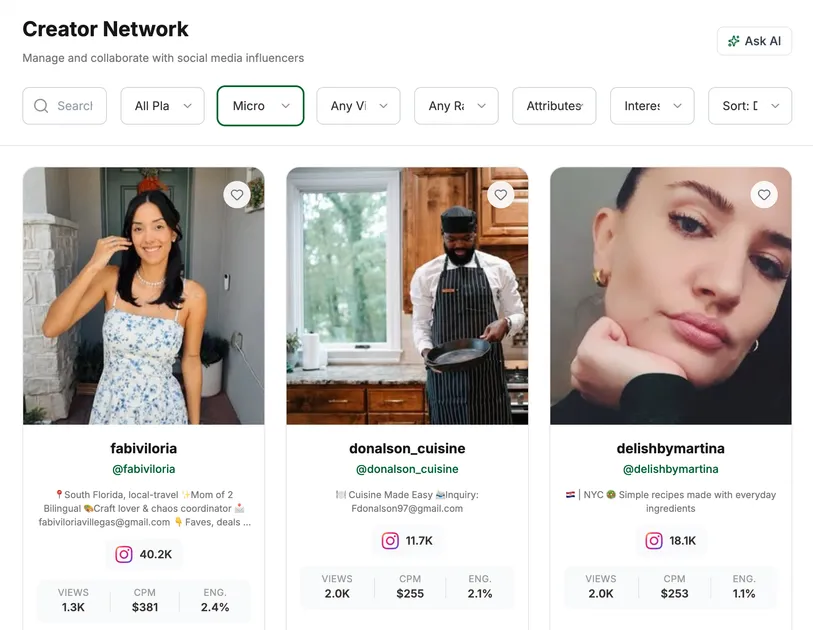
An influencer marketplace starts with the same searchable creator base but extends it into the parts of a campaign a pure database leaves untouched. That typically includes structured brief creation, a way to send offers and track creator responses, a content submission and review workflow, and performance reporting tied back to the specific creators and posts in the campaign.
The practical difference shows up the first time a brand needs to answer a question that spans both sides of the process: which creators from last quarter's campaign delivered the most impressions per dollar, and should they be re-engaged for the next one. A database cannot answer that question at all, since it never tracked what happened after the creator was found. A marketplace can, because creator discovery and campaign performance live in the same system.

See a creator discovery system built to run campaigns, not just list creators
Jupiter's creator network connects directly to brief creation, content review, and performance tracking, so a creator search is the start of a campaign, not the end of one.
Why Food CPG Brands Specifically Need the Marketplace Layer
The database-versus-marketplace distinction matters more for food and beverage CPG brands than for most other categories, because the filters that actually matter for food content are not the filters a general-purpose database typically supports. A brand searching for a dairy-free home cook with a strong TikTok following and an audience near specific retail regions needs content interest tagging, creator attribute classification, and geographic proximity data, not just a follower count and an engagement percentage.
A general-purpose influencer database built for broad categories like fashion or lifestyle usually does not carry this level of food-specific detail, because it was never built to. Content interest scoring, recipe content classification, and retailer proximity are CPG-specific data points that only exist in a system built around the category. This is also where a 12-signal campaign optimizer becomes relevant to the database-versus-marketplace question directly: signals like retailer proximity, brand affinity from past collaboration history, and content interest alignment only function inside a marketplace that tracks campaign history and creator performance over time. A pure database has no history to score against.
What to Actually Check When Evaluating Either One
A brand evaluating a tool in this category should ask a short set of direct questions before assuming it knows which type of product it is looking at.
Does the tool track anything after the creator search. If a brand cannot pull a leaderboard of past creator performance or see which creators previously worked with the brand, the tool is a database regardless of what it calls itself in its marketing.
Does creator selection connect to a brief. A marketplace should let a brand move from a creator shortlist directly into a structured brief and an offer, without exporting a list and starting a separate process elsewhere.
Does the platform show projected performance before a campaign launches. Estimated impressions and CPM based on real creator data, calculated before a dollar is spent, is a marketplace-level capability. A database has no campaign to project performance for.
Is content review built in. A workflow where a creator submits content for approval before it posts, inside the same system that found the creator, is a strong signal of a true marketplace rather than a directory with a marketplace label attached.
Still exporting a creator list into a separate campaign process?
If your creator search and your campaign management live in different tools, you are paying for a database and doing marketplace work by hand.
The Cost of Getting This Wrong
The real cost of buying a database when a brand needs a marketplace is not the subscription price. It is the manual work that has to fill the gap: building creator shortlists in a spreadsheet, tracking outreach in email threads, and reconciling performance data after the fact instead of watching it accumulate automatically inside the same system that ran the campaign.
That manual layer also erodes the exact advantage a food CPG brand needs most from creator marketing: the ability to see which creators, categories, and content formats are actually working, and to apply that history to the next campaign. A database resets to zero every time a brand starts a new search. A marketplace remembers.
Find vetted food creators and run the whole campaign in one system
Jupiter combines a 1,000+ creator network with brief creation, content review, and performance tracking, used by 58+ leading CPG brands to run creator campaigns end to end.
FAQs
Quick answers to common questions.
What is the difference between an influencer database and an influencer marketplace?▼
An influencer database is a searchable directory of creator profiles, limited to discovery and filtering. An influencer marketplace includes that same discovery layer plus campaign management: brief creation, offer negotiation, content review, and performance tracking, all in one system.
Is an influencer marketplace more expensive than a database?▼
Pricing varies by vendor rather than by category alone, but a marketplace typically replaces the cost of the manual tools a database leaves a brand needing, including spreadsheets, email coordination, and separate reporting, so the total cost of running campaigns is often lower with a marketplace even at a higher subscription price.
Do food CPG brands need a category-specific creator marketplace?▼
Food and beverage brands need filters that general-purpose databases typically do not support, including content interest tagging for recipe creators, retailer proximity, and creator attributes like dairy-free lifestyle or home cook. A marketplace built specifically for food CPG carries this data natively rather than requiring manual research after a generic search.
How can I tell if a tool is really a marketplace or just a database with different branding?▼
Check whether the tool tracks anything after the creator search, including brief creation, content review, and performance history tied to specific creators and campaigns. If the tool's usefulness ends once a creator list is exported, it is a database regardless of how it is marketed.
Can a brand use a database and a separate campaign management tool together instead of a marketplace?▼
Yes, but it recreates the manual reconciliation work a marketplace is built to remove, since creator discovery and campaign performance data live in separate systems that have to be manually connected after the fact.
What creator data should a food CPG marketplace track beyond follower count?▼
Content interest alignment, posting recency, audience credibility, retailer proximity, platform-specific pricing, and brand affinity from past collaboration history are the signals that actually predict fit and performance for food CPG campaigns, well beyond follower count or general engagement rate.
More in Platforms & Comparisons
More from Platforms & Comparisons.