Influencer Campaign Examples: 8 Food CPG Brands That Got It Right
Eight food CPG brands, eight campaign types, eight sets of real results. Each example below covers the brief angle, creator logic, content format, and what the numbers actually showed.
Trusted by leading CPG brands





On this page
▼
- Example 1: Plant-Based Dairy Alternative — Instacart Attribution Launch
- Example 2: Hot Sauce Brand — Regional Whole Foods Launch
- Example 3: Snack Bar Brand — Creator Sampling at Scale
- Example 4: Specialty Oil Brand — Long-Run Ambassadorship
- Example 5: Brand Collaboration — Two CPG Brands, One Campaign Budget
- Example 6: Bone Broth Brand — Soup Season Sprint
- Example 7: Bakery Brand — UGC Repurposed Into Paid Creatives
- Example 8: Simmer Sauce Brand — Weeknight Dinner Retailer Campaign
- Campaign Type Summary
- How Jupiter Runs All Eight Campaign Types in One Platform
The best way to understand what a high-performing food CPG influencer campaign looks like is to look at the actual numbers from campaigns that ran, not the hypothetical benchmarks from platform marketing decks. The eight examples below are drawn from live campaigns on Jupiter's platform. They represent different campaign types, budget levels, product categories, and channel mixes, because there is no single template that works for every food brand and every retail moment.
Each example covers the campaign brief angle, the creator logic, the content format, the result, and the one decision that made it work.
Example 1: Plant-Based Dairy Alternative — Instacart Attribution Launch
Campaign type: General awareness with Instacart attribution
Creator mix: 8 micro-influencers (25,000 to 80,000 followers, Instagram)
Budget: ~$10,500
Result: 5.8M+ impressions at $1.82 CPM
A plant-based dairy alternative brand used Jupiter to run its first Instacart-attributed creator campaign. The brief was built around one specific usage scenario: a morning bowl that made the product feel like a weekday staple rather than a specialty purchase. Creators were selected for high save rates on recipe content and audience concentration near Whole Foods and natural grocery distribution points.
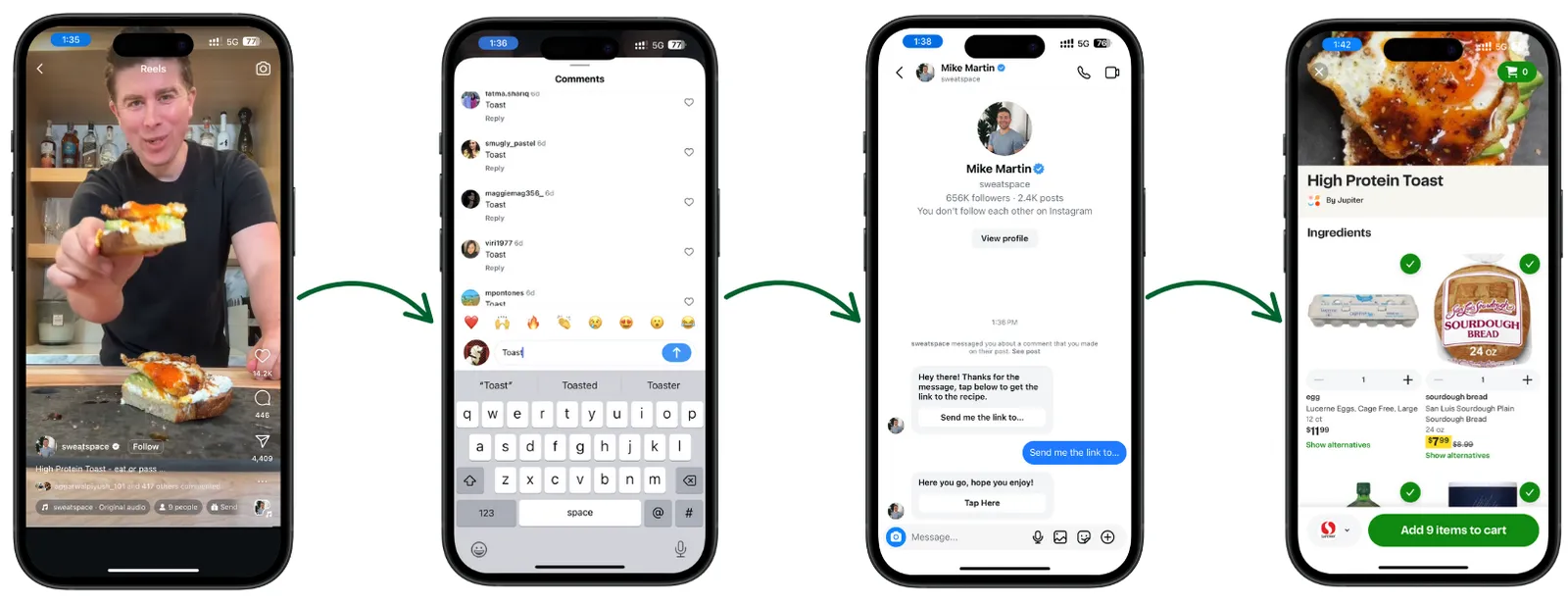
Each creator post included a specific keyword in their caption. When viewers commented that keyword, they received an automatic DM with a shoppable Instacart link pre-loaded with the brand's product. Cart adds were tracked back to the individual creator and post.
What made it work: The Instacart mechanic gave this campaign a conversion signal that standard awareness campaigns cannot produce. Instead of reporting 5.8M impressions and stopping there, the brand could show exactly which creators drove grocery purchase intent, not just views.
Example 2: Hot Sauce Brand — Regional Whole Foods Launch
Campaign type: Retailer-targeted general awareness
Creator mix: 6 micro-influencers geo-targeted to Pacific Southwest (Whole Foods density)
Budget: ~$8,800
Result: 1.1M+ impressions, CPM under $8
A hot sauce brand entering Whole Foods distribution in the Pacific Southwest used Jupiter's retailer proximity filter to select creators whose audiences were concentrated within the target distribution footprint. The brief specified one retailer by name in every caption, a direct "now at Whole Foods" callout, and a recipe format using the sauce as a finishing element rather than a primary cooking ingredient.
Creator selection excluded anyone with an audience more than 40% concentrated outside the target region, regardless of overall follower count. A creator with 60,000 followers and 78% regional audience concentration was prioritized over a creator with 200,000 followers and 22% regional concentration.
What made it work: Geographic precision. The impressions delivered reached consumers who could actually buy the product, not a national audience with no path to purchase at the specific chain the brand had just entered.
Example 3: Snack Bar Brand — Creator Sampling at Scale
Campaign type: Creator sampling (no creator fee, product-only)
Creator mix: 38 nano and micro-influencers (5,000 to 40,000 followers)
Budget: ~$950 in product cost
Result: 1M+ impressions at $1.71 CPM effective
A plant-based snack bar brand with limited launch budget ran a creator sampling campaign on Jupiter. No creator fee was paid. Each creator received product samples in exchange for an organic post. Creators were selected based on content interest alignment (specifically: high-protein recipes, fitness-adjacent lifestyle, clean-ingredient cooking), not follower count.
The brief was intentionally minimal: show the product in a realistic snack moment, mention one ingredient differentiator, and tag the brand. No scripted language. No required hashtag list. Forty creators posting authentically over four weeks generated over a million impressions at an effective CPM that would be difficult to match in any paid channel at this budget level.
What made it work: Volume of authentic voices. A single creator with 500,000 followers posting a scripted ad produces different audience behavior than 38 creators with 15,000 followers each posting something that looks like a genuine recommendation. For a launch brand trying to build initial trial and credibility, the second model is more effective per dollar.
Example 4: Specialty Oil Brand — Long-Run Ambassadorship
Campaign type: Ambassadorship (6-month minimum, 2 posts per month)
Creator mix: 1 dedicated recipe creator (mid-tier, Instagram)
Budget: ~$47,000 across the program
Result: 13.7M+ impressions at $2.75 CPM; top post drove 5.6M impressions from a single recipe
A specialty oil brand ran a six-month ambassador program with a single dedicated food creator whose content was built entirely around Mediterranean and global recipe formats that matched the brand's positioning. The brief was minimal per post because the creator's content direction was established at the program level. Two posts per month, each featuring the product as a recipe ingredient rather than a product demo.
The program ran from January through May, building audience familiarity with the brand through repeated recipe exposure across the platform. The top individual post drove 5.6M impressions from a single recipe video. The sustained cadence produced compounding SOV growth, not a one-week spike followed by silence.
What made it work: Repetition without saturation. The same creator, posting about the same brand every two weeks across six months, builds a level of audience familiarity that three one-off creator partnerships with six times the budget do not. The audience learns to associate the creator with the brand. The brand becomes part of the creator's culinary identity.

Jupiter runs all five campaign types in one platform
Creator sampling, ambassadorships, retailer-targeted campaigns, brand collabs, and seasonal sprints, from brief to Instacart attribution. Built exclusively for food and beverage CPG brands.
Example 5: Brand Collaboration — Two CPG Brands, One Campaign Budget
Campaign type: Brand collaboration (co-funded, split budget)
Creator mix: 5 mid-tier creators, brief covering both brands' products
Budget: Split 50/50 between two brand partners
Result: 1M+ combined impressions; both brands featured in every post
Two complementary CPG brands co-funded a single creator campaign. One brand brought a pantry staple (a vinegar used in cooking). The other brought a finishing oil. The campaign brief was built around a single recipe concept that used both products naturally as complementary ingredients. Neither brand appeared as the "hero" product. Both appeared as equally essential to the dish.
Creators were selected whose content regularly featured multi-ingredient recipe builds, so the dual-product brief fit their existing content style without requiring either brand to compromise their creative direction. Budget was split evenly. Impressions were shared. Both brands got content that would have cost them $8,000 to $10,000 individually for roughly half that per brand.
What made it work: Product complementarity. A collab campaign between two brands whose products naturally coexist in a recipe produces content that feels authentic because the creator would plausibly use both in the same dish anyway. A forced pairing between brands that have no recipe logic connection reads as transactional and underperforms.
Example 6: Bone Broth Brand — Soup Season Sprint
Campaign type: Seasonal sprint (6-week window)
Creator mix: 9 mid-tier and macro-influencers (Instagram + TikTok)
Budget: ~$4,000
Result: 2.5M+ impressions at $1.57 CPM; top post drove 2.46M impressions from one recipe video
A bone broth brand ran a concentrated November campaign timed to the start of soup season. The brief was built entirely around comfort food recipes featuring broth as the primary ingredient, not a supporting liquid. Creators were briefed to lead with the dish name and sensory experience in their hook, not the product. The product was introduced as the ingredient that made the dish what it was.
The top post was a single comfort-soup recipe video that drove 2.46M Instagram impressions from one creator. The campaign's total spend was under $4,000, producing a CPM of $1.57 across 2.5M+ delivered impressions.
What made it work: Timing and brief specificity. Soup season is a predictable, high-purchase-intent window for broth. Running a concentrated campaign the first two weeks of November captures the consumer at the exact moment they are actively planning comfort food purchases. A broth campaign in March at the same spend would not produce the same result.
Example 7: Bakery Brand — UGC Repurposed Into Paid Creatives
Campaign type: General awareness with paid media repurposing
Creator mix: 4 food creators (Instagram Reels)
Budget: ~$8,000 (organic) + incremental Meta whitelisting budget
Result: 1.29M+ organic impressions; top creator video repurposed into Meta whitelisted ad running 6 weeks post-campaign
A specialty bakery brand used Jupiter's content review workflow to manage the full UGC lifecycle. Creators submitted recipe videos before posting. The brand reviewed, approved, and built repurposing rights into the creator agreement. After the organic campaign ran, the top-performing video (a recipe using the brand's brioche buns as the vehicle for an air fryer recipe) was repurposed as a Meta whitelisted ad running from the creator's handle rather than the brand's account.
The whitelisted ad ran for six weeks following the organic campaign period, extending the content's commercial life well beyond the original posting window. The creative was shot by the creator, performed like creator content, and cost a fraction of what a brand-produced video of equivalent quality would have required.
What made it work: Rights clearance built in upfront. The repurposing rights were documented in the brief and creator agreement before any content was submitted. The brand did not need to negotiate post-hoc rights with a creator who had no incentive to agree. The content was cleared for paid use before the first video was filmed.
Example 8: Simmer Sauce Brand — Weeknight Dinner Retailer Campaign
Campaign type: Retailer-targeted general awareness (national grocery)
Creator mix: 7 mid-tier recipe creators (Instagram + TikTok)
Budget: ~$8,800
Result: 1.18M+ impressions at $7.42 CPM; campaign timed to peak weeknight recipe search behavior (October)
A world-flavors simmer sauce brand ran an October campaign positioned entirely around the weeknight dinner problem. The brief specified 30-minute or under recipe formats, real weeknight kitchen settings (not styled photography setups), and a retail callout naming the specific grocery chains where the product was available.
Creator selection prioritized "home cook" and "weeknight meal" content interest tags over "food photography" or "restaurant-style cooking." The intended viewer was a primary household grocery buyer looking for Tuesday night dinner inspiration, not a food enthusiast looking for a weekend project.
What made it work: Audience specificity matching brief specificity. The creators briefed for the weeknight meal format had audiences who were already looking for exactly that content. The product fit naturally into the content their audience expected. No creative lift required.
Running campaigns without the brief structure and creator logic behind these results? See what changes.
Jupiter's campaign optimizer, creator network, and Instacart attribution give you the same infrastructure these campaigns ran on, from brief creation to performance tracking.
Campaign Type Summary
Example | Campaign Type | Budget Range | Impressions | CPM | Key Signal |
|---|---|---|---|---|---|
Plant-based dairy | Awareness + Instacart attribution | ~$10k | 5.8M+ | $1.82 | Cart adds by creator |
Hot sauce | Retailer-targeted launch | ~$8.8k | 1.1M+ | <$8 | Geographic precision |
Snack bar | Creator sampling | ~$950 | 1M+ | $1.71 effective | Volume of authentic voices |
Specialty oil | Ambassadorship (6 months) | ~$47k | 13.7M+ | $2.75 | Compounding SOV |
Brand collab | Co-funded dual-brand | ~$4k each | 1M+ combined | — | Product complementarity |
Bone broth | Seasonal sprint | ~$4k | 2.5M+ | $1.57 | Timing to retail moment |
Bakery brand | UGC + paid repurposing | ~$8k + media | 1.29M+ organic | — | Rights cleared upfront |
Simmer sauce | Retailer-targeted awareness | ~$8.8k | 1.18M+ | $7.42 | Audience-brief match |
How Jupiter Runs All Eight Campaign Types in One Platform
Every example above ran on Jupiter, the only influencer marketing platform built exclusively for food and beverage CPG brands. The infrastructure behind each example is accessible from a single workflow.
The campaign creation wizard supports all five campaign types: Standard, Ambassadorship, Creator Sampling, Brand-Managed, and Collaboration. Each type has a tailored brief structure and creator selection flow. The campaign wizard takes a plain-language brief description from the Jupiter AI Marketing Agent, or a structured manual form, and builds the full campaign configuration from one interface.
Creator selection across all eight examples was powered by Jupiter's 12-signal campaign optimizer, which filters and scores creators based on retailer proximity, content interest alignment, audience credibility, brand affinity history, engagement quality, view consistency, and six additional signals, then runs a budget-constrained selection that maximizes projected impressions. The network includes 1,000+ vetted recipe creators on Instagram and TikTok, with separate pricing, engagement data, and average view counts surfaced per creator.
Instacart attribution (Example 1) runs through Jupiter's comment-to-cart mechanic: viewers comment with a keyword, receive a shoppable Instacart DM, and cart adds are tracked back to the specific creator and post. Jupiter is one of Instacart's fastest-growing affiliate partners.
Content review and UGC rights management (Example 7) run through Jupiter's content review queue, where creators submit videos before posting, brand teams approve or reject with documented notes, and rights scope is defined in the brief and creator agreement before content collection begins.
For a deeper breakdown of how Instacart attribution works across a full campaign cycle, the Instacart influencer marketing campaign playbook covers the mechanic and measurement in full. For smaller brands building their first creator program, the micro-influencer CPG grocery guide covers the creator sampling and nano-influencer model in detail.
Your next food CPG campaign has a template. Build it in Jupiter.
Instacart attribution, a 12-signal campaign optimizer, and 1,000+ vetted recipe creators, with every campaign type supported from brief to performance tracking. Used by 58+ CPG brands including Banza, Pete & Gerry's, and Kettle & Fire.
FAQs
Quick answers to common questions.
What is a food CPG influencer marketing campaign?▼
A food CPG influencer marketing campaign is a structured creator partnership where a food or beverage brand pays creators to produce and publish social media content featuring their product, with the goal of driving consumer discovery, grocery trial, or purchase intent. For CPG brands selling through grocery retail, campaigns are measured through Instacart shopping list adds, retailer velocity data, and social share-of-voice growth rather than DTC affiliate sales, because the purchase happens in a retail environment the brand does not control.
What CPM should food CPG brands expect from influencer campaigns?▼
CPM for food CPG influencer campaigns varies significantly by campaign type, creator tier, and content format. From Jupiter platform campaigns: creator sampling campaigns with product-only compensation have delivered effective CPMs under $2, general awareness campaigns with mid-tier creators typically run between $1.50 and $10 depending on creator mix and content type, and premium ambassadorship programs with dedicated long-run creators run between $2.50 and $5 at scale. Retailer-targeted campaigns with tight geographic filtering sometimes run higher CPMs in exchange for more commercially precise reach.
What is the best influencer campaign type for a new CPG food product launch?▼
For a new product launch, the two highest-performing campaign types are general awareness with Instacart attribution (micro-influencer mix, recipe content, comment-to-cart mechanic for purchase intent tracking) and retailer-targeted campaigns (creators geographically concentrated near the specific chain the product is entering). Creator sampling campaigns work well for launches with limited budget, because organic posting from 30 to 40 nano-influencers can generate over a million impressions without a creator fee budget. The campaign type should be chosen based on the brand's primary retail goal: Instacart trial, regional grocery trial, or national awareness.
How do food brands run brand collaboration campaigns with other CPG companies?▼
Brand collaboration campaigns involve two complementary food CPG brands co-funding a single creator campaign where both products appear in the same content. The brief is built around a recipe or usage scenario that uses both products naturally. Budget is typically split equally or by agreed percentage. Jupiter's collaboration campaign type handles the co-funding structure, creator selection for dual-brand briefs, and shared performance tracking. The most effective brand collabs have a clear recipe or usage complementarity — products that appear together in a dish naturally, not brands paired arbitrarily because of a joint marketing budget.
What does a high-performing food influencer post look like?▼
High-performing food influencer posts on Jupiter's platform share several structural characteristics: they lead with the dish or recipe rather than the product, they include a specific retail callout naming where to buy, they appear in a realistic home kitchen setting rather than a styled commercial environment, and they match the content format native to the platform (short-form hook-led video for TikTok, save-optimized recipe format for Instagram). The single most predictive signal for grocery conversion is saves per view, not overall engagement rate, because saves indicate the viewer plans to cook the dish and buy the ingredients.
How much does a food CPG influencer campaign cost?▼
Food CPG influencer campaigns on Jupiter range from under $1,000 for product-only creator sampling campaigns to $50,000+ for long-run ambassadorship programs. Mid-tier general awareness campaigns typically run between $5,000 and $20,000 for a 6 to 12 week campaign with six to fifteen creators. Jupiter's campaign optimizer projects impressions and CPM before any spend is committed, so brands can see their expected delivery benchmarks before launching rather than after.
More in Strategy & Guides
More from Strategy & Guides.