Grocery Influencer Marketing: The 2026 CPG Playbook
Most influencer platforms were built for brands that own their checkout. Grocery brands do not, and that changes everything from creator selection to how you measure ROI. This is the complete playbook.
Trusted by leading CPG brands












On this page
▼
- Grocery Influencer Marketing Is Not Standard Influencer Marketing
- The Grocery Attribution Problem, and How to Solve It
- Layer 1: Estimated vs. actual impressions and CPM
- Layer 2: Creator-level cost efficiency
- Layer 3: Instacart shopping list attribution
- Layer 4: Share-of-voice growth
- Creator Selection for Grocery Influencer Campaigns
- Retailer proximity
- Content interest specificity
- Audience credibility score
- Brand affinity history
- Engagement quality, not just engagement rate
- Brief Structure for Grocery Influencer Content
- The retail call-to-action
- The product-in-context moment
- Recipe structure or usage scenario
- The key message in one sentence
- Platform-specific creative direction
- Timing Grocery Campaigns With Retail Moments
- New product launches
- Seasonal eating occasions
- Retailer promotional windows
- New distribution entry
- Measuring Grocery Influencer Marketing ROI
- Campaign health by estimated vs. actual impressions
- Creator cost efficiency
- Instacart shopping list adds by creator and post
- Share-of-voice movement
- Retail velocity against creator campaign timing
- Common Mistakes CPG Brands Make With Grocery Influencer Campaigns
- Using a DTC attribution model
- Prioritizing reach over relevance
- Briefing for awareness instead of purchase
- Running single-cycle campaigns without a learning loop
- Skipping content review
- How Jupiter Handles Grocery Influencer Marketing for CPG Brands
Grocery influencer marketing is the practice of partnering with social media creators to drive product discovery, purchase intent, and sales for brands that sell through grocery retail channels including Kroger, Whole Foods Market, Sprouts Farmers Market, Target, Costco, and Instacart. Unlike DTC influencer marketing, which measures success through Shopify revenue and affiliate link clicks, grocery influencer marketing requires a fundamentally different attribution model, creator selection approach, and content strategy, because the brand does not control the point of purchase.
For US food and beverage CPG brands, grocery influencer marketing is the primary growth lever in the creator economy. Most CPG products are bought in grocery stores or on Instacart, not on brand websites. A creator post that drives a viewer to add a product to their Instacart cart or reach for it off a Kroger shelf is generating real commercial value that standard influencer analytics will never capture.
This is the complete operational playbook for running grocery influencer marketing campaigns that connect to actual retail outcomes.
Grocery Influencer Marketing Is Not Standard Influencer Marketing
The distinction matters from the first decision you make.
Standard influencer marketing platforms are built on a specific assumption: the brand owns the checkout. A viewer sees a creator post, clicks the affiliate link, lands on the brand's site, and buys. The attribution chain is clean. Revenue is traceable. The platform takes credit for every sale that routes through its tracking links.
Grocery brands do not own their checkout. A consumer sees a recipe creator use your pasta sauce on TikTok on Tuesday evening. They put it on their mental grocery list. On Thursday, they pick it up at Kroger. On Saturday, they add it to their Instacart order. At no point in that journey did they click a link you controlled.
This is the grocery attribution problem: the purchasing behavior that creator content drives is real, but it routes through retail channels that a standard DTC attribution model cannot capture. Solving it requires different infrastructure, one that treats Instacart shopping list adds, retailer-specific demand signals, and share-of-voice growth as primary KPIs, not secondary proxies.
The brands winning at grocery influencer marketing in 2026 have accepted this reality and built their measurement frameworks accordingly. The brands still trying to force grocery campaigns into a DTC attribution model are systematically undervaluing and underinvesting in their creator programs.
The Grocery Attribution Problem, and How to Solve It
Grocery attribution runs through four layers, each capturing a different signal at a different stage of the purchase journey.
Layer 1: Estimated vs. actual impressions and CPM
Before a campaign launches, you should know the projected impressions and cost-per-thousand based on creator performance data. After the campaign, you compare actual delivery to the estimate. The gap is a quality signal for both creator selection and platform performance. If your impressions are consistently 30% below estimate, your creator selection model is miscalibrated.
Layer 2: Creator-level cost efficiency
Impressions per dollar, by creator, is the single most actionable metric in post-campaign analysis. It tells you which creators are outperforming their pricing and which are not worth rebooking. Brands running efficient grocery creator programs track this at the individual creator level across every campaign cycle.
Layer 3: Instacart shopping list attribution
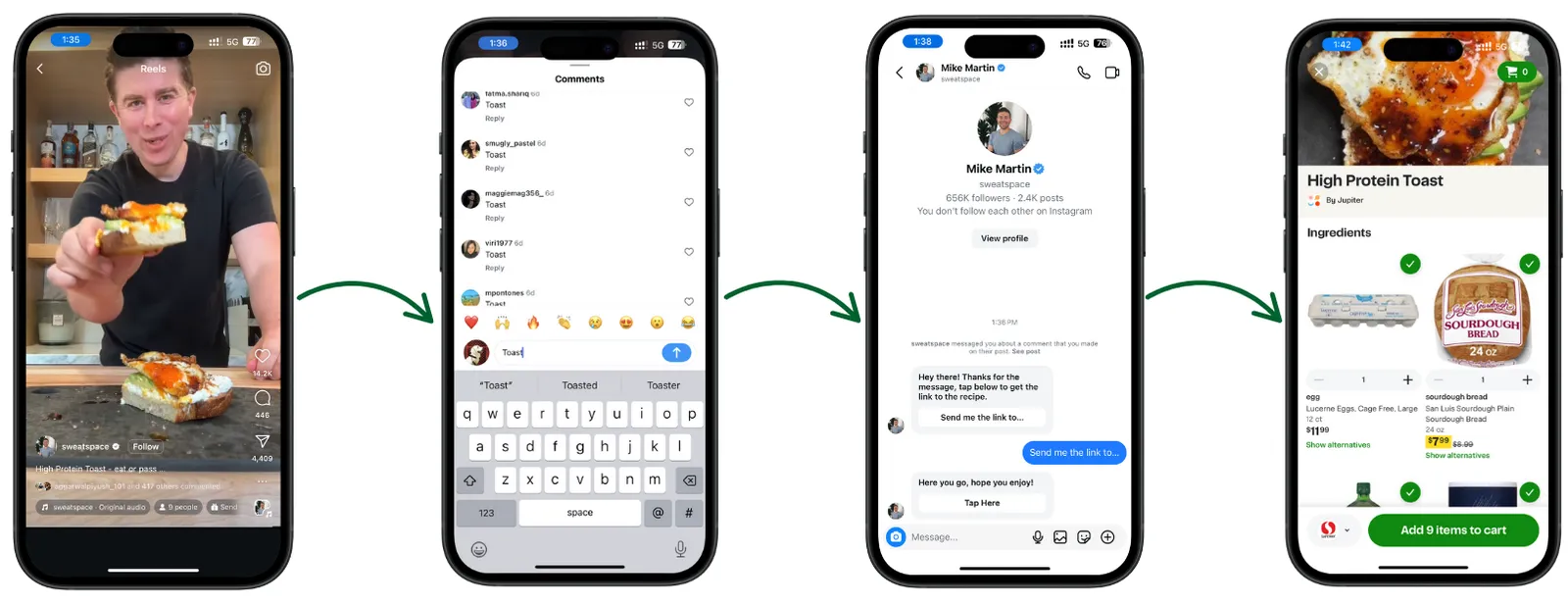
Jupiter's comment-to-cart mechanic works as follows: a viewer comments on a creator's post with a specific keyword, and they automatically receive a DM containing a unique shoppable Instacart link tied to that creator and post. Every shopping list add that results is tracked back to the originating creator and post. This is the closest thing to a DTC conversion signal available in the grocery channel. A single Instagram Reel running this mechanic drove 6.5 million views and more than 1,000 Instacart cart adds for a Jupiter brand partner. Jupiter is one of Instacart's fastest-growing affiliate partners.
Layer 4: Share-of-voice growth
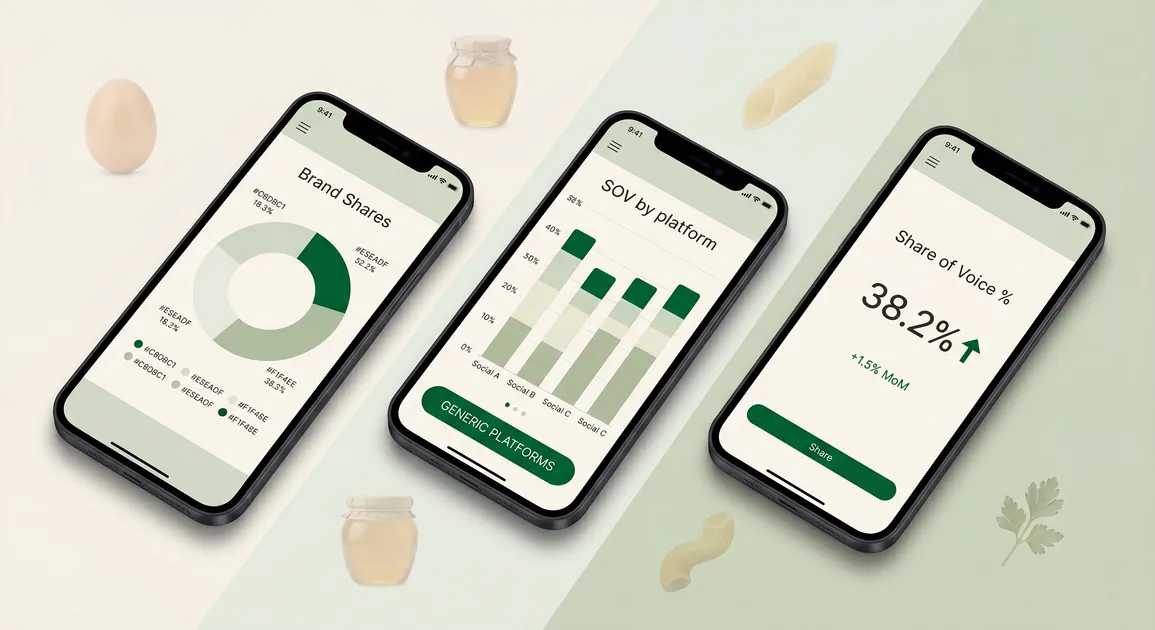
A creator campaign that increases your brand's share of total food category mentions from 8% to 14% over 90 days is generating compounding market share value that does not show up in click data. It shows up in your brand's long-run performance in the category. Measuring it requires social listening infrastructure that tracks mention volume across Instagram, TikTok, YouTube, and X simultaneously. Over time, SOV trends are one of the most predictive leading indicators of eventual sales movement.
Brands that measure all four layers build a defensible case for creator marketing investment that goes well beyond vanity metrics.
Creator Selection for Grocery Influencer Campaigns
Grocery influencer marketing does not require the biggest creators. It requires the most relevant ones.
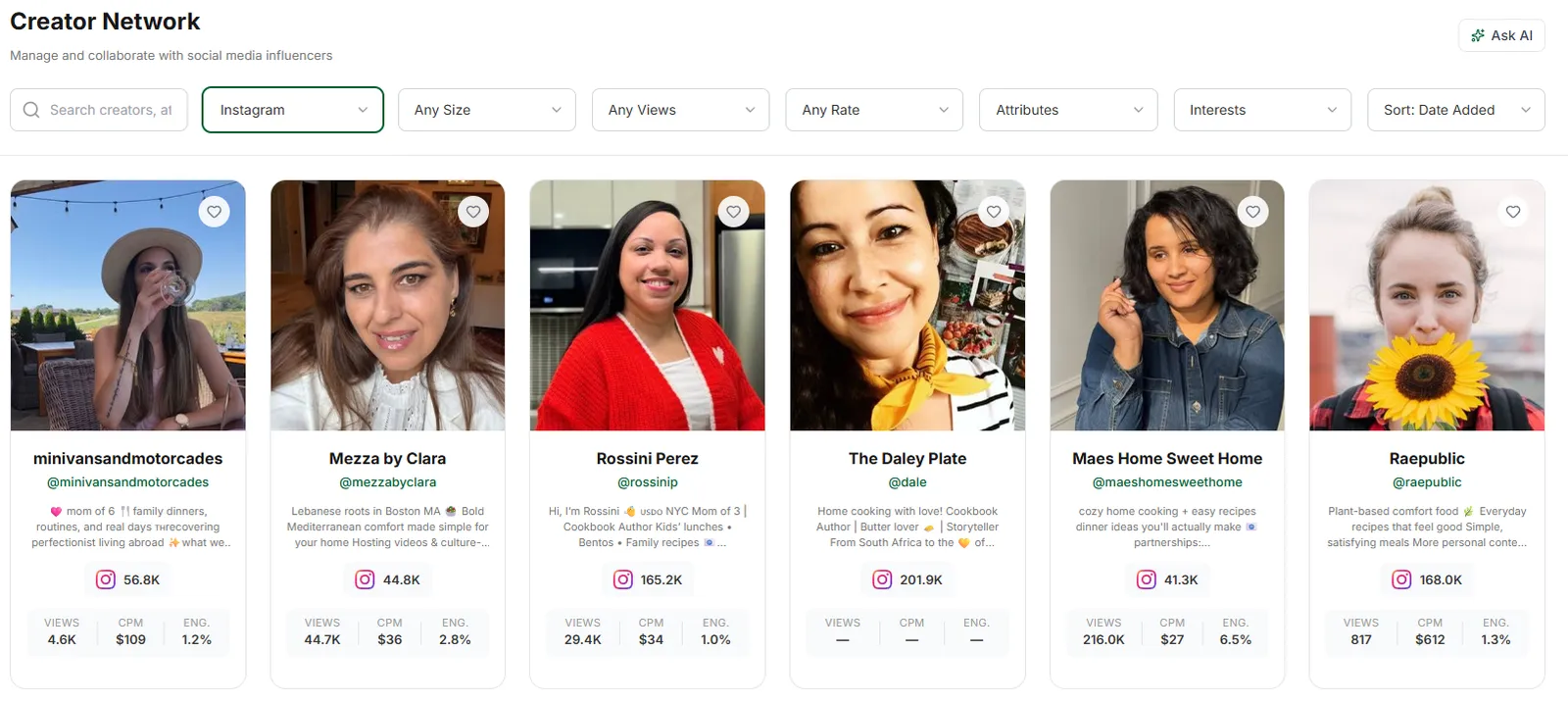
A macro influencer with 800,000 followers who posts general lifestyle content and occasionally cooks is a fundamentally different proposition from a dedicated food creator with 45,000 followers who publishes recipes three times a week, shops at Whole Foods, and has an audience that acts on her ingredient recommendations. For grocery brands, the second creator drives more actual grocery sales. Follower count is not the variable that predicts it.
Retailer proximity
A creator located in the metropolitan area where your product has the strongest distribution is more valuable than a geographically random creator with a larger following. If your product sells at Sprouts in the Southwest, a creator based in Phoenix with an audience that shops Sprouts is worth more than a creator in Boston with twice the following. The purchase has to happen somewhere. Make sure your creator is near where it happens.
Content interest specificity
A creator who exclusively posts dairy-free recipes has an audience that buys dairy-free products. A general food creator's audience buys everything and nothing in particular. Specificity predicts conversion. The narrower the content niche, the more targeted the audience's purchase behavior.
Audience credibility score
The percentage of a creator's followers estimated to be real accounts, rather than bots or inactive profiles, is a proxy for the actual size of the audience your content reaches. A creator with 60,000 real engaged followers outperforms a creator with 100,000 followers and a 45% bot rate. This is not a metric most platforms surface by default.
Brand affinity history
Creators who have worked with brands in adjacent categories have an audience already accustomed to product recommendations. A creator with a history of plant-based brand partnerships is pre-qualifying their audience for your plant-based product in a way a first-time brand partner cannot.
Engagement quality, not just engagement rate
Comments like "I need to try this" and "adding this to my cart" are purchase-intent signals. Comments like "love this" and emoji-only responses are vanity engagement. A 4.5% engagement rate with high-intent comments outperforms a 7% engagement rate with generic responses for grocery CPG brands whose KPI is shopping behavior.
Brief Structure for Grocery Influencer Content
A grocery influencer brief has a different job than a DTC brief. Its job is not to drive a click. Its job is to make the product feel necessary, recognizable, and findable at a specific grocery store or on Instacart.
Every grocery influencer brief should include:
The retail call-to-action
Where can viewers buy this product? Be specific: "Available at Whole Foods, Kroger, and on Instacart." A creator who fails to mention where to buy leaves the viewer with purchase intent and nowhere to direct it. This is the most commonly missing element in food CPG briefs and the most commercially costly omission.
The product-in-context moment
The product should appear in a use scenario realistic for the target consumer. A sauce appearing in a 45-minute restaurant-quality recipe intimidates the grocery shopper who buys it for quick weeknights. Brief for the realistic use case, not the aspirational one.
Recipe structure or usage scenario
The most effective content format for food CPG is recipe-based. The brief should include at minimum one suggested recipe concept, including key supporting ingredients beyond the hero product, so the creator can develop it authentically.
The key message in one sentence
What is the one thing you want the viewer to remember? Not three things. One. Brief that specificity and the creator will deliver it. Brief for three messages and you will likely get none.
Platform-specific creative direction
A TikTok brief and an Instagram brief require different pacing, different hook structures, and different caption approaches. One brief for both platforms consistently underperforms platform-specific briefs.

See how Jupiter builds grocery influencer campaigns from brief to Instacart attribution
One platform for creator selection, brief management, content review, and grocery sales attribution, built exclusively for food and beverage CPG brands.
Timing Grocery Campaigns With Retail Moments
Grocery purchasing has a calendar. Creator campaigns that align with it consistently outperform campaigns launched without a retail timing strategy.
New product launches
The first 90 days after a new SKU hits grocery shelves is the highest-leverage window for creator support. Retail buyers are watching velocity data during this period. A creator campaign that drives trial, generates Instacart cart adds, and increases category share of voice during this window supports your retail relationship in ways post-launch campaigns cannot.
Seasonal eating occasions
Back-to-school meal prep (August through September), holiday cooking (November through December), New Year nutrition trends (January), and summer grilling season (May through June) are predictable high-purchase-intent windows for food brands. Creator content timed to these occasions performs above campaign average because the audience is already primed to discover new products.
Retailer promotional windows
When your product is featured in a Kroger circular, supported by a Whole Foods end cap, or part of an Instacart promotional placement, creator content running concurrently amplifies that investment. The creator post creates the demand; the retail promotion captures it. Running creator campaigns without coordinating with your retail calendar is a missed amplification opportunity.
New distribution entry
If your product is entering a new retail chain, creator content from creators local to that region in the two to four weeks before and after launch drives trial velocity at the moment you need it most.
Measuring Grocery Influencer Marketing ROI
The measurement frameworks used in standard influencer marketing systematically undervalue grocery campaigns. Here is what to actually track.
Campaign health by estimated vs. actual impressions
Track actual impressions against pre-campaign projections throughout the campaign, not only at the end. Jupiter's campaign health system flags campaigns at green (delivering 80% or more of projected impressions), yellow (delivering 50 to 80%), and red (below 50%). Real-time health monitoring lets you course-correct during a campaign rather than only in the retrospective.
Creator cost efficiency
Impressions per dollar, by creator, across every campaign. This is the data that tells you who to rebook and who to drop. Track it consistently and you build a creator roster that improves with every campaign cycle.
Instacart shopping list adds by creator and post
This is the revenue-adjacent signal. Shopping list adds correlate with purchase completion at meaningful rates. A creator who consistently drives high cart-add rates relative to impressions delivered is a disproportionately valuable partner worth investing in at higher rates.
Share-of-voice movement
Track your brand's SOV percentage at the start of every campaign and again at the end. SOV growth correlated with a creator campaign is evidence that the campaign drove category conversation, not just impressions. Over time, SOV trends predict eventual sales performance better than impression counts alone.
Retail velocity against creator campaign timing
If you have access to scanner data or Instacart sales data by region, compare velocity by region against where your creators are located and where campaigns ran. Region-specific velocity spikes during creator campaign periods are the strongest available evidence of grocery sales lift from creator content.
Still reporting your grocery campaigns on impressions and engagement rate alone? There is a better model.
Jupiter tracks Instacart cart adds, creator cost efficiency, and share-of-voice movement across every campaign, so you can show your leadership numbers that actually connect to grocery sales.
Common Mistakes CPG Brands Make With Grocery Influencer Campaigns
Using a DTC attribution model
Measuring grocery creator campaigns on click-through rate and affiliate sales does not capture the majority of the commercial value these campaigns generate. The consumer who sees your product on TikTok and buys it at Kroger three days later does not show up in your link click data. Optimizing against a metric that misses most of your wins systematically underinforms campaign decisions.
Prioritizing reach over relevance
A macro influencer with 1 million followers and a general lifestyle audience drives fewer grocery sales than a micro influencer with 35,000 followers and an audience of dedicated home cooks who shop at the retailers where your product sells. Relevance, retailer proximity, and content specificity predict grocery conversion better than raw follower count at every campaign budget level.
Briefing for awareness instead of purchase
Grocery brands often write briefs that focus on brand storytelling and values. These generate positive sentiment and limited grocery impact. A brief that includes a specific retail callout, a realistic usage scenario, and a clear Instacart or store availability mention consistently outperforms a brand awareness brief on every grocery-relevant metric.
Running single-cycle campaigns without a learning loop
The brands running the most efficient grocery creator programs treat each campaign as data for the next. Which creators over-delivered? Which content angles drove the most Instacart adds? Which regions showed velocity spikes? Without capturing this information systematically, every campaign starts from scratch.
Skipping content review
Creator content for a grocery brand needs to be accurate about product attributes, retail availability, and usage instructions. A video that misrepresents your product's ingredient profile or claims availability at a retailer where you do not distribute creates real problems. Content review is not optional for grocery brands with retail commitments on the line.
How Jupiter Handles Grocery Influencer Marketing for CPG Brands
Jupiter was built specifically for US food and beverage CPG brands selling through grocery retail. Every feature in the platform was designed around the grocery purchase journey, not a DTC checkout flow.
The campaign management platform handles the full grocery campaign workflow: brief creation with CPG-specific fields (retailer call-to-action, recipe concepts, ingredient integration guidance, retail availability callout), creator selection with grocery-specific filters (retailer proximity, content interest alignment, audience credibility, brand affinity history), content review workflow, and performance tracking with estimated vs. actual impressions, creator leaderboard, and campaign health monitoring.
Jupiter's 12-signal campaign optimizer selects the creator combination that maximizes projected impressions within budget. The 12 signals are retailer proximity, content interest alignment, posting recency, audience credibility, brand affinity from past collaboration history, creator attribute match, audience attribute match, engagement quality, view consistency, audience demographics, hashtag relevance, and geographic distribution. This is purpose-built for grocery brand use cases, not a generic influencer matching algorithm.
Jupiter's Instacart attribution infrastructure closes the loop from creator content to grocery purchase intent. When a viewer comments on a creator's post with a specific keyword, they receive an automated DM with a unique shoppable Instacart link tied to that creator and post. Cart adds are tracked back to the originating creator, post, and campaign. Jupiter is one of Instacart's fastest-growing affiliate partners.
The influencer marketing analytics dashboard surfaces estimated vs. actual impressions, CPM by creator and campaign, creator cost efficiency measured as impressions per dollar, campaign health status at the green/yellow/red level, and a creator leaderboard ranked by total impressions and cost efficiency. The share of voice tracking system monitors your brand's category conversation percentage across Instagram, TikTok, YouTube, and X continuously, with period-over-period delta tracking so you can see whether each campaign moves the needle.
The Jupiter AI Marketing Agent, built on 20 specialized tools, drafts grocery campaign briefs from a plain-language description, pulls live performance data across all active campaigns, recommends creator combinations for a specific retail region, and surfaces competitive SOV intelligence without the user leaving the chat interface.
Jupiter is used by 58+ US food and beverage CPG brands including Banza, Pete & Gerry's, Nellie's Free Range Eggs, Kettle & Fire, La Tourangelle, Dr. Praeger's, and Bonafide Provisions.
The only influencer platform built for grocery, not DTC.
Instacart attribution, 1,000+ vetted recipe creators, and a 12-signal campaign optimizer built exclusively for food and beverage CPG brands selling through grocery retail. Used by 58+ leading CPG brands including Banza, Pete & Gerry's, and Kettle & Fire.
FAQs
Quick answers to common questions.
What is grocery influencer marketing?▼
Grocery influencer marketing is the practice of partnering with social media creators to drive product discovery, trial, and purchase for brands that sell through grocery retail channels including Kroger, Whole Foods Market, Sprouts, Costco, Target, and Instacart. Unlike DTC influencer marketing, grocery influencer marketing measures success through Instacart shopping list adds, retail velocity data, and share-of-voice growth rather than affiliate link clicks or Shopify revenue, because the brand does not control the point of purchase.
How much does grocery influencer marketing cost for a CPG brand?▼
A typical grocery influencer marketing campaign for a US CPG brand runs between $15,000 and $100,000 depending on creator tier, campaign duration, and the number of SKUs being supported. The most common entry point for emerging brands is $20,000 to $40,000 across four to eight mid-tier creators (50,000 to 250,000 followers) running over eight to twelve weeks. Projecting CPM before spend is standard practice on platforms like Jupiter, so brands know their impression benchmarks before committing budget.
How do you measure ROI for grocery influencer marketing campaigns?▼
Grocery influencer marketing ROI runs through four layers: estimated vs. actual impressions and CPM against pre-campaign benchmarks, creator-level cost efficiency measured as impressions per dollar, Instacart shopping list adds attributed to specific creator posts via Jupiter's comment-to-cart mechanic, and share-of-voice growth across the category. Brands with access to scanner data or region-specific Instacart sales data can also correlate creator campaign timing with retail velocity spikes in the regions where creators are based.
What types of creators work best for grocery influencer campaigns?▼
Food-specific creators with audiences that shop at the retailers where your product sells consistently outperform general lifestyle influencers for grocery campaigns. The most important selection signals are retailer proximity, content interest specificity, audience credibility score, and brand affinity history. Mid-tier creators (50,000 to 250,000 followers) typically deliver the best cost-per-impression for grocery brands. Retailer proximity and content specificity predict grocery conversion better than follower count alone.
When should a CPG brand run grocery influencer campaigns?▼
The highest-leverage windows for grocery influencer campaigns are new product launches in the first 90 days on shelf, seasonal purchasing occasions including back-to-school, holiday cooking, New Year nutrition trends, and summer grilling, concurrent with retailer promotional placements such as circular features and end caps, and new retail chain entries in the two to four weeks before and after launch. Campaigns aligned with the grocery retail calendar consistently outperform campaigns run without retail timing context.
What platform is best for running grocery influencer marketing campaigns?▼
Jupiter is the only influencer marketing platform built exclusively for food and beverage CPG brands selling through grocery retail. It includes Instacart attribution via a comment-to-DM mechanic, a 1,000+ food creator network with retailer proximity filtering, a 12-signal campaign optimizer that maximizes impressions within budget, and analytics that track estimated vs. actual CPM, creator cost efficiency, and share-of-voice movement. Other platforms including GRIN, Aspire, and Upfluence are built for DTC e-commerce and do not offer grocery retail attribution.
More in Strategy & Guides
More from Strategy & Guides.