Instagram Influencer Marketing for CPG Brands: A Complete Guide
Instagram still delivers 73.7% of impressions from food CPG creator campaigns, but most brands are measuring the wrong things. Here is the complete guide to running Instagram influencer marketing that connects creator content to grocery sales, not just engagement rates.
Trusted by leading CPG brands












On this page
▼
- Why Instagram still leads food CPG creator marketing
- Recipe content has a permanent home on Instagram
- Reels now drive the majority of organic reach on Instagram
- Instagram's audience geography is more measurable
- What makes Instagram influencer marketing different for food CPG
- Creator selection shifts from reach to audience specificity
- Reels performance data replaces feed engagement rate
- Attribution shifts from UTM links to Instacart shoppable mechanics
- Brief structure shifts to food-CPG-specific fields
- Instagram Reels strategy for food CPG brands
- The first 1.5 seconds determine distribution
- Recipe format outperforms product-first format for grocery conversion
- Save rate is the leading indicator of purchase intent
- Creator selection for Instagram food CPG campaigns
- Reels average views, not just follower count
- Audience geography matched to retailer footprint
- Brand affinity from past food category collaborations
- Audience credibility
- Attribution and measurement for Instagram food CPG campaigns
- Estimated vs actual Reels views and CPM
- Creator-level cost efficiency
- Instacart trackable link clicks and cart adds
- Category share of voice
- How Jupiter handles Instagram influencer marketing for food CPG
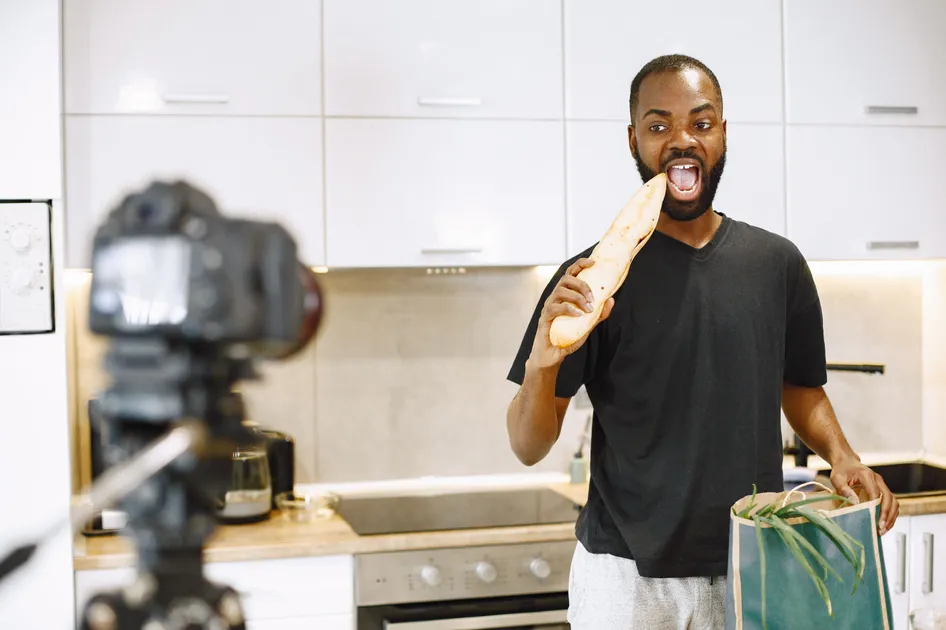
Instagram influencer marketing for CPG brands is the practice of partnering with food creators on Instagram to promote products, drive Instacart shopping list adds, and build grocery retail demand through recipe content, product placements, and Reels-format cooking videos that reach grocery-shopping audiences at scale.
Despite the rise of TikTok as a food discovery platform, Instagram remains the dominant delivery channel for food CPG creator campaigns. Across creator campaigns run through Jupiter, 73.7% of delivered impressions come from Instagram on a base of over 229 million impressions tracked from posted creator content. Instagram's save mechanic, Reels algorithmic distribution, and the recipe-forward content culture the platform has built over a decade make it the channel where food CPG brand awareness and grocery purchase intent combine most efficiently.
This guide covers how to run Instagram influencer marketing specifically for CPG brands selling through grocery retail and Instacart, where the purchase journey differs fundamentally from the DTC model most Instagram influencer playbooks were written for.
Why Instagram still leads food CPG creator marketing
Three structural reasons explain why Instagram continues to lead TikTok in delivered impressions for food CPG campaigns despite TikTok's rapid growth.
Recipe content has a permanent home on Instagram
The save-and-rewatch behavior that recipe content generates is deeply embedded in Instagram's audience culture. Saved recipes accumulate in personal collections that users return to when planning meals and grocery trips. A recipe Reel saved in January gets returned to in February when the viewer is planning a dinner party. TikTok has growing recipe culture, but Instagram's save mechanic and the decade of recipe creator behavior built around it produce a different kind of audience intent than TikTok's scroll-first discovery model.
Reels now drive the majority of organic reach on Instagram
Instagram's algorithm shifted meaningfully toward Reels distribution, pushing Reels content to non-followers at rates comparable to TikTok. For food CPG brands, this means Instagram Reels now combine the engaged, save-oriented audience behavior of legacy Instagram with the algorithmic non-follower distribution that was previously TikTok's primary advantage. A 30 to 60 second recipe Reel using a brand's product reaches both the creator's existing food-motivated audience and a new audience the algorithm determines is likely to respond to recipe content.
Instagram's audience geography is more measurable
For food CPG brands running retailer-windowed campaigns (a Whole Foods endcap in the Bay Area, a Kroger Mega Sale in the Midwest), filtering creator selection by audience location is critical. Instagram's audience data gives brands more granular geographic breakdowns for many creators, which means retailer proximity scoring is more precise on Instagram for campaigns that need to drive in-store demand in specific markets.
It is worth noting that TikTok has caught up significantly for food category conversation. Across food CPG brand mentions tracked through Jupiter's share-of-voice infrastructure, Instagram holds 42.8% of category conversation share and TikTok holds 40.6%. The platforms are operationally co-equal for food discovery. The impression delivery gap (73.7% Instagram vs 26.3% TikTok across Jupiter campaigns) reflects where brand spend is currently concentrated, not where the audience has moved. Brands optimizing for grocery sales in 2026 should treat both as primary channels and our TikTok influencer marketing guide covers the TikTok-specific playbook in detail.
What makes Instagram influencer marketing different for food CPG
The standard Instagram influencer playbook was built for DTC brands: creator posts product, viewer clicks link in bio, viewer buys through Shopify checkout, conversion tracked. This model breaks down for food CPG brands because there is no Shopify checkout. The purchase happens at Whole Foods, Kroger, or Instacart, and the connection between the Instagram Reel and the grocery purchase disappears without a different attribution infrastructure.
Four things need to change in the playbook for food CPG specifically.
Creator selection shifts from reach to audience specificity
A macro creator with 600,000 broadly-distributed followers is the wrong choice for a brand with regional Whole Foods distribution. A mid-tier creator with 80,000 followers concentrated in Bay Area metros is the right choice for a Northern California Whole Foods campaign. Audience geography and grocery-shopping audience profile replace raw follower count as the primary selection signal.
Reels performance data replaces feed engagement rate
Feed engagement rate was the primary creator quality signal when Instagram was primarily a feed-post platform. For food CPG in 2026, average Reels views, save rate, and reshare rate are the signals that predict campaign performance. Platforms that still surface feed engagement rate as the primary quality metric are reading the wrong data.
Attribution shifts from UTM links to Instacart shoppable mechanics
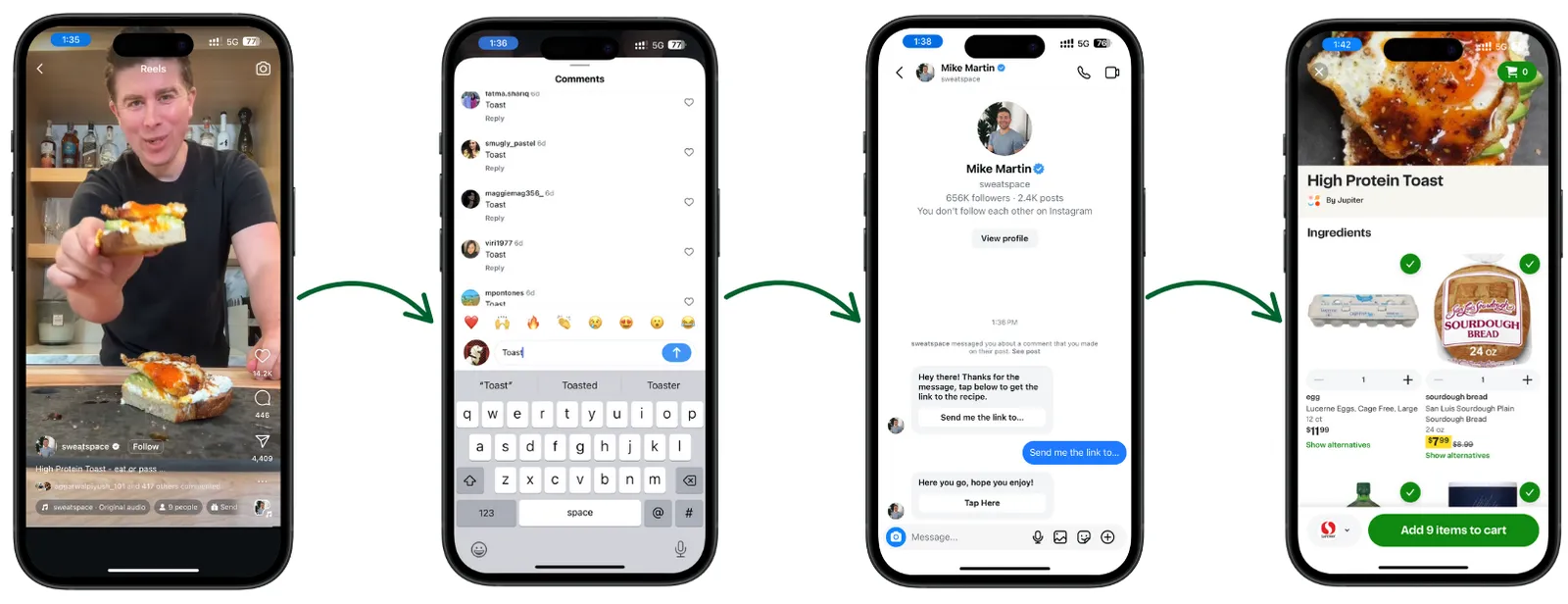
UTM links require a brand-controlled checkout that CPG brands do not have. Instacart attribution replaces the UTM model with per-creator trackable shoppable links that route viewers to an Instacart cart pre-loaded with the brand's product. When a viewer comments on a creator's Reel with a specific keyword, they receive a DM with a unique shoppable link tied to that creator. Cart adds attribute back to the specific creator and Reel that drove them. One proof point: one Instagram Reel, 6.5 million views, 1,000+ customers added that brand's products to their Instacart carts.
Brief structure shifts to food-CPG-specific fields
A brief built for DTC asks for key message and deliverables. A brief built for food CPG asks for recipe concept, ingredient placement, retailer call-to-action specific to the target store, shoppable comment trigger phrase, certifications to highlight, and the seasonal retailer window the content needs to align with.

See how Jupiter runs Instagram campaigns built for grocery sales, not DTC clicks
Reels performance data, Instacart attribution, retailer proximity scoring, and food-specific brief workflows built exclusively for CPG brands selling through grocery retail.
Instagram Reels strategy for food CPG brands
Reels are the primary content format for food CPG Instagram campaigns. Three strategic considerations shape Reels performance specifically.
The first 1.5 seconds determine distribution
Instagram's algorithm evaluates Reels completion rate and early engagement velocity in the first seconds after posting. Briefs for food CPG campaigns should specify a strong hook concept: a dramatic ingredient reveal, an unexpected recipe application, a "you have never seen this product used this way" visual moment. The hook does not need to be polished. It needs to be visually arresting enough that the viewer does not swipe past.
Recipe format outperforms product-first format for grocery conversion
Viewers who are in recipe discovery mode are in active purchase intent. They are planning a meal, mentally assembling an ingredient list, and primed to add to cart when they see an ingredient they want. Briefs should specify recipe-format integration rather than product-review or lifestyle-integration formats for campaigns targeting Instacart conversion.
Save rate is the leading indicator of purchase intent
A save on a recipe Reel means the viewer intends to make the recipe, which means they will be shopping for the ingredients. Optimizing creator selection and brief design for Reels save rate is more directly predictive of grocery purchase behavior than optimizing for like rate or comment rate. Creators with high Reels save rates on food content are worth a premium over creators with equivalent reach but lower save rates.
Creator selection for Instagram food CPG campaigns
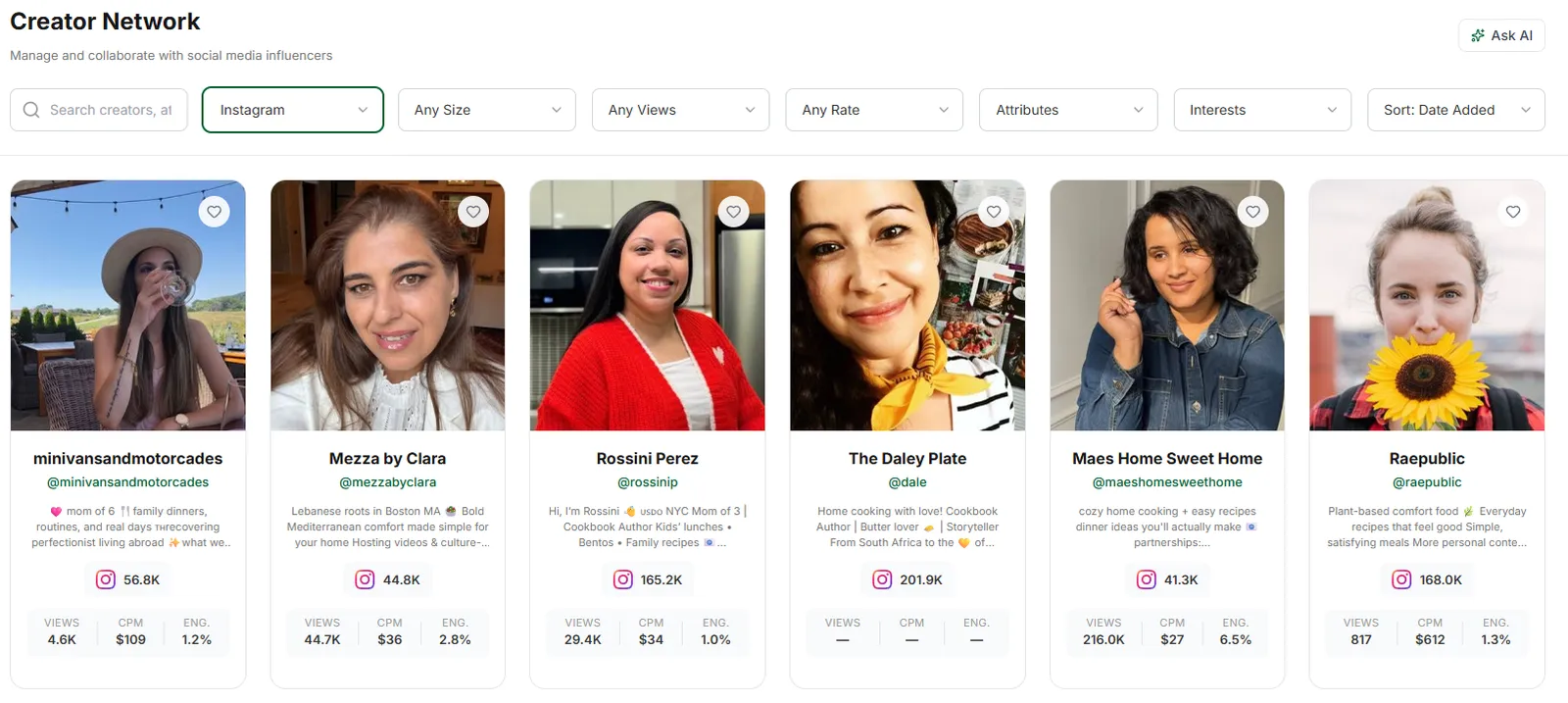
The 12-signal optimizer that Jupiter's campaign management platform uses to rank creator candidates incorporates the Instagram-specific signals that matter most for food CPG grocery outcomes.
Reels average views, not just follower count
Within any follower tier, the variance in Reels average views is substantial. A creator with 75,000 followers averaging 280,000 Reels views per post reaches more people than a creator with 200,000 followers averaging 80,000 Reels views. The optimizer surfaces Reels view averages explicitly so brands select on actual delivered reach rather than theoretical reach.
Audience geography matched to retailer footprint
The optimizer's retailer proximity signal scores each creator by how well their audience geography aligns with the campaign's target retailer markets. For Whole Foods campaigns, it prioritizes creators with audiences concentrated in Whole Foods metros. For Kroger Midwest campaigns, it surfaces creators concentrated in Kroger banner markets. This is the signal most generic Instagram influencer platforms do not surface and the one that most directly affects in-store sell-through.
Brand affinity from past food category collaborations
Creators who have previously worked with brands in adjacent food CPG categories have audiences pre-conditioned to respond to the new brand's category. Jupiter scores brand affinity by mapping each creator's collaboration history against the campaign brand's AI-generated category tags.
Audience credibility
Creators with high credibility scores (the percentage of audience estimated to be real versus bot) produce more reliable Reels performance because engagement and save behavior are real. Jupiter scores audience credibility from third-party audience quality data for every creator in the network.
Running Instagram food campaigns without Instacart attribution?
See what per-creator Reels performance data, Instacart cart-add tracking, and retailer proximity scoring look like when they are built into the platform.
Attribution and measurement for Instagram food CPG campaigns
The four-layer attribution model that applies to all food CPG influencer campaigns applies to Instagram specifically. Our influencer marketing ROI guide covers the full framework, but the Instagram-specific notes are these.
Estimated vs actual Reels views and CPM
Every Jupiter campaign projects estimated impressions and CPM before launch based on creator Reels view history. Tracking actual delivered Reels views against estimated views tells you whether the campaign performed as projected and which creators outperformed or underperformed their estimates. This is the mid-campaign optimization signal that allows brands to accelerate spend on overperforming creators and pause underperformers before the campaign ends. Jupiter's real campaign examples with CPM data show how this plays out across eight food CPG campaigns on Instagram and TikTok.
Creator-level cost efficiency
Impressions per dollar per creator is the metric that determines which creators belong on the next campaign roster. The analytics dashboard surfaces this creator leaderboard ranked by impressions per dollar continuously. The gap between creators ranked by impressions versus creators ranked by Instacart clicks often reveals which creators have grocery-shopping audiences versus broad entertainment audiences.
Instacart trackable link clicks and cart adds
Per-creator unique Instacart links track which creators drove actual grocery purchase intent.
The geographic distribution of Instacart clicks tells you whether the campaign reached the right retailer markets. For the full Instacart attribution workflow, our Instacart campaign execution playbook covers the end-to-end mechanics.
Category share of voice
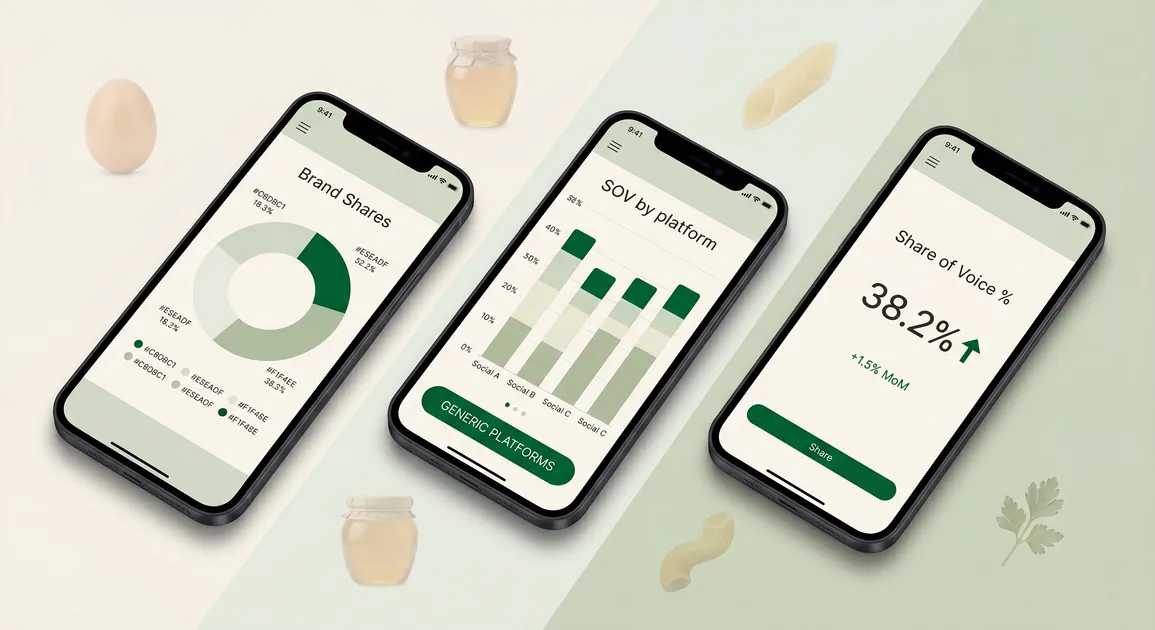
Instagram Reels from food CPG creator campaigns move brand SOV in the food category conversation. Jupiter's share of voice tracking tracks owned vs earned Instagram mentions, category conversation share, and SOV movement relative to competitors continuously throughout the campaign window.
How Jupiter handles Instagram influencer marketing for food CPG
Jupiter is built exclusively for food and beverage CPG brands. Its 1,000+ food creator network is curated specifically for recipe and food lifestyle content, with Instagram Reels average views, save rates, engagement rates, audience geography, and credibility scores for every creator. The 12-signal campaign optimizer produces Instagram-specific creator shortlists matched to the brand's retailer footprint, budget, category, and campaign duration. The brief workflow includes food-CPG-specific fields for recipe format, retailer call-to-action, shoppable comment trigger, and certification mentions. The Instacart attribution infrastructure generates per-creator unique shoppable links and tracks Instacart cart adds per creator and post from the moment content goes live.
The Jupiter AI marketing agent is a 20-tool conversational assistant that handles creator search, brief drafting, campaign analytics, and performance reporting in plain language. Ask it to find Instagram food creators with strong Reels save rates and audiences concentrated in Chicago, pull how the last three Instagram campaigns performed against estimated Reels views, or draft a brief for a new kombucha SKU launching at Sprouts in May.
For a platform comparison covering which Instagram influencer tools actually fit food CPG workflows, our Instagram influencer marketing platforms guide covers the full evaluation framework.
Brands using Jupiter today include Banza, Pete & Gerry's, Nellie's Free Range Eggs, Kettle & Fire, La Tourangelle, Schweid & Sons, Vermont Creamery, and 50+ other food and beverage CPG brands running Instagram campaigns with Instacart attribution built into every campaign natively.
Run Instagram influencer campaigns that actually drive grocery sales.
1,000+ curated recipe creators, Reels performance data, retailer proximity scoring, Instacart attribution, and a 20-tool AI marketing agent built exclusively for food and beverage CPG brands.
FAQs
Quick answers to common questions.
What is Instagram influencer marketing for CPG brands?▼
Instagram influencer marketing for CPG brands is the practice of partnering with food creators on Instagram to promote products through recipe Reels and product placements, drive Instacart shopping list adds through per-creator shoppable links, and build grocery retail demand among audiences who shop at Whole Foods, Kroger, Sprouts, and other retailers. It differs from DTC Instagram influencer marketing because the purchase journey ends at grocery retail rather than a Shopify checkout, which requires different attribution infrastructure, creator selection signals, and brief design.
How much does Instagram influencer marketing cost for food CPG brands?▼
Instagram influencer marketing costs for food CPG brands vary by creator tier. Micro creators (10K to 50K followers) typically charge $400 to $1,500 per Instagram Reel. Mid-tier creators (50K to 250K followers) charge $1,200 to $5,000. Macro creators (250K to 1M followers) charge $4,000 to $15,000. Most food CPG brands running Jupiter campaigns concentrate spend in the mid-tier range (50K to 250K followers) where cost-per-impression efficiency is strongest and audience specificity for grocery-shopping demographics is highest.
How do food CPG brands attribute Instagram Reels to grocery sales?▼
Food CPG brands attribute Instagram Reels to grocery sales through per-creator trackable Instacart links. When a viewer comments on a creator's Reel with a specific keyword, they automatically receive a DM with a unique shoppable Instacart link tied to that creator and post. The resulting Instacart cart adds attribute back to the specific creator and Reel that drove them. This model replaces the DTC affiliate link attribution that does not work for brands selling through grocery retail rather than a brand-controlled checkout.
What metrics matter most for Instagram food CPG influencer campaigns?▼
The metrics that matter most are: average Reels views per post (actual delivered reach, not follower count), Reels save rate (highest-intent pre-purchase signal for recipe content), audience geographic concentration in target retailer markets (determines campaign regional relevance for in-store sell-through), Instacart trackable link clicks and cart adds per creator (direct grocery purchase intent signal), and estimated vs actual Reels views relative to campaign projection (execution quality indicator). Feed engagement rate is a secondary signal and should not drive creator selection for food CPG campaigns.
Should food CPG brands run Instagram or TikTok influencer campaigns?▼
Most food CPG brands should run both. Across Jupiter campaigns, Instagram delivers 73.7% of total impressions and TikTok delivers 26.3%, but the share of category conversation on social is nearly equal (42.8% Instagram vs 40.6% TikTok across tracked food CPG brand mentions). Instagram leads on total delivered impressions and geographic audience measurement. TikTok is growing rapidly for food discovery and produces strong algorithmic amplification for recipe content. Running both from one campaign workflow, with platform-specific creator selection and attribution, is the standard approach for food CPG brands at growth and mid-market scale.
What is the best way to brief Instagram food creators for CPG campaigns?▼
The most effective briefs for Instagram food CPG campaigns specify a recipe concept and ingredient placement (not a product-review format), a retailer-specific call-to-action (naming the specific store where the product is available rather than generic "major retailers" language), a shoppable comment trigger phrase (the keyword viewers comment to receive the Instacart link), any certifications or sourcing story the brand wants highlighted, and a strong hook concept for the first 1.5 seconds of the Reel. Generic key-message briefs produce generic content that underperforms against Instacart conversion targets.
More in Strategy & Guides
More from Strategy & Guides.