Measuring Influencer Marketing ROI for CPG Brands | Instacart Attribution Guide
Most CPG brands measure influencer marketing with impressions and engagement rate. Here's the four-layer attribution framework that connects creator content to actual retail sales, including Instacart.
Trusted by leading CPG brands
















On this page
▼
- The CPG Attribution Problem Nobody Talks About
- The Four Layers of CPG Influencer Marketing Measurement
- Layer 1: Estimated vs. Actual Campaign Performance
- Layer 2: Creator-Level Cost Efficiency
- Layer 3: Trackable Links and UTM Attribution
- Layer 4: Instacart Attribution
- Share of Voice as a Long-Term ROI Signal
- What a Complete CPG Influencer ROI Report Looks Like
Measuring influencer marketing ROI for CPG brands requires a different approach than DTC. Because CPG brands sell through retail — Kroger, Whole Foods, Instacart — there's no checkout pixel you control. The framework that works has four layers: estimated vs. actual campaign performance, creator-level cost efficiency, trackable UTM links, and Instacart shopping list attribution. Each layer gets you closer to connecting a creator post to an actual product sale.
The CPG Attribution Problem Nobody Talks About
DTC brands have it easy. Someone clicks an influencer's link, lands on a Shopify store, and buys. The attribution is clean. The ROI math is straightforward.
CPG brands don't get that luxury.
Your customer sees a recipe video on TikTok, drives to Kroger three days later, and picks your oat milk off the shelf. There's no cookie, no pixel, no checkout flow you control. By the time the sale happens, the creator post that drove it is invisible in your data.
This is why most CPG marketing teams default to vanity metrics: impressions, reach, engagement rate. Numbers that look good in a deck but don't connect to the thing that actually matters, which is product moving off shelves.
Measuring influencer marketing ROI for CPG brands requires a different framework than what DTC brands use. Here's how it works.
The Four Layers of CPG Influencer Marketing Measurement
Think of CPG attribution as a stack. Each layer gets you closer to actual purchase behavior.
Layer 1: Estimated vs. Actual Campaign Performance
Good influencer marketing measurement starts before you spend anything. The right approach is to project expected performance upfront, then measure deviation from that projection.
For each creator in a campaign, estimated impressions are calculated from their average views per post multiplied by the number of scheduled posts. Estimated CPM follows: divide your total budget by estimated impressions, multiply by 1,000. This gives you a pre-spend benchmark to hold the campaign accountable to.
Once posts go live, actual impressions and CPM are tracked per post and rolled up at the campaign level. A campaign running above estimated CPM is underperforming on cost efficiency. One running below it is over-delivering.
This estimated vs. actual comparison is the foundation of influencer marketing ROI. Without it, you're evaluating campaigns in a vacuum.
Layer 2: Creator-Level Cost Efficiency
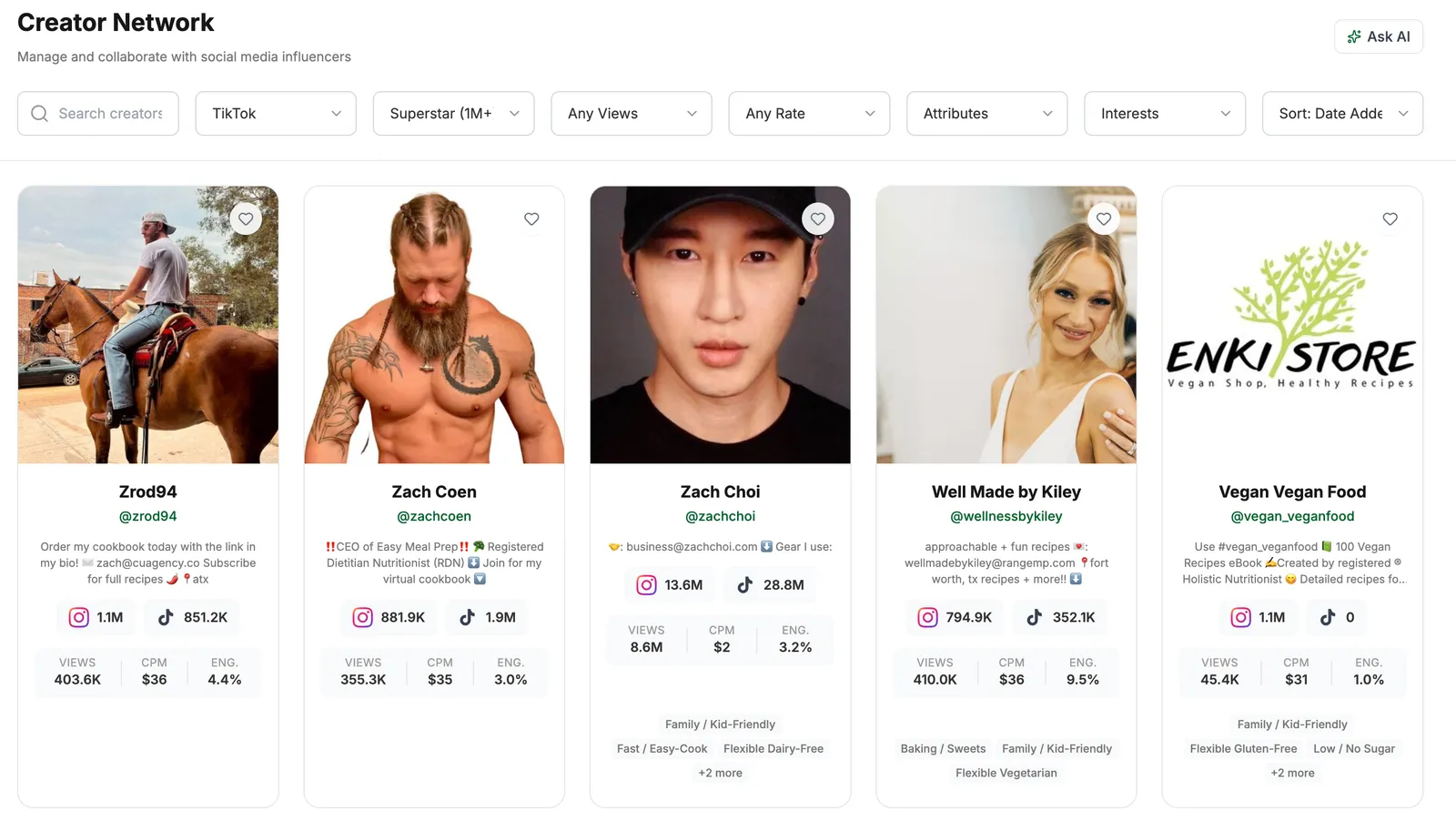
Aggregate campaign numbers hide where your money is actually working. The metric that matters at the creator level is impressions per dollar: total impressions delivered divided by the creator's total cost.
A creator charging $2,000 per post who delivers 150,000 views outperforms a creator charging $800 per post who delivers 40,000 views, even though the second looks cheaper on the surface. Cost efficiency is the number that tells you who to reinvest in.
Pair this with engagement rate. At 4.4% average engagement, a post is generating genuine audience interaction, the kind that actually influences purchase behavior. High impressions with low engagement reaches people who aren't paying attention.
Layer 3: Trackable Links and UTM Attribution
For any campaign that includes a direct response element, a recipe page, a product detail page, or an Instacart link, trackable links close the gap between content and commerce.
Each food creator gets a unique short link. When a follower clicks it, the platform logs the click, captures UTM parameters (source, medium, campaign), and redirects to the destination. Every click ties back to the specific post and creator that drove it.
This gives you a click-through layer that sits between impressions and purchase intent. A creator driving strong impressions but zero link clicks is building awareness. A creator driving clicks is moving people down the funnel.
Layer 4: Instacart Attribution
This is where CPG influencer marketing measurement gets genuinely powerful.
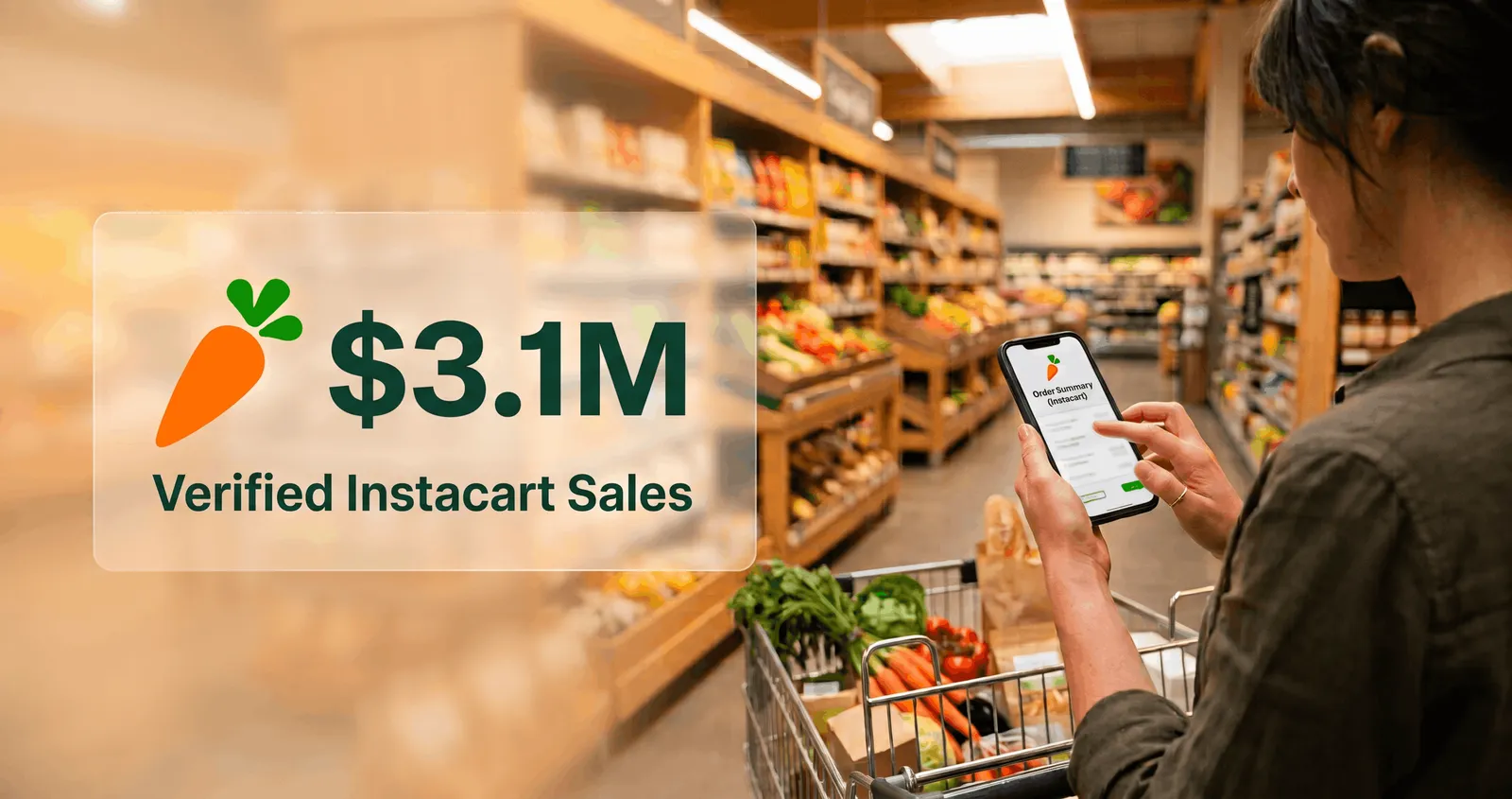
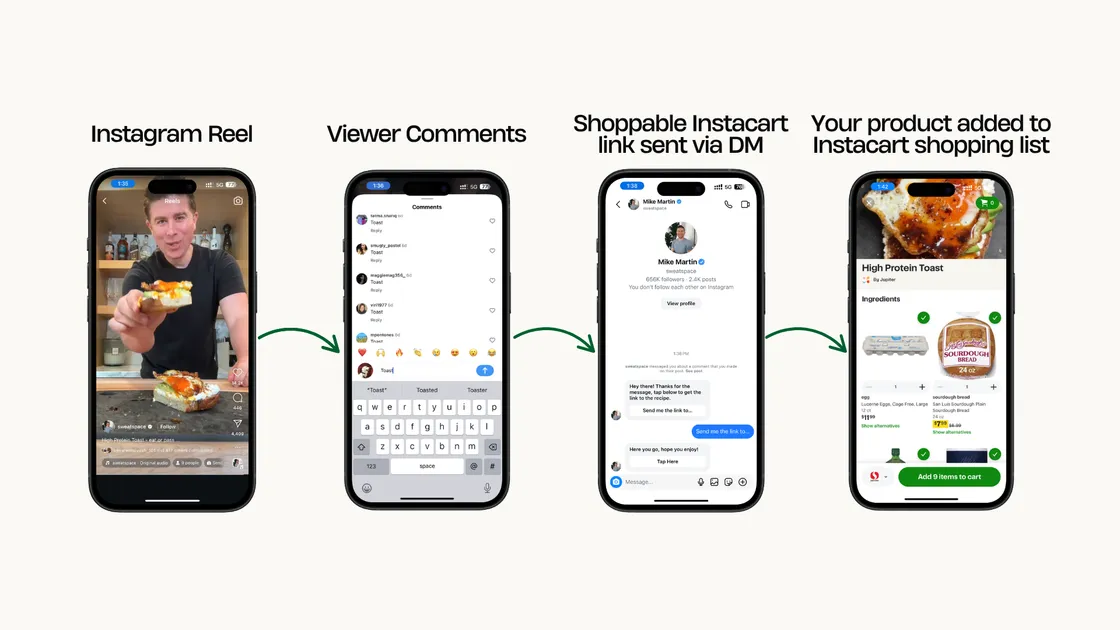
The flow: a creator posts a recipe video featuring your product. In the caption or via DM, they share a shoppable Instacart link. A viewer clicks the link and your product gets added to their Instacart shopping list. Every shopping list add is tracked back to the original creator post.
This is not modeled or estimated data. It is actual consumer purchase intent, measured at the individual post level. A shopping list add on Instacart is the CPG equivalent of an add-to-cart event, the strongest purchase signal available outside of a completed transaction.
GMV estimation from there: shopping list adds multiplied by an estimated checkout conversion rate, multiplied by your product's retail price. It's an approximation, but one grounded in real behavioral data rather than impression proxies.
For brands selling through Instacart, this is the attribution layer that finally answers the question your CFO is actually asking.

See how Jupiter tracks Instacart attribution for food brands.
Jupiter is one of Instacart's fastest growing affiliate partner
See how Jupiter tracks Instacart attributionShare of Voice as a Long-Term ROI Signal
Not every campaign outcome shows up in click or conversion data. Brand awareness campaigns, creator sampling programs, and ambassadorships build equity that accrues over time.
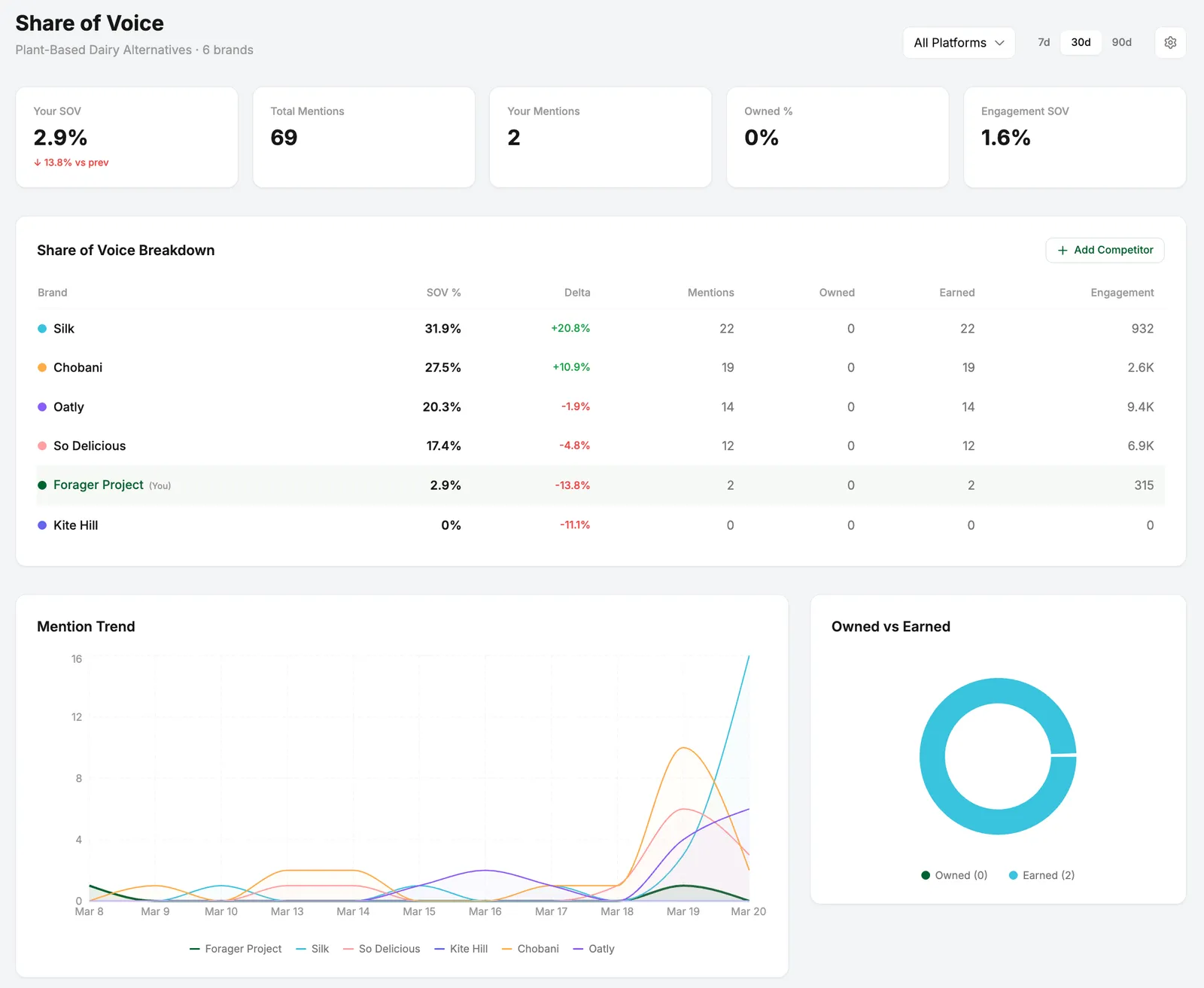
Share of voice, your brand's percentage of total category mentions across Instagram, TikTok, YouTube, and X, is the metric that captures this. An influencer campaign that moves your SOV from 12% to 19% over a quarter is generating real value that won't appear in your trackable link dashboard but will show up in market share over time.
The distinction between owned mentions (content your brand posted) and earned mentions (organic creator and consumer content) matters here. A high earned percentage means your campaign sparked genuine conversation beyond the paid placements, the highest-efficiency outcome in influencer marketing.
What a Complete CPG Influencer ROI Report Looks Like
A full influencer marketing ROI report for a CPG brand has five components:
Estimated vs. actual impressions and CPM
Creator leaderboard by cost efficiency
Top performing posts by impressions and engagement
Instacart attribution: shopping list adds and estimated GMV
Share of voice delta: did the campaign move your category presence?
Most CPG brands are only reporting on the first two. The brands winning on creator marketing are measuring all five.
Measure all five. Not just impressions.
Jupiter is the only influencer marketing platform built for CPG brands that tracks Instacart attribution, creator cost efficiency, and share of voice in one place.
Book a demoFAQs
Quick answers to common questions.
How do CPG brands measure influencer marketing ROI?▼
CPG brands measure influencer marketing ROI through four layers: estimated vs. actual impressions and CPM, creator-level cost efficiency, UTM-tracked link clicks, and Instacart shopping list attribution. Unlike DTC brands that track purchases through checkout pixels, CPG brands sell through grocery retail and need proxy signals that connect social content to purchase intent at the retail level.
What is Instacart attribution for influencer marketing?▼
Instacart attribution for influencer marketing works by assigning each creator a unique shoppable Instacart link. When a viewer comments on a creator's post, they're automatically sent that link via DM. When they click and add the product to their Instacart cart, that shopping list add is tracked back to the specific creator post that generated it. This makes it the strongest purchase-intent signal available to CPG brands — the equivalent of an add-to-cart event in e-commerce.
What is a good engagement rate for food influencer marketing?▼
A good engagement rate for food CPG influencer campaigns is 4% or above. Jupiter campaigns average 4.4% engagement across all creator posts. High impressions paired with low engagement — below 1–2% — typically indicates the audience isn't paying attention, which means purchase intent is low regardless of reach. Engagement rate is most useful when paired with cost efficiency: impressions per dollar, not impressions alone.
How do you calculate influencer marketing CPM for CPG brands?▼
Influencer marketing CPM for CPG brands is calculated by dividing total campaign spend by total impressions delivered, then multiplying by 1,000. The best practice is to calculate estimated CPM before the campaign launches — based on each creator's historical average views — so you have a benchmark to hold actual performance against. A campaign running above estimated CPM is underperforming on cost efficiency.
What is share of voice and why does it matter for CPG influencer marketing?▼
Share of voice is a brand's percentage of total social mentions in its product category across Instagram, TikTok, YouTube, and X. It's the long-term ROI signal for influencer campaigns that don't produce immediate trackable clicks — brand awareness campaigns, ambassador programs, and sampling activations. A campaign that moves your share of voice from 12% to 19% in a quarter is generating real equity that will show up in market share over time, even if it doesn't appear in UTM click data.
What is the difference between owned and earned mentions in CPG influencer marketing?▼
Owned mentions are social posts published directly by the brand through its own channels. Earned mentions are organic posts from creators, consumers, and press who mention the brand without being paid to do so. For CPG brands running influencer programs, a high earned-to-owned ratio means your campaign sparked genuine conversation beyond the paid placements — the highest-efficiency outcome in influencer marketing, because earned reach has no incremental cost.
More in Attribution & Measurement
More from Attribution & Measurement.