Campaign Reporting Becomes a Conversation Instead of a Spreadsheet Exercise
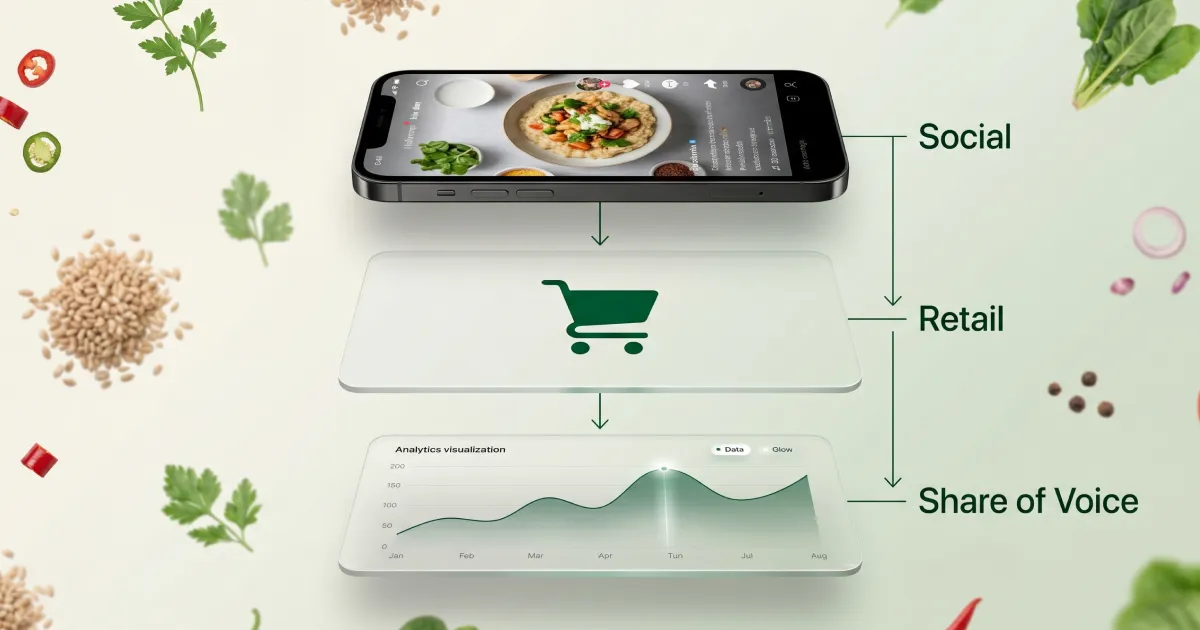
Pulling social data, Instacart attribution, and share of voice into one report used to take an afternoon. Through MCP it takes a single request.

Trusted by leading CPG brands


















End-of-campaign reporting is a task every marketer knows and few enjoy. Pull social performance from one platform, Instacart attribution from another, share-of-voice movement from a third, then reconcile all of it into something a brand stakeholder can read. It is necessary, and it is almost never the best use of a marketer's time.
Through Jupiter's MCP, the reconciliation step largely disappears.
One request replaces four exports
Instead of exporting data from separate dashboards, a marketer can ask directly, inside the same conversation with their AI assistant, for a synthesized answer. Pull the end-of-campaign report for the Q3 launch. Show how the last campaign performed against projections.
Jupiter's Marketing Agent pulls the underlying data and returns it synthesized rather than as four separate files to stitch together. The reporting model itself is covered in how CPG brands track campaign performance.
The real cost of slow reporting is timing, not hours
The bigger issue with manual reporting is not that it is slow. It is that it happens once, at the end, when it is too late to act on most of what the report reveals. When pulling a report takes an afternoon, most CPG teams do it once per campaign cycle, if at all. That is one of the specific costs described in what marketing teams lose by running campaigns by hand.

See campaign health while you can still act on it
Real-time campaign status against projections, creator leaderboards, and cart-add attribution in one view.
When it takes a single request, checking mid-campaign becomes realistic. A marketer can ask how a campaign looks against projections halfway through, catch an underperforming creator early, and reallocate before the campaign closes rather than discovering it in a postmortem.
Report frequency matters more than report depth
Frequency is the variable that actually changes outcomes. A report produced once at the end can only explain what happened. A report available on demand can change what happens next, which is a different function entirely even when the underlying numbers are identical.
Get every campaign signal in a single answer
Social performance, Instacart attribution, creator efficiency, and share of voice, without manual reconciliation.
What the report actually contains
Actual versus projected impressions and CPM, with campaign health at green, yellow, or red against delivery thresholds
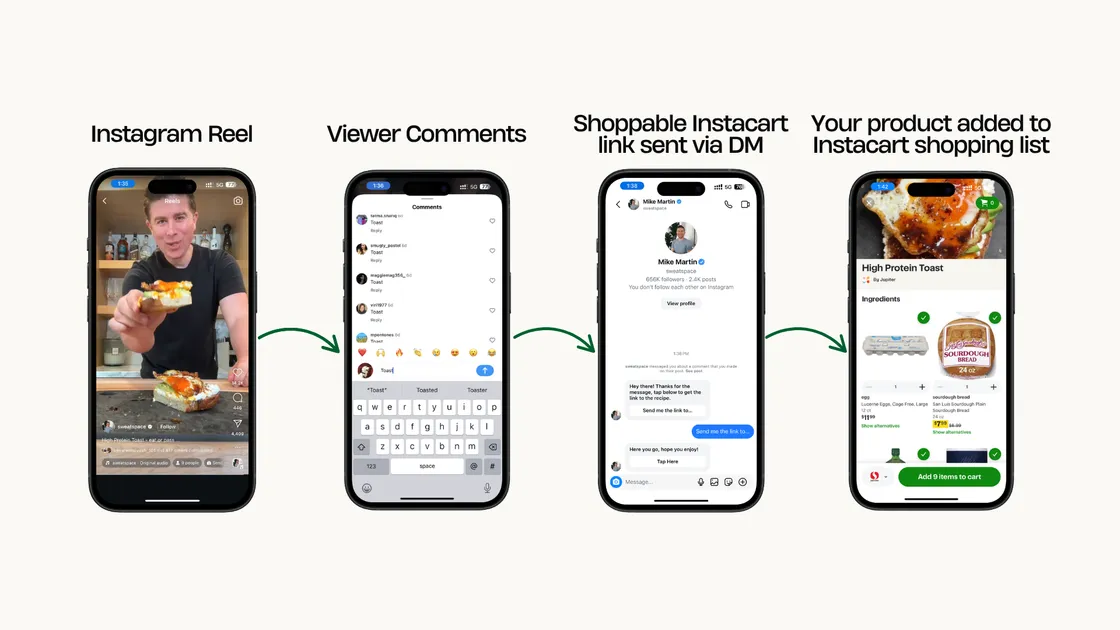
Instacart cart-add attribution tied to specific creators and posts, using the comment-to-cart mechanic
Creator leaderboard ranked by cost efficiency and impressions delivered
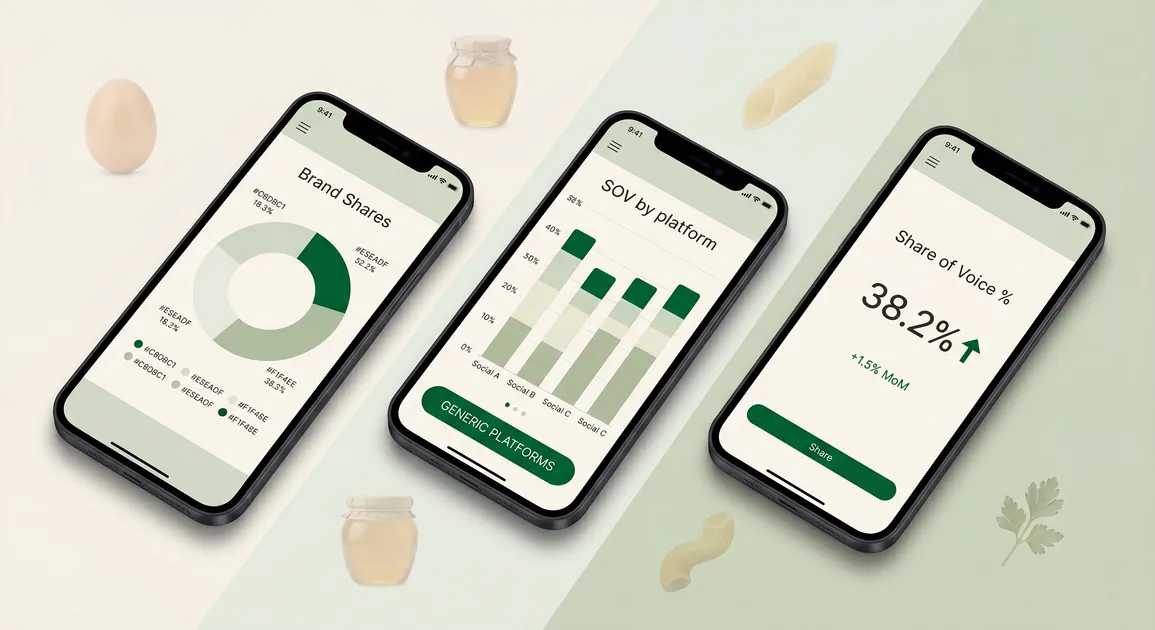
Share-of-voice delta across the campaign period, tracked through continuous SOV monitoring
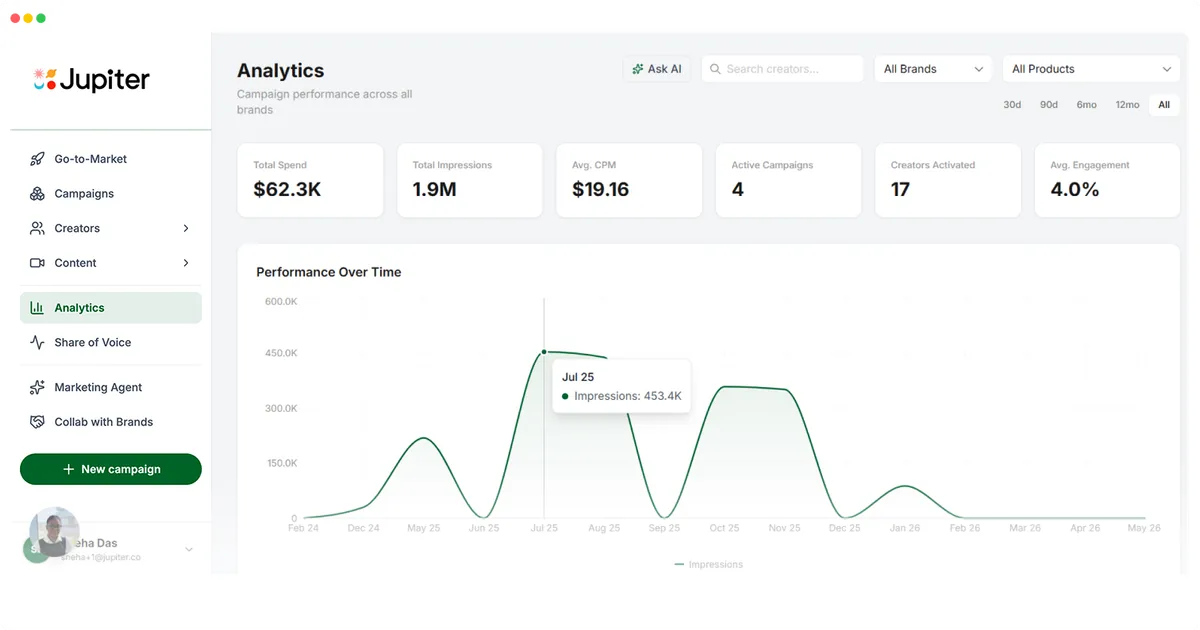
This is the same data available in the analytics dashboard. The MCP removes the requirement to be inside that dashboard, clicking through each view, to reach it.
Consistency is a secondary benefit worth noting. When every report is assembled by hand, small differences in how figures are pulled creep in between cycles, making period-over-period comparison less reliable than it appears.
Faster reporting only helps if you report the right metrics
A report is only as useful as the benchmark behind it. Impressions alone do not answer whether a campaign moved product, which is why shelf velocity rather than impressions is the KPI that actually matters for a food brand. Speeding up a report built on the wrong metrics just produces the wrong answer faster.
Reporting shifts from postmortem to course correction
Reporting stops being an end-of-cycle obligation and becomes something a marketer checks as casually as asking a question. That changes campaign management from a look-back exercise into something closer to continuous course correction, where budget moves toward what is working while the campaign is still running.
Stop building campaign reports by hand
See how Jupiter surfaces campaign performance, attribution, and creator efficiency without the spreadsheet step.
FAQs
Quick answers to common questions.
What goes into an end-of-campaign report for a CPG influencer campaign?▼
A complete report covers actual versus projected impressions and CPM, campaign health status, Instacart cart-add attribution tied to specific creators, creator leaderboard rankings by cost efficiency, and share-of-voice movement across the campaign period. Impressions alone do not answer whether product moved, so the retail and commerce signals matter most. Reporting on all five together is what makes reinvestment decisions possible.
How much time or cost does automated campaign reporting actually save?▼
Manual reporting typically means pulling exports from three or four platforms and reconciling them in a spreadsheet, which is why most teams do it once per campaign cycle at best. Automating that removes the reconciliation labor rather than the analysis itself. The larger saving is strategic: mid-campaign checks become realistic, so budget can be reallocated before a campaign ends.
Do I need to export data from multiple platforms to build this report?▼
No. That is the specific problem this solves. The MCP pulls from all underlying data sources and returns a synthesized answer in a single request rather than requiring separate exports.
Can I check campaign performance before the campaign ends?▼
Yes. Because the request is conversational rather than a manual export process, checking mid-campaign performance becomes realistic in a way a full manual reporting process usually is not.
Is this different from the Jupiter analytics dashboard?▼
It is the same underlying data. The MCP makes it accessible through a conversational request instead of requiring a marketer to be inside the dashboard clicking through separate views.
Which metrics should a CPG brand focus on in a campaign report?▼
Cart adds, cost efficiency per creator, and performance against pre-campaign projections tend to be more actionable than impressions or engagement rate. Those metrics connect more directly to whether product actually moved off shelf.
Related Posts
Browse more from our blog.