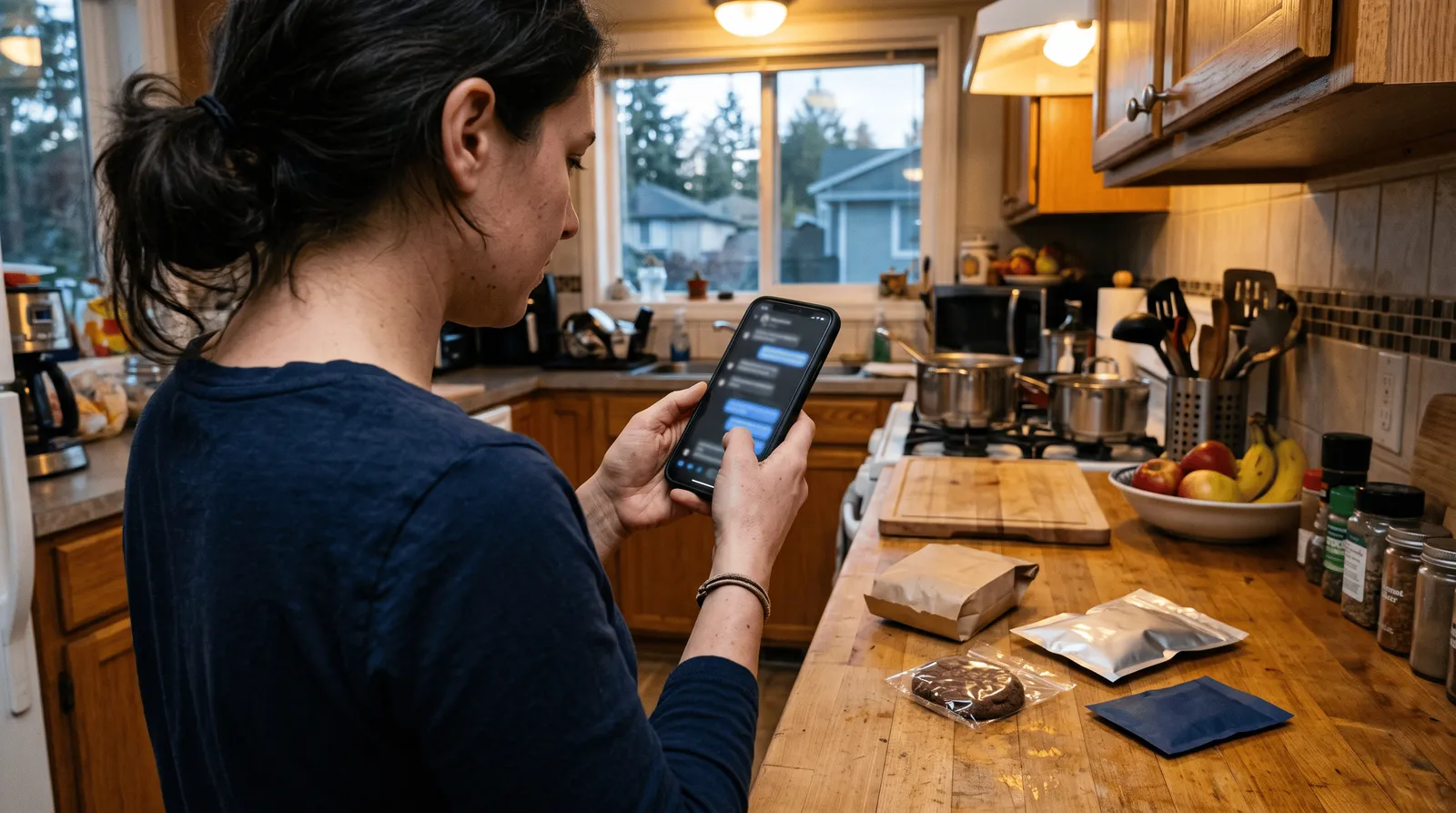
How One Marketer Can Run a Full Influencer Program With AI
A single marketer with the right AI-native platform can run a full influencer program, from sourcing to reporting, without adding headcount or an agency.
Trusted by leading CPG brands












Influencer marketing cost isn't just what a brand pays creators, it's the total cost of running the program, including the headcount or agency fees required to execute it. For a lean CPG marketing team, the most expensive part of influencer marketing is often not the media spend at all. It's the assumption that running a real program requires either a dedicated hire or an outside agency.
That assumption is increasingly outdated. An AI-native platform can compress most of the execution work that used to require a team into tools one marketer can operate directly, sourcing, briefing, budget allocation, content review, and reporting, all from a single interface rather than coordinated across multiple people or vendors.
What the full lifecycle looks like end to end
Sourcing and matching
Instead of manually researching creators, one marketer describes a campaign in plain language to an AI agent, which pulls matched creators from a vetted network scored against content fit, audience alignment, and brand history. This step, which traditionally required a dedicated coordinator or agency team, becomes a single conversation.
Briefing
The same AI agent can draft a full campaign brief from that plain-language description, or extract one automatically from an uploaded brand document. What used to require a separate briefing step and a template gets folded into the sourcing conversation itself.
Budget allocation
A budget-constrained optimizer decides how to distribute spend across the matched creator shortlist to maximize projected impressions, removing the manual spreadsheet math that would otherwise require someone to model allocation scenarios by hand.
Content review
As creators submit content, one marketer can review and approve or reject submissions directly from a queue, rather than managing a scattered set of email threads or shared drive folders.
Reporting
Live analytics show actual performance against estimated performance without requiring a separate reporting build. A single dashboard replaces what used to be a recurring manual task.

See the full campaign lifecycle in one interface
Sourcing, briefing, budget allocation, review, and reporting, without switching tools or adding headcount.
Why this changes the cost conversation
When a marketing team evaluates the cost of running influencer marketing, the comparison usually lands on media spend versus agency fees. That comparison misses the actual lever: how much of the total cost is headcount or agency labor required to execute a program manually, independent of what's paid to creators. A stack that lets one marketer run the full lifecycle removes that labor cost from the equation entirely, which changes what "affordable" influencer marketing actually looks like for a lean team, regardless of media budget size.
This doesn't mean influencer marketing becomes free. Creator rates and media costs still apply. What changes is that a brand no longer needs to add a coordinator, a second marketing hire, or an agency retainer just to execute what the AI-native stack can handle directly.
What this doesn't replace
Strategy still requires a human. Deciding which campaigns to run, what creative direction to pursue, which retail moments to prioritize, and how a campaign fits into the broader marketing calendar are judgment calls an AI agent can support with data but shouldn't make unsupervised. The one-marketer stack removes execution labor, not strategic decision-making. A marketer using this stack still needs to know what a good campaign looks like for their brand, the platform makes it possible to actually execute that vision without a team behind them.
Running influencer marketing solo and feeling stretched thin?
See how one marketer can run sourcing, briefing, and reporting from a single platform.
A realistic week for a one-marketer program
A useful way to picture this: on Monday, a marketer describes a new campaign to the AI agent and reviews the AI-drafted brief and matched creator shortlist, adjusting as needed, roughly an hour of work instead of several days. By Wednesday, the optimizer has surfaced an estimated impressions and CPM projection, and the marketer approves the budget allocation. Through the following two weeks, content submissions come in through the review queue, taking minutes per submission rather than a scattered email thread. Throughout, live analytics show actual performance, so if something's underperforming, the marketer sees it in week one rather than in a post-campaign report. None of this requires a second hire. It requires a platform built to handle the execution layer directly.
How Jupiter handles this for food CPG brands
Jupiter is built so that a single marketer at a food or beverage CPG brand can run campaign creation, content review, and analytics from one platform, with the AI agent handling sourcing and briefing and the 12-signal optimizer handling budget allocation. Brands like Bonafide Provisions and Schweid & Sons run full campaign lifecycles this way, without a dedicated influencer marketing hire or an outside agency managing execution on their behalf.
See what your team can run without adding headcount
Jupiter's full campaign lifecycle runs from one platform, built for lean CPG marketing teams.
FAQs
Quick answers to common questions.
Can one marketer really run a full influencer marketing program alone?▼
Yes, when the execution steps, sourcing, briefing, budget allocation, and reporting, are handled by an AI-native platform rather than manually, one marketer can manage a full program without a dedicated team or agency support for execution.
Does this replace the need for marketing strategy or creative direction?▼
No. AI-native platforms handle execution labor, not strategic decisions like campaign goals, creative direction, or which retail moments to prioritize. Those decisions still require a marketer's judgment.
What is influencer marketing cost really made up of?▼
Total influencer marketing cost includes both creator/media spend and the labor cost of executing the program, whether that labor is an internal hire, an agency, or software. Reducing the labor component changes total program cost independent of media spend.
How does an AI marketing agent help with campaign briefing?▼
An AI agent can draft a full campaign brief from a plain-language description, or extract structured brief fields automatically from an uploaded PDF or Word document, removing the need to build a brief from a blank template.
Is a one-marketer influencer stack only useful for small brands?▼
It's most immediately valuable for lean teams without dedicated influencer marketing headcount, but larger teams also use the same execution efficiency to run more campaigns without proportionally growing staff.
What tasks still require a dedicated marketer instead of just the software?▼
Reviewing AI-generated shortlists and briefs for brand fit, approving budget allocations, making creative and strategic calls, and reviewing submitted content for brand alignment all still require a marketer's judgment.
More in AI Marketing & Automation
More from AI Marketing & Automation.