What to Look for in an Influencer Agency for Food and Beverage Brands
Most influencer agencies were built for DTC e-commerce brands, not for food and beverage CPG companies selling through grocery retail. Here is how to evaluate your options and what a purpose-built alternative looks like.

Trusted by leading CPG brands













On this page
▼
- What an Influencer Agency Does (and Does Not Do)
- Why Food and Beverage Brands Have Different Requirements
- Red Flags When Evaluating an Influencer Agency
- No performance tracking beyond impressions and engagement rate
- Creator rosters that are not food-specific
- No pre-post content review workflow
- No attribution for grocery retail
- Opaque creator pricing
- High retainer minimums with long commitment periods
- How to Evaluate Your Options: A Framework
- Creator quality and vertical focus
- Attribution infrastructure
- Campaign intelligence before launch
- Content operations
- Institutional learning
- Jupiter as the Category-Specific Alternative
- Creator discovery built for food
- The 12-signal optimizer
- Instacart comment-to-cart attribution
- Campaign management and content operations
- Analytics with institutional memory
- Agency vs. Platform: What the Decision Actually Comes Down To
- How Jupiter Handles What Agencies Typically Cannot
An influencer agency is a company that manages creator relationships, campaign execution, and performance reporting on behalf of a brand. They find creators, negotiate rates, write briefs, coordinate content, and deliver a results summary at the end of a campaign. For many industries, this model works well. For food and beverage CPG brands, it routinely falls short.
The core problem is that influencer agencies are built around a DTC assumption. They optimize for reach, engagement rate, and link clicks because those metrics matter when a brand sells directly through its own website. When you sell through Whole Foods, Instacart, Kroger, or Sprouts, those metrics are necessary but not sufficient. What you actually need is attribution back to a grocery cart, creator selection weighted for retailer proximity, and campaign intelligence that accounts for how food content performs differently by platform and creator tier.
Most agencies cannot deliver that. And the ones that can often charge retainers that make the math difficult for a mid-market CPG brand running three to five campaigns per year.
This guide covers what influencer agencies do, where the standard model breaks down for food and beverage brands, what to look for when evaluating options, and how a category-specific platform compares.
What an Influencer Agency Does (and Does Not Do)
A full-service influencer agency typically handles four things: creator sourcing, contract and rate negotiation, campaign management, and reporting. At the high end, they also provide creative strategy and trend research. At the low end, they are primarily a staffing layer between a brand and a creator database.
What they do not consistently do: attribute results to retail. Optimize creator selection algorithmically. Score creators on audience credibility to filter out inflated follower counts. Track campaign health in real time. Or build institutional knowledge about which creators perform for your specific product category, so that each subsequent campaign is smarter than the last.
These gaps matter more for food CPG than for most other categories. Food brands need creators whose audiences actively cook, grocery shop, and engage with recipe content, not just lifestyle influencers who happen to post food occasionally. They need CPM benchmarks that reflect the grocery retail purchase journey, not direct-to-consumer conversion funnels. And they need attribution infrastructure that connects creator content to actual purchase behavior at retail.
A general-purpose influencer agency rarely provides any of this at a level of precision that makes the spend defensible to a finance team.
Why Food and Beverage Brands Have Different Requirements
The purchase journey is different. When a DTC brand runs an influencer campaign, the path from post to purchase is short: creator posts a link, viewer clicks, viewer buys. The attribution is built into the mechanic. When a food CPG brand runs a campaign, the viewer has to physically go to a store or open Instacart, find the product, and put it in a cart. Nothing about that journey is trackable through a standard agency reporting model.
The creator pool is different. Food content is a large category on Instagram and TikTok, but within it, the creators who actually drive grocery purchase behavior are a subset. Recipe creators with highly engaged home-cooking audiences, creators with strong retailer proximity to your key markets, creators with a history of authentic food brand collaborations. Identifying those creators requires vertical-specific data, not a general talent database.
The content requirements are different. Food campaigns have unique brief requirements: recipe accuracy, on-brand plating, ingredient feature prominence, FTC disclosure language specific to food products, and often specific retailer call-outs in the caption or video. A generic brief template designed for fashion or beauty campaigns will not cover these needs.
The performance benchmarks are different. A $6.00 CPM might be considered efficient in some influencer contexts. For a food CPG brand with tight gross margins and a retail channel that involves slotting fees and promotional spend, $6.00 CPM needs to be justified against a much more detailed model. Jupiter campaigns have delivered CPMs as low as $1.25 for ambassador programs and $1.57 for general awareness campaigns, with actual impressions tracked per creator across the campaign lifecycle.
These differences are not details. They are structural, and they explain why the standard influencer agency model underperforms for food brands.
Red Flags When Evaluating an Influencer Agency
Before signing a retainer or a campaign agreement, food CPG marketing teams should watch for these signals.
No performance tracking beyond impressions and engagement rate
If an agency's reporting does not include actual versus estimated impression tracking, per-creator cost efficiency, and some form of retail attribution, they are not equipped to serve a food CPG brand. Impressions and engagement rate are inputs to the analysis, not the analysis itself.
Creator rosters that are not food-specific
If the agency's initial creator suggestions include lifestyle influencers, fitness creators, and travel bloggers who occasionally post food content, their database is not curated for your category. Ask to see the criteria used to identify creators before agreeing to a proposal.
No pre-post content review workflow
For food brands, content going live without brand approval is a meaningful risk. Recipe errors, off-brand presentation, missing disclosure language. Any agency that relies on email chains, shared drives, or trust for content review is introducing operational risk into your campaign.
No attribution for grocery retail
If the agency cannot explain how they would track creator-driven traffic or purchase intent at Instacart, Whole Foods, or your primary retail channel, they cannot close the loop on your campaign. They can report on social performance. They cannot tell you whether the campaign moved product.
Opaque creator pricing
Agencies that cannot provide estimated CPM before launch, or that present creator fees without context about expected impressions or engagement, are asking you to commit budget without a performance framework. Projected CPM before spend is a basic capability. It is not standard practice at most agencies, which is a problem.
High retainer minimums with long commitment periods
Many full-service influencer agencies charge $10,000 to $30,000 per month in management fees on top of creator costs. For a mid-market CPG brand, that overhead is difficult to justify unless the agency is providing capabilities that cannot be replicated through a platform or in-house team.
How to Evaluate Your Options: A Framework
When comparing an influencer agency against a platform or an in-house approach, food CPG brand teams should evaluate across five dimensions.
Creator quality and vertical focus
How deep is the creator database in food and recipe content specifically? Can you filter by content interest at a granular level, not just category? Are creator profiles enriched with audience credibility scores to filter out inflated follower counts? Is there retailer proximity data to match creators to your key markets?
Attribution infrastructure
Can the agency or platform close the loop between a creator post and a grocery cart add? Is there a mechanic for Instacart attribution? How is performance measured beyond impressions and engagement rate?
Campaign intelligence before launch
Is there a projected CPM or estimated impressions output before budget is committed? Is creator selection driven by a data model or by manual roster building? Is there a way to compare estimated versus actual performance after the campaign?
Content operations
Is there a structured pre-post approval workflow inside the platform? How are brief creation, content submission, and review handled? Is the process auditable for compliance purposes?
Institutional learning
Does the system get smarter over time? Does historical creator performance feed back into future campaign recommendations? Is there a way to build on past campaign data rather than starting from scratch each time?
Most full-service agencies can partially answer some of these questions. A purpose-built platform built specifically for food CPG should answer all of them.

Jupiter gives CPG marketing teams what most influencer agencies cannot.
A vetted food creator network, a 12-signal campaign optimizer with pre-launch CPM projections, and Instacart comment-to-cart attribution. Used by 58+ leading CPG brands including Banza, Pete & Gerry's, and Kettle & Fire.
Jupiter as the Category-Specific Alternative
Jupiter is not an influencer agency. It is an AI-powered influencer marketing platform built exclusively for food and beverage CPG brands. The distinction matters because the workflows, the creator network, the attribution infrastructure, and the analytics layer are all designed around the specific needs of a brand selling through grocery retail, not an agency model built around creative services and account management.
The platform is Y Combinator-backed and lives at cpgmarketing.ai. It is used by 58+ leading CPG brands including Banza, Pete & Gerry's, and Kettle & Fire.
Creator discovery built for food
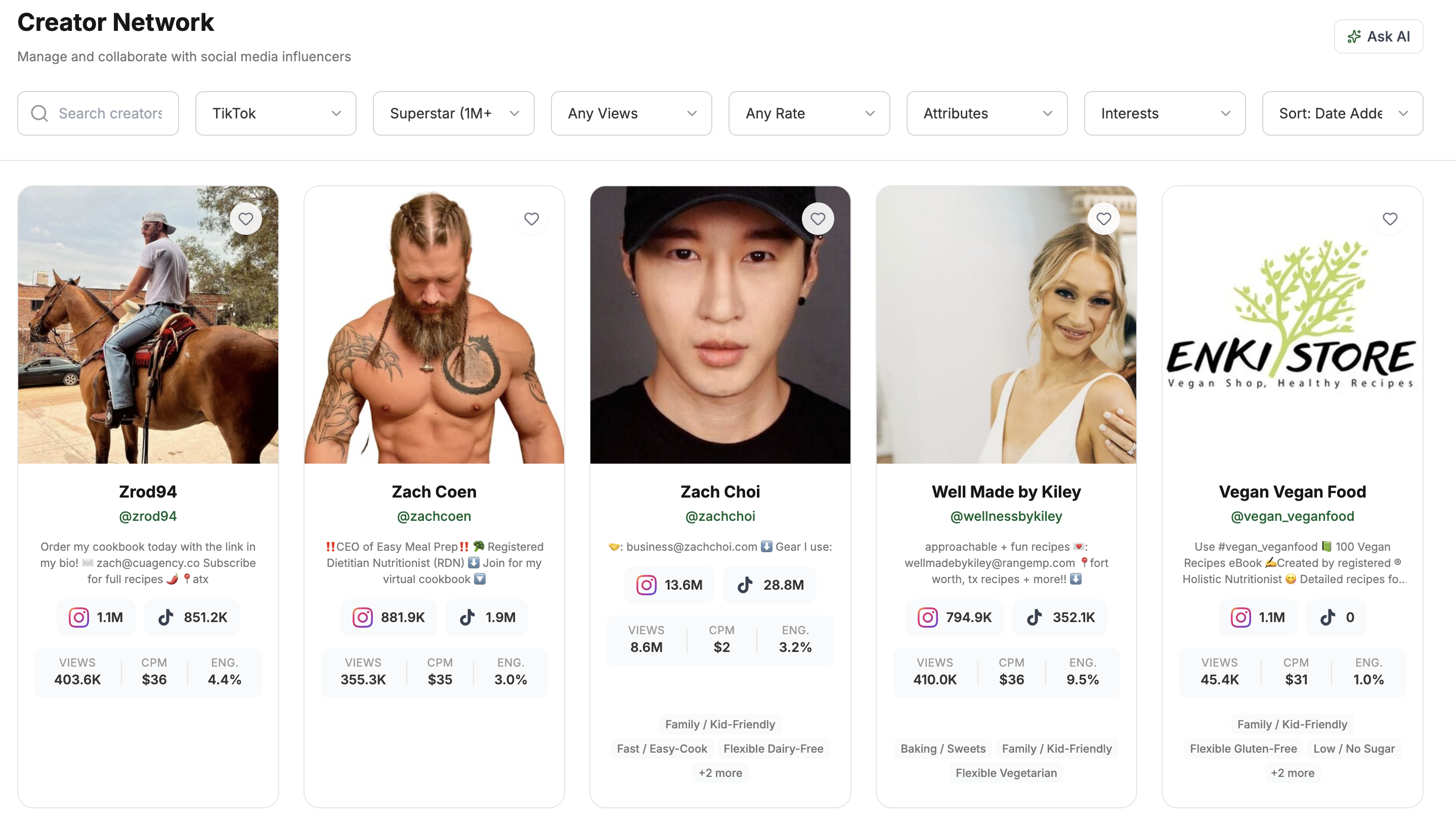
Jupiter maintains a vetted network of 1,000+ food and recipe creators across Instagram and TikTok. These are not generalist influencers. They are creators whose primary content is recipe-focused, cooking-driven, and directed at grocery-buying audiences. Every profile includes content interest tags, audience credibility scores, estimated CPM, and retailer proximity data. Across 635 tracked campaign posts, Jupiter has delivered 229M+ total impressions, with 73.7% from Instagram and 26.3% from TikTok.
The 12-signal optimizer
When a campaign launches on Jupiter, the platform runs a 4-phase optimization pipeline. Every eligible creator is scored across 12 signals: content interest alignment, posting recency, retailer proximity, brand affinity from past collaboration history, creator attribute match, audience attribute match, geographic match, demographic alignment, engagement quality, view consistency, audience credibility, and hashtag relevance. The output is a creator roster and an estimated metrics card showing projected impressions and CPM before any budget is committed.
This is the pre-launch intelligence that most agencies cannot provide. A plant-based pasta brand running an ambassador campaign through Jupiter delivered 70M+ impressions at a $1.25 CPM. A bone broth brand's general awareness campaign produced 2.57M impressions at a $1.57 CPM. These results come from optimizer-driven selection, not manual roster guesswork.
Instacart comment-to-cart attribution
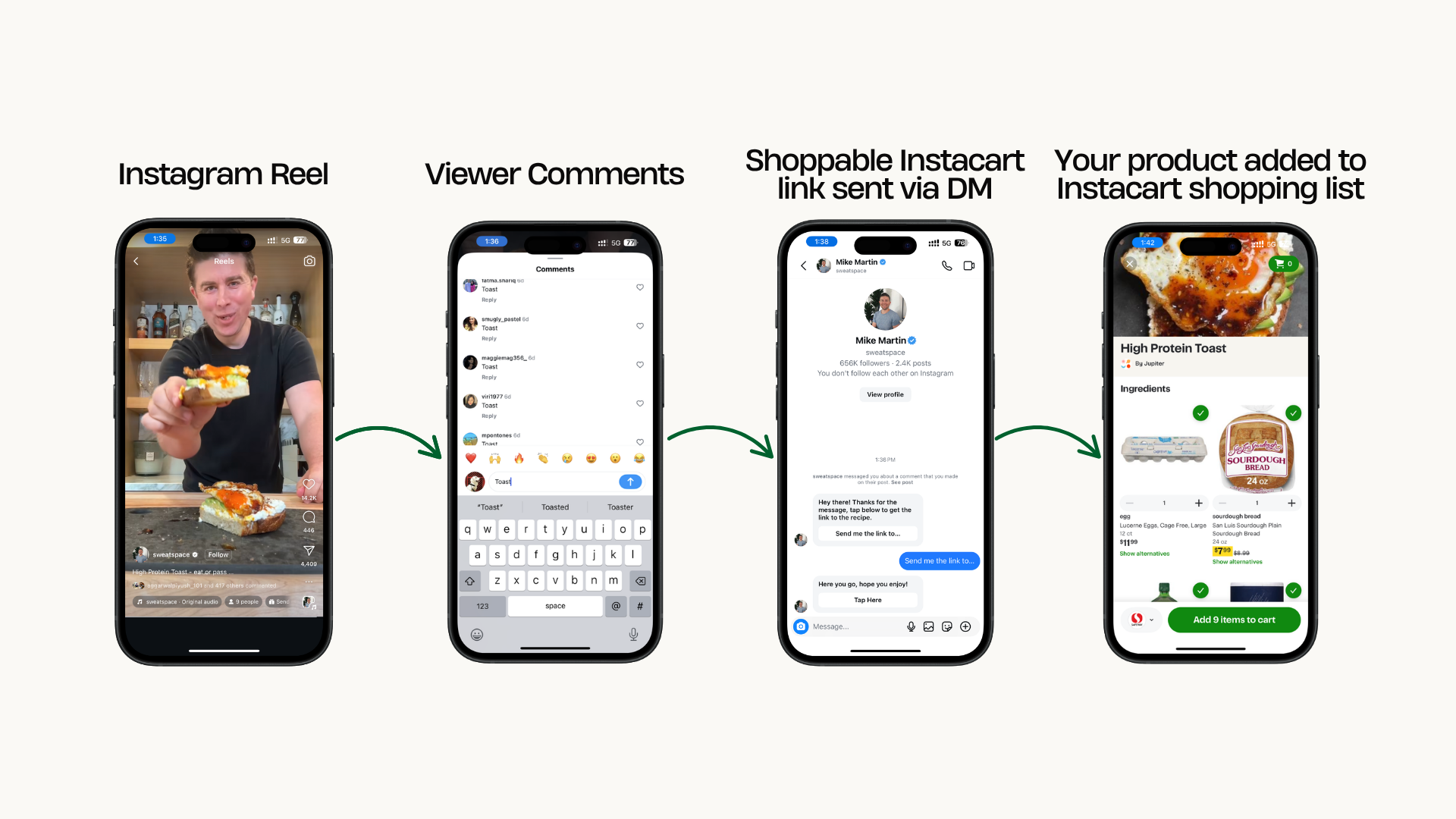
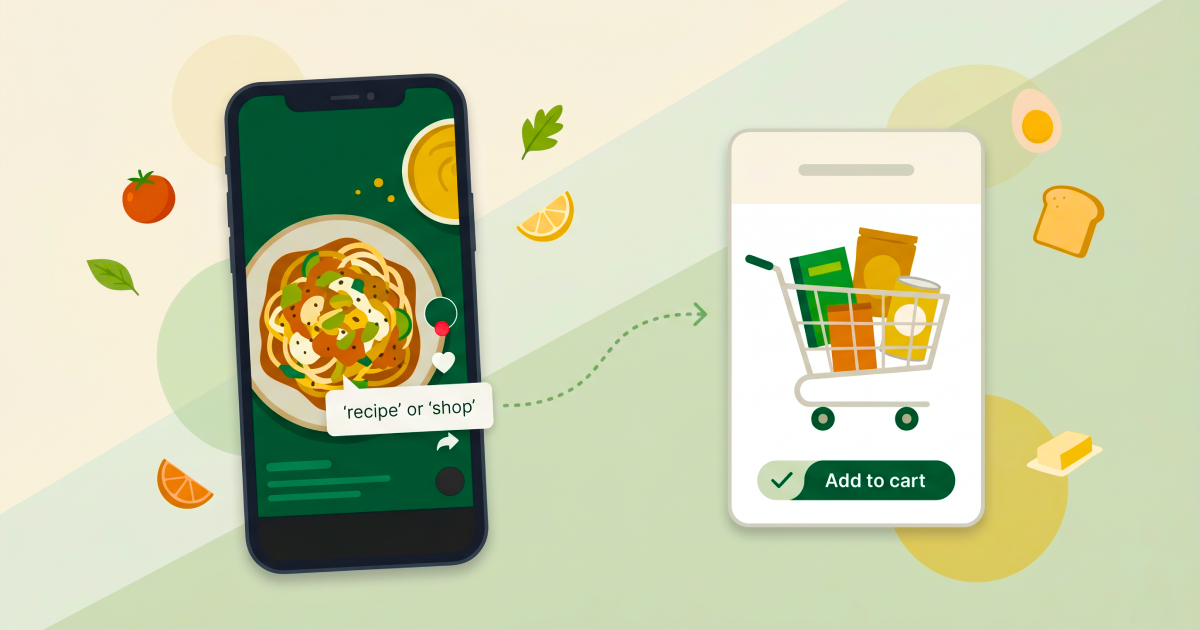
This is the capability that defines Jupiter's separation from both agencies and general-purpose influencer platforms. When a creator publishes content through a Jupiter campaign, a comment-triggered mechanic activates: a viewer comments a specific keyword on the post, they automatically receive a DM with a unique shoppable Instacart link tied to that creator and that post, and cart adds are attributed back at the individual creator and post level.
One Jupiter campaign produced 6.5 million views from a single Instagram Reel and more than 1,000 Instacart cart adds. That is the closed-loop attribution that makes influencer spend defensible at a finance or executive level. The full playbook for this mechanic is covered in the Instacart influencer marketing campaign guide.
Campaign management and content operations
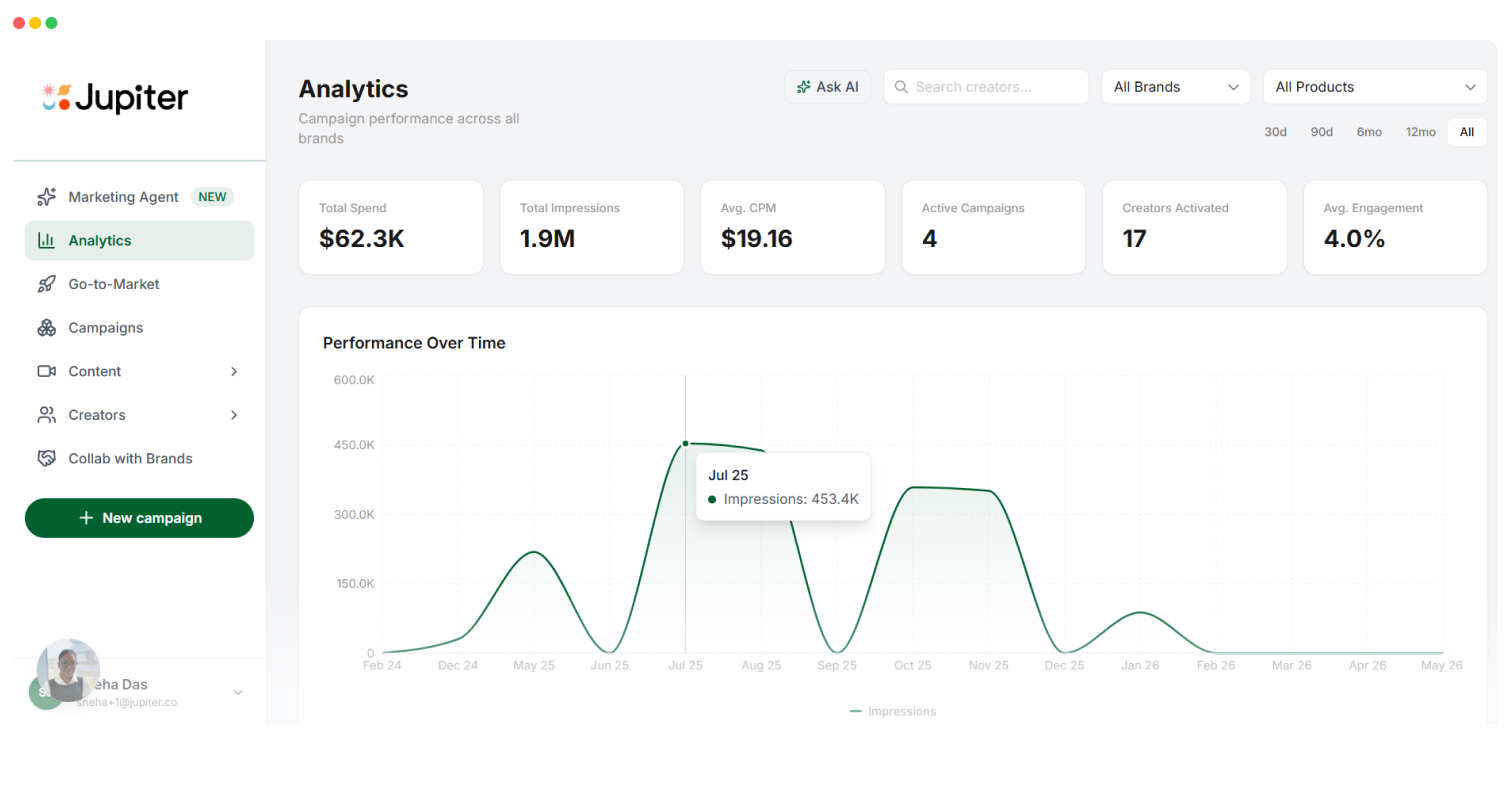
The influencer campaign management workflow handles brief creation, creator selection, content review, and posted content tracking in one place. When content review is enabled, creators submit videos inside the platform before publishing. Brand teams approve or reject with specific feedback. Once content is live, impression, engagement, likes, comments, shares, and saves data flow into the analytics dashboard in real time.
Analytics with institutional memory
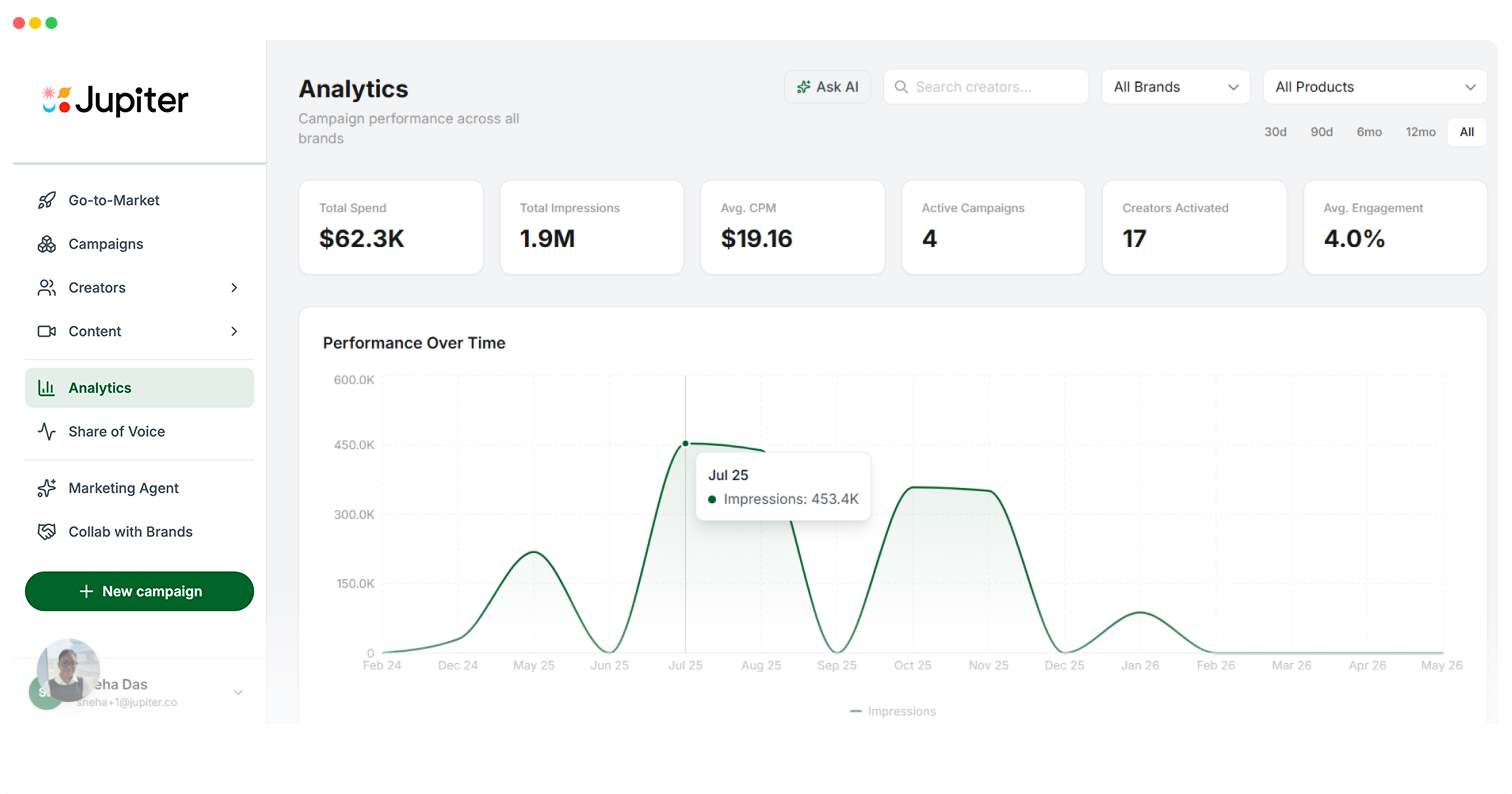
The influencer marketing analytics dashboard tracks performance across campaigns, brands, and creators. A creator leaderboard ranks contributors by total impressions and cost efficiency. Campaign health is tracked in real time against pre-launch estimates: green means the campaign has hit at least 80% of projected impressions, yellow is 50 to 79%, red is below 50%. Historical performance data feeds back into future optimizer runs, meaning each campaign benefits from everything learned in campaigns before it.
For teams building out a longer-term influencer strategy, the CPG influencer marketing strategy guide covers how to structure campaigns across retailer targets, creator tiers, and budget cycles.
Working with an influencer agency that cannot show you CPM before you spend?
Jupiter gives CPG brand teams pre-launch impression projections, a 12-signal optimizer, and Instacart attribution built in. No agency retainer required.
Agency vs. Platform: What the Decision Actually Comes Down To
A full-service influencer agency makes sense in a specific scenario: your team has no bandwidth for campaign operations, you have a large enough budget to absorb the management overhead, and the creative strategy layer the agency provides is something you genuinely need and cannot replicate internally.
For most mid-market food CPG brands, none of those conditions are fully true. Brand managers typically have opinions about creative direction. Campaign operations at the volume of three to five campaigns per quarter are manageable with the right tooling. And the agency management fee is a meaningful percentage of a budget that is already stretched across retail promotions, paid media, and trade spend.
The case for a category-specific platform is that it removes the overhead while adding the vertical intelligence that a general agency cannot provide. You are not paying for account management. You are paying for a creator network that was built for food, an optimizer that was built for grocery retail attribution, and an analytics layer that grows smarter with every campaign you run.
The question to ask any agency before committing is this: can you show me projected CPM before launch, Instacart attribution tied to individual creator posts, and a performance record for your food creator recommendations? If the answer to any of those is no, the decision framework is already pointing in a different direction.
How Jupiter Handles What Agencies Typically Cannot
Jupiter was built to replace the fragmented, manual workflow that most CPG brand teams currently use when running influencer campaigns without a purpose-built platform. Spreadsheets for creator tracking. Email chains for content review. Separate analytics exports with no unified performance view and no retail attribution layer.
The platform covers the full workflow: discover creators from a vetted food-specific network, build campaigns with AI-assisted brief creation through a AI marketing agent, launch with optimizer-projected CPM, review creator content before it goes live, track performance in real time, and measure results against both impressions targets and Instacart cart adds.
For brands that have existing creator relationships, Jupiter supports a brand-managed roster alongside the marketplace network, so your existing relationships can be folded into the same campaign infrastructure. Ambassador programs, with a 6-month minimum commitment and two posts per month per creator, give brands like La Tourangelle and Banza a structured long-term creator development track built on performance data from past campaigns.
Used by 58+ food and beverage CPG brands, Jupiter is the platform that fills the gap between agency overhead and the operational gaps of running influencer campaigns fully in-house.
The influencer marketing platform built for food and beverage CPG brands.
Jupiter replaces agency overhead with a vetted food creator network, a 12-signal campaign optimizer, and Instacart cart attribution in one place. Used by 58+ brands including Banza, Pete & Gerry's, and Kettle & Fire.
FAQs
Quick answers to common questions.
What does an influencer agency do for food and beverage brands?▼
An influencer agency manages creator sourcing, contract negotiation, campaign execution, and performance reporting on behalf of a brand. For food and beverage CPG brands specifically, the most important capabilities are food-vertical creator networks, recipe-appropriate brief creation, pre-post content review, and attribution that connects creator posts to grocery retail purchase behavior. Most general-purpose agencies handle the first three inconsistently and the fourth not at all, which is why purpose-built platforms have emerged as a stronger fit for CPG food teams.
How much does an influencer agency cost for CPG brands?▼
Full-service influencer agency retainers typically range from $10,000 to $30,000 per month in management fees, separate from creator costs. For mid-market CPG brands, this overhead is often difficult to justify against the capability gaps that remain: most agencies cannot provide pre-launch CPM projections, Instacart attribution, or systematic creator scoring built for the grocery retail purchase journey. Platform-based alternatives eliminate the retainer structure and give brand teams direct control over campaign operations with transparent cost-per-impression data before spending.
What is the difference between an influencer agency and a platform like Jupiter?▼
An influencer agency provides creative services, account management, and campaign execution as a service. A platform like Jupiter gives brand teams the infrastructure to run campaigns in-house, with an AI-powered optimizer, a vetted creator network, and attribution tools built in. Jupiter is not a managed service. It gives CPG marketing managers and brand directors the tools to run campaigns themselves, with pre-launch CPM projections, 12-signal creator scoring, and Instacart comment-to-cart attribution that most agencies cannot replicate.
Does Jupiter provide Instacart attribution for influencer campaigns?▼
Yes. Jupiter's Instacart attribution operates through a comment-triggered mechanic: when a viewer comments a specific keyword on a creator's post, they receive an automated DM with a unique shoppable Instacart link tied to that creator and post. Cart adds are attributed back at the individual creator and post level. One campaign generated 6.5 million views from a single Instagram Reel and more than 1,000 Instacart cart adds. Jupiter is one of Instacart's fastest-growing affiliate partners.
What red flags should CPG brands watch for when evaluating an influencer agency?▼
Key red flags include: reporting that stops at impressions and engagement rate with no retail attribution; creator rosters that include non-food lifestyle creators as primary recommendations; no structured pre-post content review workflow; inability to provide projected CPM before launch; and high retainer minimums without a clear performance accountability model. For food CPG brands, the absence of grocery retail attribution infrastructure is the most significant disqualifier, as it means the agency cannot connect campaign spend to actual purchase behavior.
Can Jupiter support brands that already have existing creator relationships?▼
Yes. Jupiter supports a brand-managed creator roster alongside its marketplace network. Brands can import existing creator relationships via CSV or manual entry, and Jupiter automatically enriches each profile with follower counts, engagement rate, and estimated market rate based on public social data. Those creators can then be included in campaigns alongside marketplace creators, using the same optimizer, content review workflow, and analytics infrastructure.
Related Posts
Browse more from our blog.