Why Influencer Marketing Has Become the Primary Growth Channel for Food and Beverage CPG Brands
Influencer marketing for CPG brands is not the same discipline as influencer marketing for DTC companies. The purchase journey is different, the creators are different, and the measurement question is different. This guide covers what actually works for food and beverage brands selling through grocery retail.

Trusted by leading CPG brands













On this page
▼
- Influencer Marketing for CPG Brands Requires a Different Framework Than DTC
- The Platforms That Drive CPG Influencer Marketing Results
- Creator Selection for CPG Influencer Marketing
- Campaign Structure for CPG Influencer Marketing
- Instacart Attribution Makes CPG Influencer Marketing Measurable
- Measuring CPG Influencer Marketing Performance
- What CPG Brands Get Wrong About Influencer Marketing
- How Jupiter Runs Influencer Marketing for CPG Brands
Influencer marketing for CPG brands is the practice of partnering with social media creators to build consumer awareness, product consideration, and purchase intent for packaged goods sold through retail channels. For food and beverage brands specifically, this means working with recipe creators, food content specialists, and grocery-focused lifestyle creators on Instagram and TikTok to put products in front of shoppers before they reach the store aisle or open the Instacart app.
The channel has become central to CPG marketing for a simple reason: the grocery shopper's discovery journey now runs through social. A consumer finds a new pasta sauce in a recipe reel. They see a bone broth in a meal prep haul. They add a snack bar to their Instacart cart because a creator they follow mentioned it in a comment. Traditional CPG marketing channels, trade promotions, FSIs, in-store displays, are not capturing the moment when purchase intent forms. Creator content is.
This guide covers how influencer marketing for CPG brands actually works, what distinguishes it from general influencer marketing, and what the data from real food and beverage campaigns shows.
Influencer Marketing for CPG Brands Requires a Different Framework Than DTC
The standard influencer marketing playbook was written for DTC brands. The creator posts, viewers click a link, sales track directly to that link. Clean attribution, direct conversion, clear ROI.
CPG brands do not have that purchase path. A consumer who sees your oat milk in a TikTok recipe video does not click a link and buy it from your website. They add it to a grocery list, pick it up at Kroger on Thursday, or add it to their Instacart order the next morning. The gap between creator exposure and retail purchase is real and it cannot be bridged by a standard affiliate link.
This distinction changes everything about how CPG influencer marketing should be structured. It changes which creators you hire, because you need food and recipe specialists with grocery-oriented audiences, not lifestyle creators with DTC-compatible audiences. It changes how you brief them, because the call to action is "available at Whole Foods" or "order on Instacart," not "shop now." And it changes how you measure results, because you need retail attribution data, not click-through rates.
Brands that treat CPG influencer marketing as a direct application of DTC influencer marketing consistently underperform. Brands that build their programs around the grocery retail purchase journey consistently see returns.
The Platforms That Drive CPG Influencer Marketing Results
Instagram and TikTok are the two platforms that matter for food and beverage CPG influencer marketing. The data is clear on this.
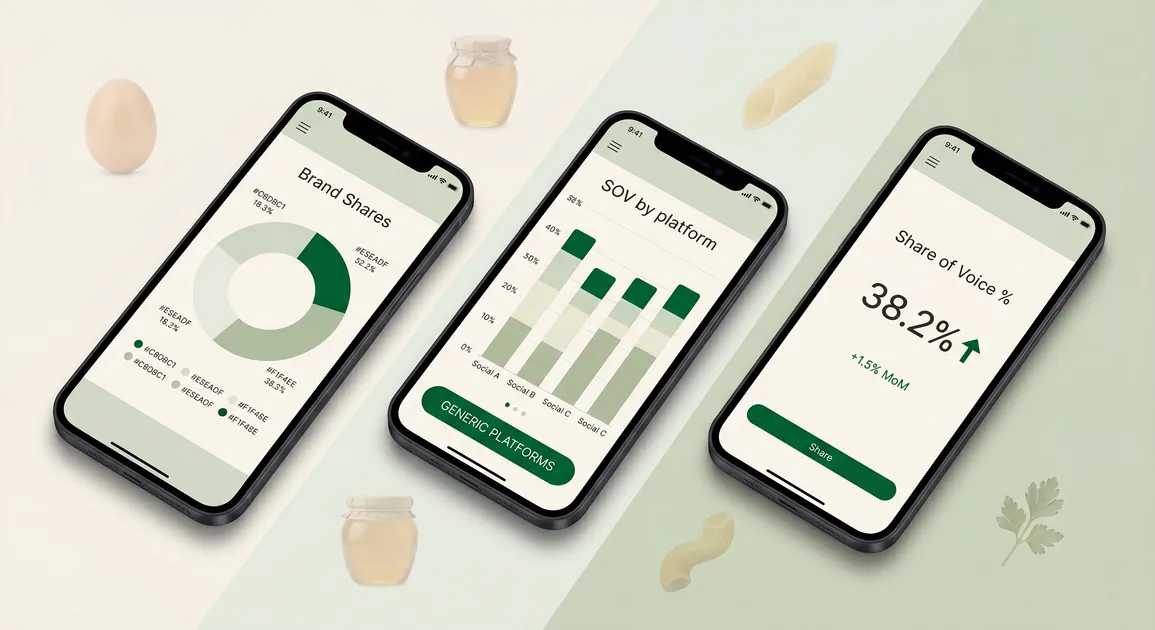
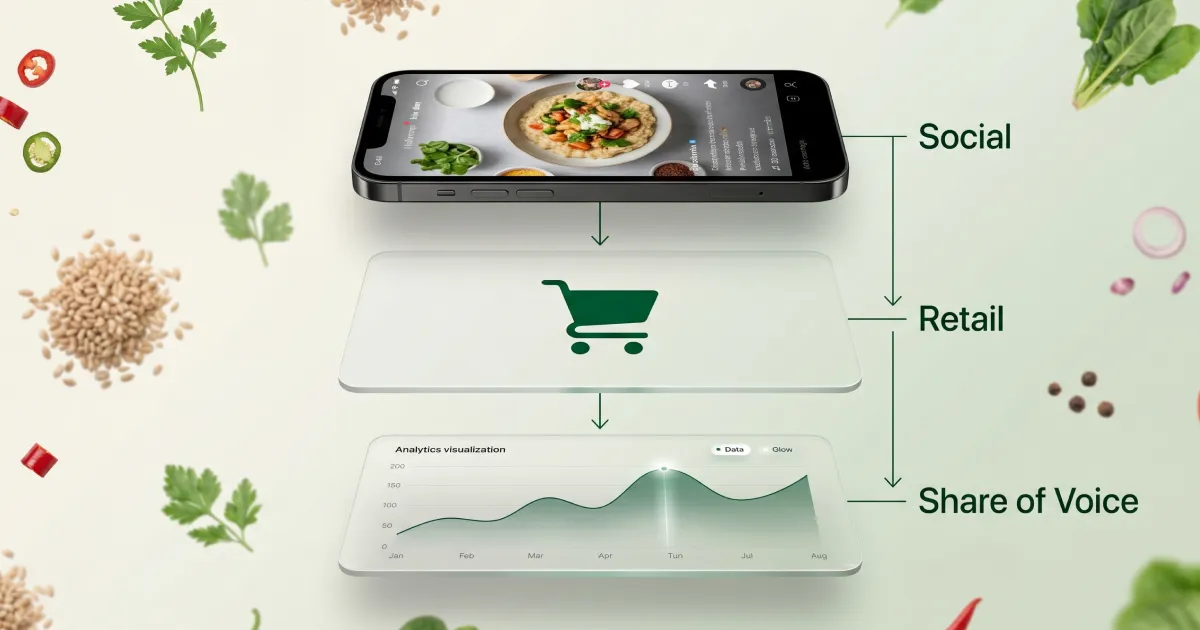
Jupiter tracks brand mention share of voice across Instagram, TikTok, YouTube, and X for food and beverage CPG brands. Instagram accounts for 42.8% of category share of voice. TikTok accounts for 40.6%. Together they represent over 83% of where the food CPG social conversation happens. YouTube and X account for the remaining 16.6% combined.
When you look at where brands actually deliver impressions through creator campaigns, the split is even more concentrated. Across 635 posted creator pieces tracked by Jupiter, 73.7% of impressions were delivered through Instagram and 26.3% through TikTok.
Instagram delivers higher impression volume for most CPG campaigns because of Reels distribution and the platform's established food content ecosystem. TikTok delivers stronger discovery for new or emerging brands because its algorithm surfaces content to non-followers more aggressively. The right allocation between the two depends on whether a brand is building awareness in a new market or deepening engagement in an established one.
Creator Selection for CPG Influencer Marketing
Finding the right creators is where most CPG influencer marketing programs spend too little time and too little rigor. The typical approach, search relevant hashtags, evaluate follower counts, send DMs, produces an inconsistent creator mix with no systematic quality filter.
What actually predicts creator performance for food and beverage CPG campaigns is a multi-signal evaluation that most brands never run manually because it requires data they do not have access to.
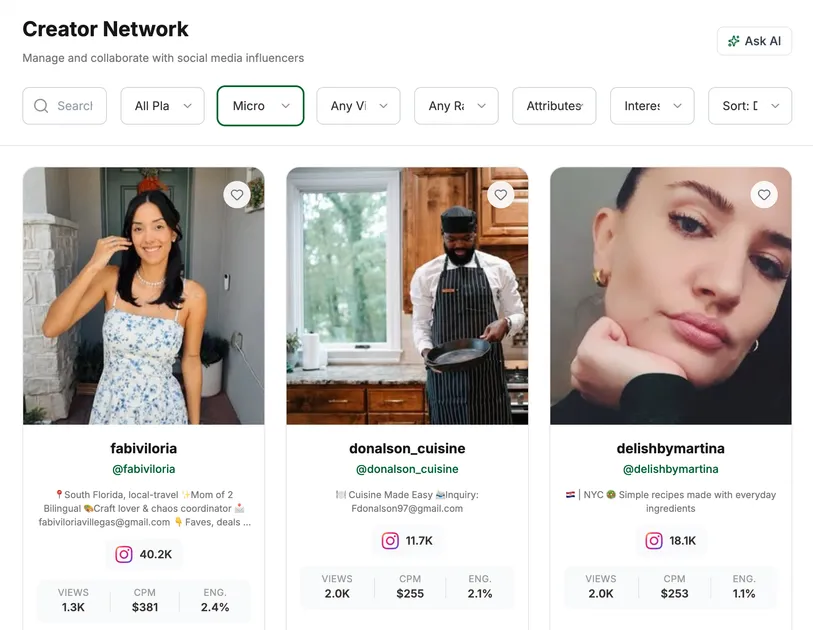
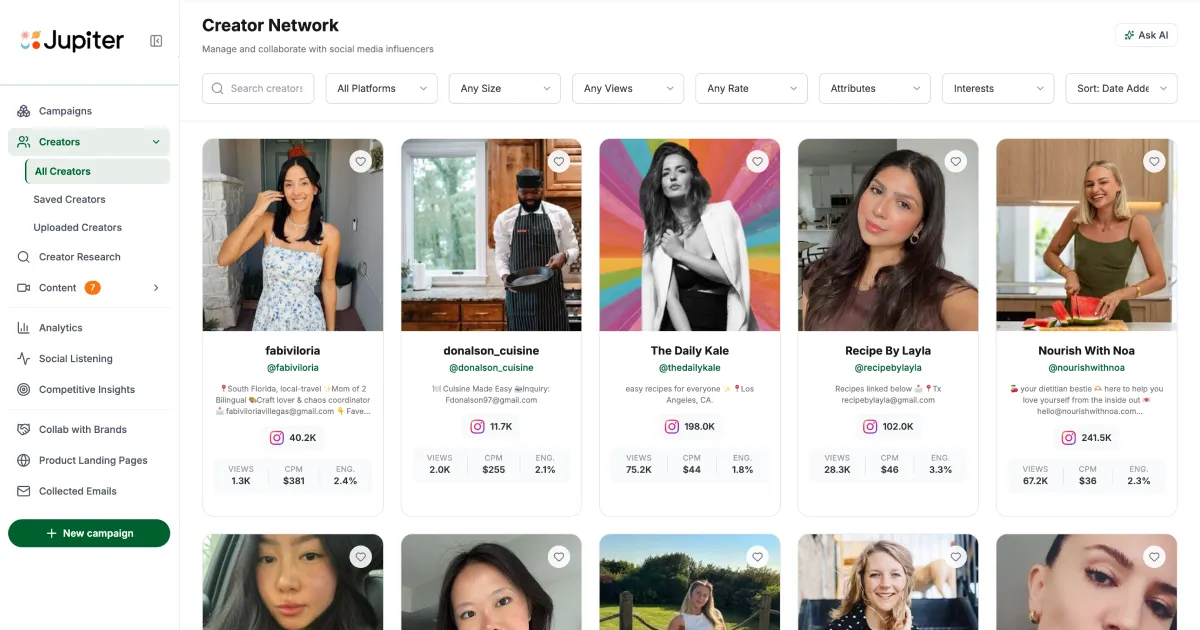
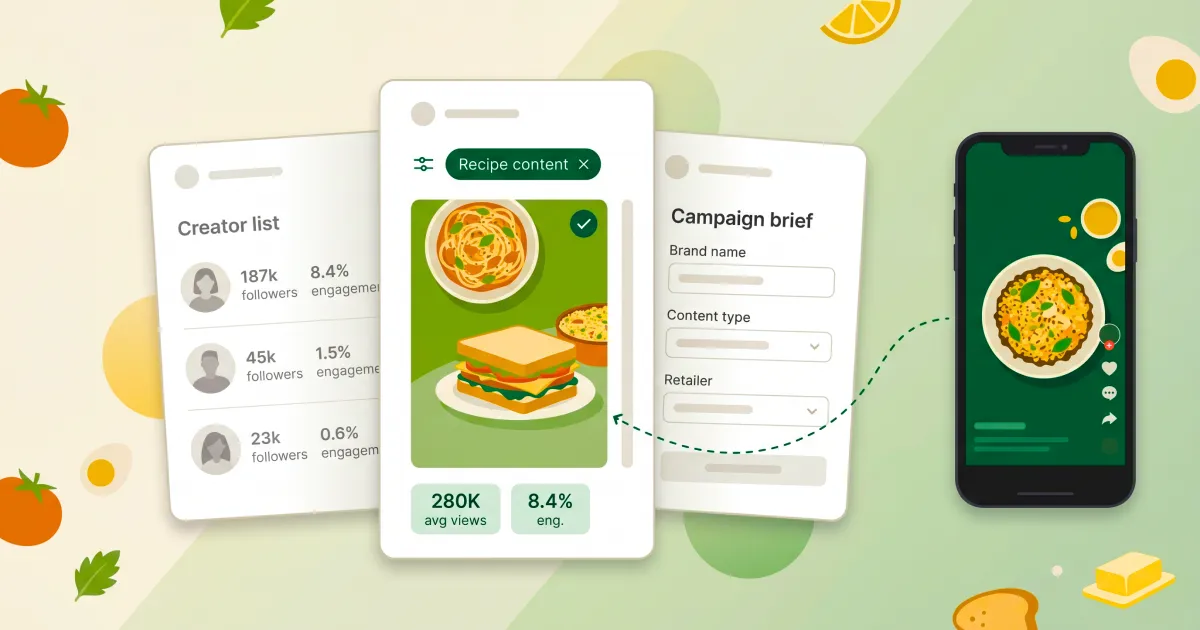
Jupiter's 12-signal campaign optimizer evaluates every creator in its network of 1,000+ food and recipe creators against twelve performance signals: content interest alignment with your product category, posting recency, retailer proximity to your target markets, brand affinity from past collaboration history, creator attribute match, audience attribute match, engagement quality, view consistency, demographic alignment, geographic match, audience credibility, and hashtag relevance.
Each signal matters for CPG specifically. Retailer proximity is a signal that does not exist in generic influencer platforms but is critical for food CPG programs: a creator whose audience is concentrated in markets where your product is not distributed creates awareness that cannot convert. Audience credibility flags creators whose follower count includes significant bot or inactive accounts, which inflates impression projections and leads to overpayment. Brand affinity from past collaboration history shows whether a creator has worked with brands in adjacent categories, which predicts content quality and brief compliance.
The output of the 12-signal evaluation is a creator roster with projected impressions and estimated CPM before any budget is spent. A plant-based yogurt brand running through Jupiter's optimizer saw 5.8 million impressions at a $1.82 CPM. A bone broth brand delivered 2.57 million impressions at a $1.57 CPM. These numbers reflect systematic creator selection, not guesswork. See Jupiter's food CPG influencer campaign examples for eight more campaigns with budgets, creator mixes, and delivered CPM.

See How Jupiter Selects Creators for CPG Influencer Campaigns
Jupiter's 12-signal optimizer scores every creator against your product, retail targets, and audience profile, then shows projected impressions and CPM before you spend.
Campaign Structure for CPG Influencer Marketing
A well-structured CPG influencer marketing campaign has five components: brief, creator mix, content format, posting cadence, and attribution setup. Each one compounds the others.
The brief is the most consequential document in the campaign. A food CPG brief needs to go deeper than a standard influencer brief. It should cover the product's category positioning and retail context, specific recipe concepts or usage scenarios that make sense for the creator's audience, taste experience points the creator should convey authentically, the retail call to action tied to your distribution (available at Sprouts, order on Instacart), and creative hooks that feel native to food content rather than scripted from a brand deck. Jupiter's brief creation tool includes all of these CPG-specific fields and supports AI-assisted brief generation from a plain-language campaign description.
The creator mix for most CPG campaigns works best as a combination of tiers rather than a single level. Mid-tier food creators (50,000 to 250,000 followers) anchor the campaign with meaningful reach. Micro creators (10,000 to 50,000 followers) provide geographic distribution and cost-efficient impression volume. TikTok's median view counts for Jupiter's food creator network show 2,118 views per post for micro creators and 9,154 for mid-tier creators. The blend depends on budget, retail distribution footprint, and campaign goal.
Content format for food CPG performs best when it solves a problem the viewer actually has. A recipe that uses your product as a featured ingredient gives viewers a reason to buy it. A taste comparison helps someone make a purchase decision. A grocery haul places your product in the context of a regular weekly shop. These formats outperform pure product showcase content because they earn attention rather than demanding it.
Posting cadence within a campaign matters for algorithmic distribution. Jupiter's optimizer distributes selected creators across monthly posting slots based on campaign duration and per-month posting targets, ensuring impression delivery is spread consistently rather than concentrated in a single week.
For brands running ambassador programs, the structure shifts to sustained creator relationships over a 6-month minimum commitment with 2 posts per month per creator. The longer relationship allows creators to develop genuine familiarity with the product, which audiences detect and which drives stronger commercial performance over time. Banza and La Tourangelle both run active ambassador programs through Jupiter with demonstrably reduced per-post rates compared to standard campaigns.
Instacart Attribution Makes CPG Influencer Marketing Measurable
The biggest historical objection to CPG influencer marketing as a performance channel is measurement. You could see impressions. You could see engagement. You could not directly tie a creator's content to a grocery purchase.
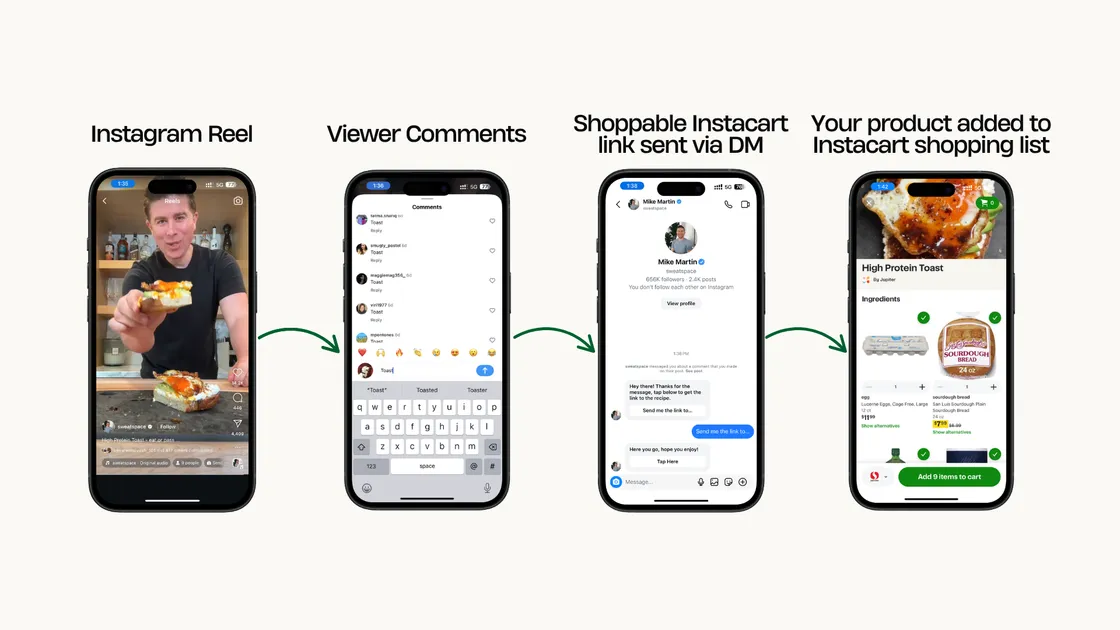
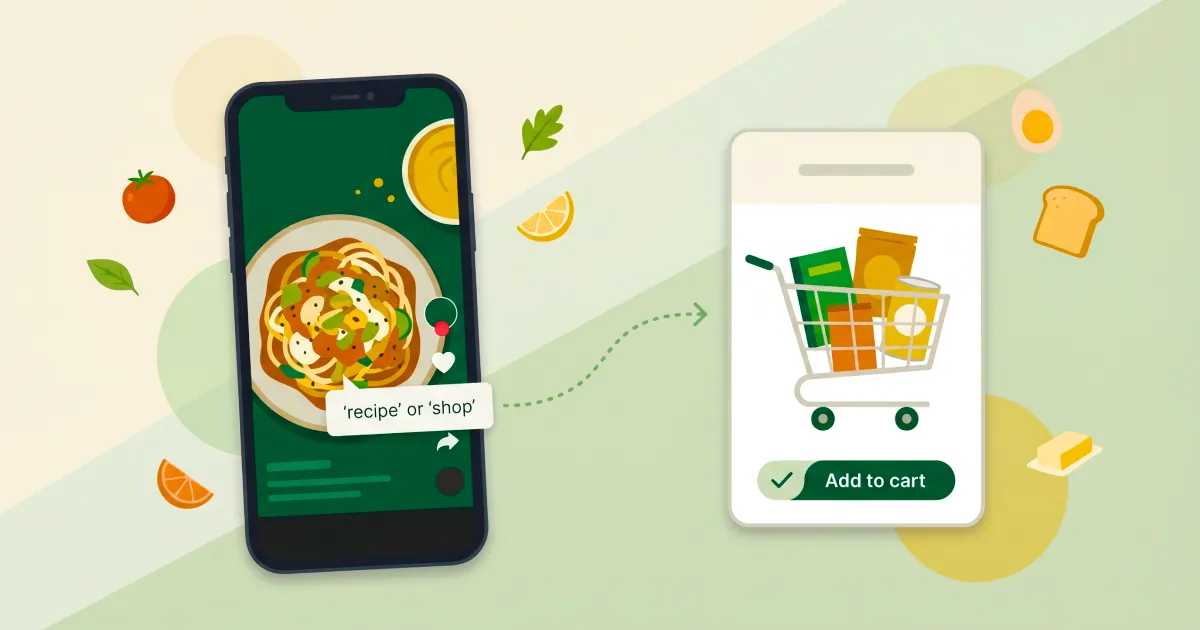
Instacart attribution through Jupiter's comment-to-cart mechanic resolves this. When a creator publishes a post with a specific keyword prompt in the caption, viewers who comment with that keyword automatically receive a direct message containing a unique shoppable Instacart link tied to that creator and that specific post. When a viewer opens the link and adds the product to their cart, that cart add attributes back to the exact creator and post that drove it.
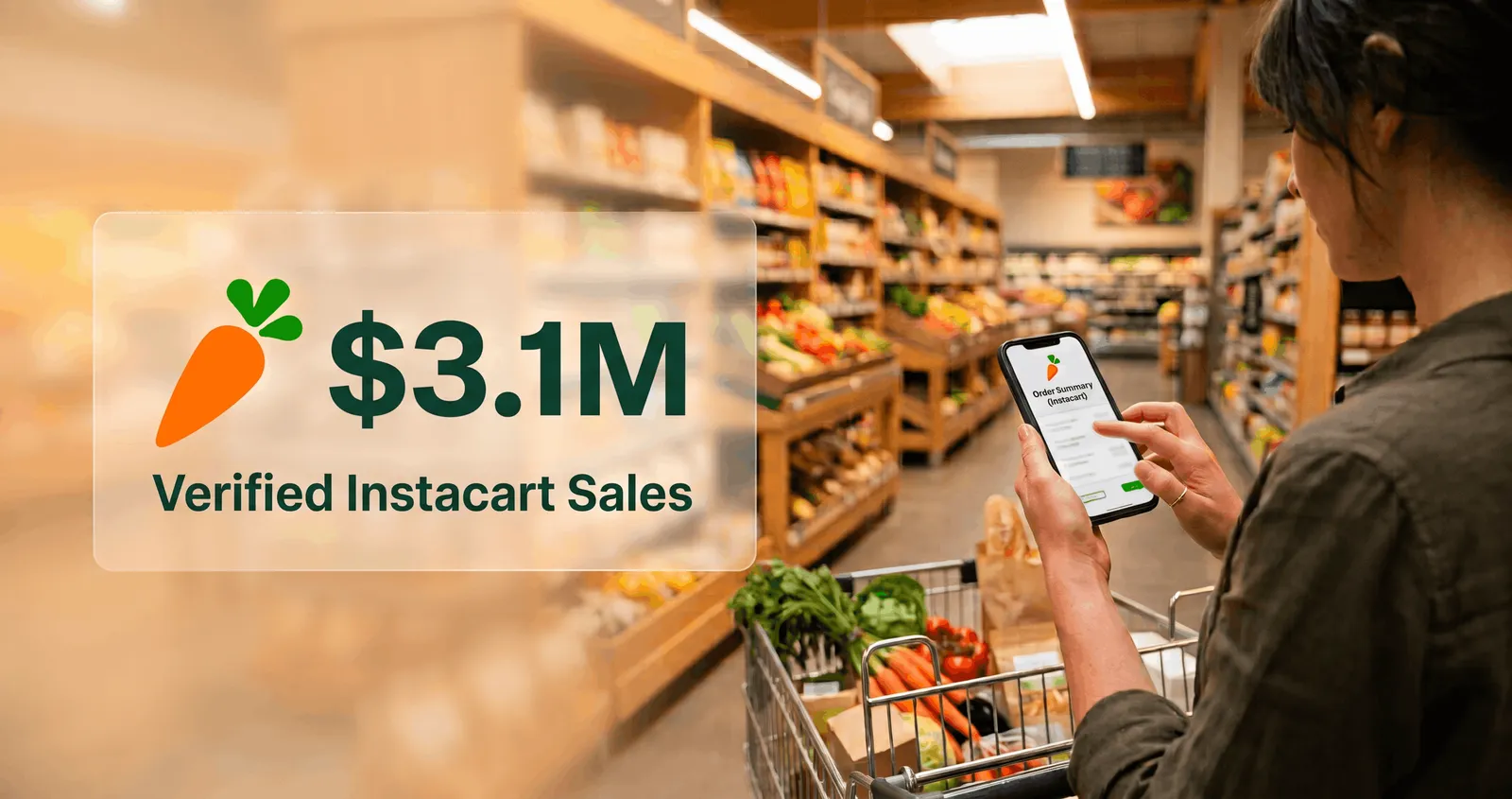
The results from live campaigns using this mechanic are significant. One Instagram Reel generated 6.5 million views and over 1,000 Instacart cart adds. That is direct purchase attribution data tied to a single piece of creator content, not a modeled estimate.
Jupiter is one of Instacart's fastest-growing affiliate partners. The comment-to-cart mechanic is live, confirmed, and running across active campaigns for food and beverage CPG brands. For brands that have been treating influencer marketing as a brand awareness channel because measurement was not possible, this mechanic changes the commercial case for the channel entirely. Read our Instacart influencer marketing campaign playbook.
Still Treating CPG Influencer Marketing as a Brand Awareness Play?
If you cannot tie creator content to cart adds or retail velocity, Jupiter's Instacart attribution mechanic gives you the purchase data you have been missing.
Measuring CPG Influencer Marketing Performance
Performance measurement for CPG influencer marketing operates at three levels and requires different data at each one.
At the content level, the metrics are impressions, engagement rate, and for Instacart-connected campaigns, cart adds per post. Jupiter's posted content feed color-codes engagement rate for each piece of content: emerald green for above-average, blue for solid performance, gray for below-average. This gives a fast read on which content is earning attention and which is not, without needing to manually pull data from multiple platforms.
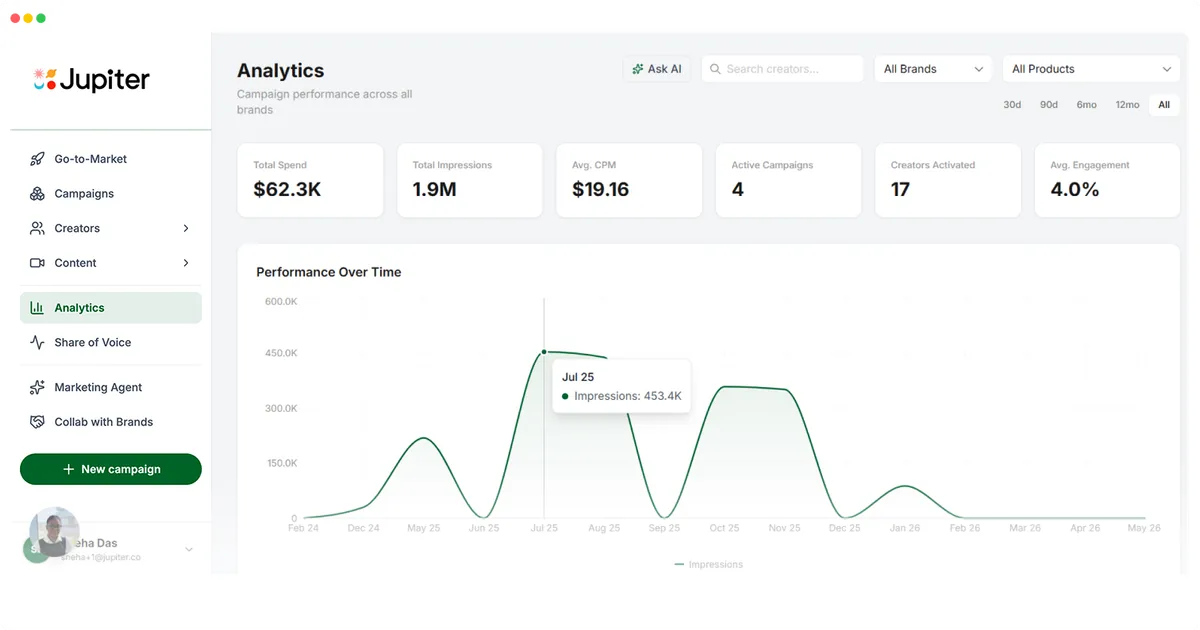
At the campaign level, the most useful measure is actual impressions against estimated impressions, and actual CPM against estimated CPM. Jupiter's campaign optimizer produces pre-launch projections. The analytics dashboard tracks delivery against those projections in real time. Campaign health is displayed as green for campaigns at 80% or more of estimated impressions, yellow for 50 to 80%, and red for below 50%. A red campaign signals a problem with creator selection, brief, or content format before more budget is committed.
At the brand level, share of voice tracking shows how your creator activity compares to competitors in the category across Instagram, TikTok, YouTube, and X. SOV data in Jupiter includes owned mentions (content your brand and paid creators produce), earned mentions (organic consumer and creator mentions), engagement share, and platform breakdown. This is the data that connects your influencer marketing program to your competitive position in the category. See our guide to CPG influencer marketing analytics and reporting.
The creator leaderboard in Jupiter's analytics ranks all creators who have run campaigns for your brand by total impressions, engagement rate, and impressions per dollar. This is the foundation of any ambassador graduation model: the creators who deliver the strongest cost efficiency become the candidates for long-term relationships with meaningfully reduced per-post rates.
What CPG Brands Get Wrong About Influencer Marketing
Most underperformance in CPG influencer marketing traces back to a small set of recurring errors.
Selecting creators from generic databases rather than food-specific networks means you are evaluating creators without the CPG-specific signals that predict performance. A creator can have strong general engagement but weak content alignment with grocery audiences, poor credibility scores, or an audience concentrated outside your retail distribution. Generic databases do not surface these distinctions.
Briefing for brand compliance rather than creator authenticity produces content that audiences recognize as scripted. Food creators have established voices and formats that their audiences trust. A brief that overrides those in favor of brand-approved language usually produces weaker content than a brief that gives the creator the key messages and commercial requirements, then leaves the creative expression to them.
Measuring only what happened on social misses the retail impact entirely. A campaign that delivered strong engagement on Instagram but drove zero Instacart orders is not a success. Measurement needs to connect to retail behavior, which requires Instacart attribution or another commerce-connected mechanic.
Running campaigns in isolation rather than building toward a sustained program limits compounding returns. The brands with the strongest CPG influencer marketing ROI are the ones running consistent creator programs, refreshing creator rosters based on performance data, and graduating high-performing creators into ambassador relationships.
How Jupiter Runs Influencer Marketing for CPG Brands
Jupiter is the only influencer marketing platform built exclusively for food and beverage CPG brands. It is Y Combinator-backed and serves 58+ CPG brands including Banza, Pete & Gerry's, Nellie's Free Range Eggs, Kettle & Fire, and Dr. Praeger's.
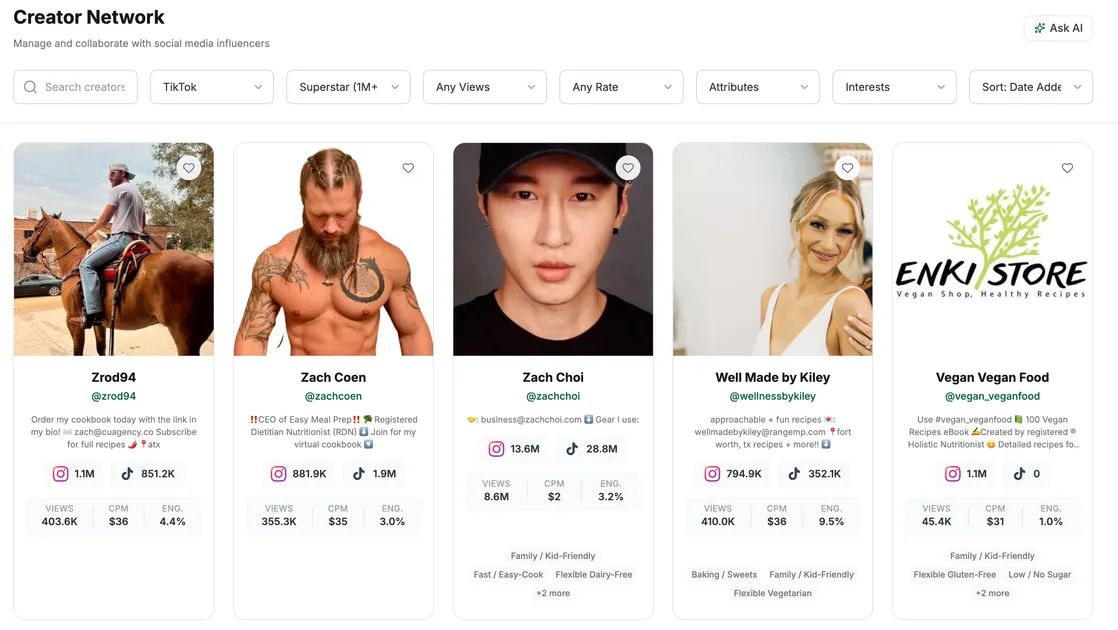
The platform covers the complete CPG influencer marketing workflow. Creator discovery uses a network of 1,000+ vetted food and recipe creators on Instagram and TikTok, filtered by content interests, engagement rate, credibility score, retailer proximity, audience demographics, and geographic region. Campaign creation starts with a brief, either built manually through Jupiter's structured form or generated from a plain-language description using the 20-tool AI marketing agent. The 12-signal optimizer then runs automatically, selects the highest-performing creator mix for the campaign budget, and displays estimated CPM before launch.
Content review, posting tracking, live analytics, creator leaderboard, Instacart attribution, and share of voice tracking all run through a single platform. There is no stitching together of spreadsheets, agency reports, and disconnected analytics tools.
229M+ total impressions have been delivered across Jupiter campaigns. The platform handles campaigns from initial brief to final performance report for food and beverage brands at every stage of growth, from emerging DTC brands entering retail to established multi-SKU players optimizing campaign efficiency across national distribution.
Learn more about the Jupiter influencer campaign management platform.
See Jupiter's CPG Influencer Marketing Platform in Action
Creator discovery, 12-signal optimization, Instacart attribution, and campaign analytics in one platform. Used by 58+ food and beverage CPG brands including Banza and Kettle & Fire.
FAQs
Quick answers to common questions.
What is influencer marketing for CPG brands?▼
Influencer marketing for CPG brands is the practice of working with social media creators to build awareness and purchase intent for consumer packaged goods sold through grocery retail. Unlike DTC influencer marketing, CPG programs are designed around the grocery retail purchase journey: the creator's content drives a shopper to add a product to their Instacart cart or pick it up at a store, not to click a direct purchase link. The primary platforms are Instagram and TikTok, where food and recipe creators reach grocery-oriented audiences.
How much does influencer marketing cost for CPG brands?▼
CPG influencer marketing costs vary by creator tier, platform, campaign type, and category. Based on production data from Jupiter campaigns, CPM ranges from approximately $1.25 for ambassador programs with plant-based brands to $7.42 for simmer sauce general awareness campaigns. Mid-tier food creators on Instagram typically charge between $500 and $2,500 per post. Nano creators can be engaged through product seeding programs at little or no cash cost. The right benchmark is category-specific CPM, not a generic rate card.
Which social media platforms work best for CPG influencer marketing?▼
Instagram and TikTok are the dominant platforms for CPG influencer marketing. Jupiter's campaign data across 635 posted creator pieces shows Instagram delivering 73.7% of total impressions and TikTok delivering 26.3%. Instagram performs better for brands with established audiences and higher-production recipe content. TikTok performs better for new product discovery and brands targeting younger grocery shoppers. Most CPG campaigns benefit from running both simultaneously with platform-specific creator mixes.
How do CPG brands measure influencer marketing ROI?▼
CPG influencer marketing ROI is measured through impression delivery against pre-campaign projections, CPM relative to category benchmarks, engagement rate by piece of content, and for Instacart-connected campaigns, direct cart add attribution. Jupiter's comment-to-cart mechanic ties each Instacart cart add back to the specific creator and post that drove it. Campaign health in Jupiter is displayed as green at 80% or more of estimated impressions, yellow at 50 to 80%, and red below 50%. Share of voice tracking adds a competitive dimension to measurement.
What types of creators work best for food and beverage CPG campaigns?▼
Food and recipe creators with grocery-oriented audiences and high audience credibility scores perform best for CPG campaigns. The most effective tier for most CPG budgets is mid-tier (50,000 to 250,000 followers) for reach combined with micro creators (10,000 to 50,000 followers) for geographic distribution and cost efficiency. Nano creators work well for product seeding campaigns. The key signals to evaluate are content interest alignment, retailer proximity, audience credibility, and past brand collaboration history in adjacent categories, not follower count alone.
What is the difference between a one-time CPG influencer campaign and an ambassador program?▼
A standard CPG influencer campaign is a time-limited paid partnership where creators post once or a small number of times over a defined campaign window. An ambassador program is a sustained creator relationship, typically 6 months or longer, with a consistent posting cadence. Ambassador programs build stronger brand association because creators develop genuine familiarity with the product over time, which their audiences recognize and trust. Jupiter's ambassador framework enforces a 6-month minimum with 2 posts per month per creator, with meaningfully reduced per-post rates compared to standard campaign pricing.
Related Posts
Browse more from our blog.