Influencer Marketing Trends for Food & CPG Brands: 2026
The way food CPG brands run influencer campaigns is changing faster than most marketing calendars can keep up with. These eight trends define where the category is heading and what to do about each one.
Trusted by leading CPG brands








On this page
▼
- 1. Recipe Content Is Outperforming Product-Only Posts by a Significant Margin in Saves
- 2. TikTok Shop Is Cannibalizing Instacart Referral in Certain Categories
- 3. Content Usage Rights Are Now a Standard Budget Line Item
- 4. AI Brief Generation Has Compressed the Brief-to-Post Timeline from Weeks to Days
- 5. Share of Voice Is Replacing Follower Count as the Primary Competitive Benchmark
- 6. Ambassador Programs Are Replacing One-Off Campaigns for High-Repeat-Purchase SKUs
- 7. Co-Branded CPG Campaigns Are Growing
- 8. Nano-Influencer Seeding Is Scaling at Lower CPM Than Mid-Tier Macro Campaigns
- How Jupiter Is Built for Where This Is Going
Influencer marketing trends in food and CPG are not moving slowly. The playbook that worked in 2023 — identify a mid-tier food creator, send a brief, pay per post, check impressions — is already showing diminishing returns. In 2026, the brands winning at creator-led commerce have made structural changes to how they select creators, brief content, attribute sales, and measure competitive position.
This post covers eight shifts that are measurable, material, and actionable for CPG brand managers today.
1. Recipe Content Is Outperforming Product-Only Posts by a Significant Margin in Saves
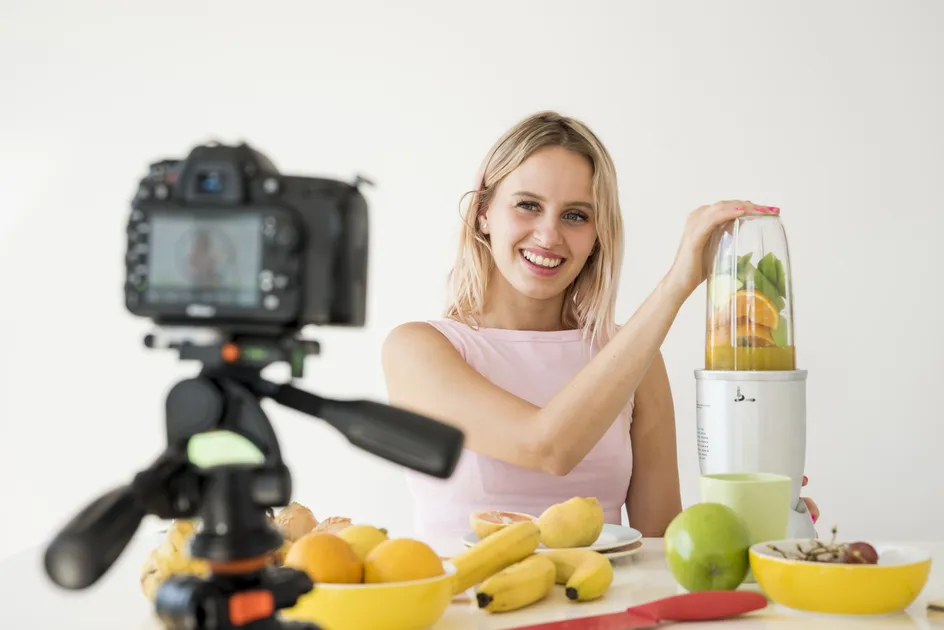
The engagement gap between recipe-led content and product-showcase content has widened. Saves — the metric that signals genuine purchase consideration — are running two to three times higher on recipe-format posts than on posts where a product is simply held up or described.
For food brands, this is not a stylistic preference. Saves drive re-engagement: a viewer who saves a pasta recipe featuring your chickpea pasta is more likely to seek out that product at retail. Recipe content creates a use-case anchor that product-only posts cannot.
The practical implication is brief structure. Campaigns that lead with a recipe concept — and treat the product as the hero ingredient, not the subject of the video — consistently outperform campaigns built around product features. Jupiter's campaign brief builder includes dedicated fields for recipe concepts, cooking instructions, and taste experience points for this reason.
2. TikTok Shop Is Cannibalizing Instacart Referral in Certain Categories
TikTok Shop has accelerated faster than most food brands anticipated, and its effect on Instacart-driven purchase attribution is uneven across categories. For snack brands and impulse-purchase SKUs priced under $15, TikTok Shop's native checkout is beginning to capture purchase intent that previously converted through Instacart affiliate links.
For higher-consideration categories — specialty oils, premium eggs, bone broth, refrigerated items — Instacart remains the dominant commerce bridge because TikTok Shop's cold-chain and perishables infrastructure is not at parity.
The strategic implication: brands in impulse-adjacent categories should audit whether their creator content is pointing viewers toward TikTok Shop checkout, Instacart, or a retailer locator. Attribution only works if the path is clear. Jupiter's comment-to-cart mechanic addresses this directly: when a viewer comments on a creator's post with a specific keyword, they receive an automated DM with a unique shoppable Instacart link tied to that creator and post, with cart adds attributed back to the specific piece of content.
3. Content Usage Rights Are Now a Standard Budget Line Item
Two years ago, usage rights were an afterthought — something negotiated awkwardly after a campaign was designed. In 2026, brands running paid social amplification behind creator content have normalized licensing fees as a predictable cost.
The driver is Meta whitelisting. Brands that want to run creator-posted content as paid ads through the creator's handle (boosted posts, dark posts) need to negotiate whitelisting rights upfront. A standard organic post license and a paid amplification license are now different line items with different rates.
The brands that treat usage rights as an afterthought are either paying premium renegotiation rates or running amplification without proper licensing, which creates FTC and legal exposure. Build usage rights scope into every campaign brief: specify organic only, paid amplification, or both, and attach a time window (30, 60, 90 days).
4. AI Brief Generation Has Compressed the Brief-to-Post Timeline from Weeks to Days
The administrative drag of influencer campaigns has historically been brief creation. Writing a fresh brief for each campaign, tailoring it per creator type, waiting on revisions — this cycle used to take two weeks or more from brief inception to a creator having workable direction.
AI-assisted brief generation has collapsed that timeline. Brands using Jupiter's AI marketing agent can describe a campaign in plain language and receive a fully structured brief in minutes: brand story, recipe concepts, creative hooks, key messages, deliverables, and platform guidelines, all populated and ready to review.
The operational impact is not just speed. Compressed timelines mean brands can respond to retail moments, seasonal triggers, and competitive moves without a two-week runway. A new SKU hitting Whole Foods shelves can have a creator campaign live within days, not a month later.

See how Jupiter compresses the campaign timeline for food CPG brands
From AI brief generation to creator selection to live tracking — Jupiter is the only platform built exclusively for food and beverage CPG. See the full workflow.
5. Share of Voice Is Replacing Follower Count as the Primary Competitive Benchmark
Follower count as a success metric is losing credibility with experienced CPG marketers. The question that actually matters is not how many followers your creators have, but what percentage of the social conversation in your category your brand owns.
Share of voice tracking across Instagram, TikTok, YouTube, and X gives brand managers a competitive picture that follower-count metrics cannot. A brand with 42% SOV in the specialty oil category has a defensible position. A brand with 200,000 combined creator followers but only 8% SOV is losing the conversation.
Jupiter's share-of-voice tracking automatically identifies your product category, discovers competitors, and begins tracking social mentions within 24 hours of brand setup. Data on owned vs. earned mentions, platform breakdown, and period-over-
6. Ambassador Programs Are Replacing One-Off Campaigns for High-Repeat-Purchase SKUs
For SKUs with high repurchase frequency — eggs, coffee, cooking oil, broth, snack bars — one-off creator campaigns produce a spike and then nothing. The post goes live, impressions accrue, and then the creator moves on. No sustained presence, no familiarity building, no compounding content volume.
Ambassador programs — structured, multi-month creator relationships with consistent posting cadence — are better suited to these categories. A creator who posts about your brand's olive oil every two weeks for six months builds category authority with their audience in a way that a single sponsored post cannot.
Jupiter's ambassador program infrastructure enforces a six-month minimum and two posts per month per creator. Brands including La Tourangelle and Banza have used this structure to build sustained creator presence at meaningfully reduced per-post rates compared to one-off campaigns.
7. Co-Branded CPG Campaigns Are Growing
Brand-to-brand collaboration on creator campaigns is a structural shift, not a trend. CPG brands that sell through the same retailers are discovering that shared campaigns split costs and expand audience reach simultaneously.
A bone broth brand and a pasta brand targeting the same "home cook who shops at Whole Foods" audience can fund a shared creator campaign, reach both audiences, and reduce their individual CPM without diluting message relevance. The key is category adjacency: brands that solve for the same meal occasion but are not direct competitors.
Jupiter's collaboration infrastructure lets brands discover other CPG brands on the platform, express interest, and structure co-funded campaigns with defined budget splits and shared brief direction. The campaign-level analytics separate each brand's contribution and track performance against both partners' targets.
Still running one-off campaigns with no benchmark for what's working?
Jupiter gives food CPG brands share-of-voice data, campaign health tracking, and a 12-signal optimizer — so you can see exactly what's working before you spend.
8. Nano-Influencer Seeding Is Scaling at Lower CPM Than Mid-Tier Macro Campaigns
The math on nano-influencer product seeding has improved. Nano creators (1K–10K followers) posting organically about a product they received — without a paid partnership disclosure requirement, because no money changed hands — are delivering CPMs that mid-tier and macro campaigns cannot match.
From Jupiter's food creator network, median TikTok views for nano creators sit at 1,062 per post. That sounds modest. But when a brand seeds 50 nano creators at minimal cost and 40 of them post, the aggregate impression volume and the authentic, unscripted quality of the content compound in a way that two macro posts cannot replicate.
The operational challenge has been scale. Managing 50 nano creator relationships manually, tracking who received product, who posted, and what the content quality looked like, is not feasible without infrastructure. Jupiter's Creator Sampling campaign type handles this: product seeding campaigns with automated creator selection, posting tracking, and content review built in.
How Jupiter Is Built for Where This Is Going
Every trend in this post points in the same direction: CPG influencer marketing is becoming more measurable, more structured, and more accountable to retail outcomes. Brands that treat creator campaigns as loosely tracked awareness spend are losing ground to brands running campaigns with optimizer-driven selection, Instacart attribution, ambassador program infrastructure, and competitive SOV benchmarking.
Jupiter is the platform built for exactly this moment. It is used by 58+ leading CPG brands including Banza, Pete & Gerry's, and Kettle & Fire. It is one of Instacart's fastest-growing affiliate partners. And it delivers 800M+ impressions through a vetted network of 1,000+ food and recipe creators on Instagram and TikTok.
If your creator campaigns are still running on spreadsheets, agency calls, and gut-feel CPM estimates, the gap between you and your competitors is widening.
Jupiter is built for where CPG influencer marketing is going
Used by 58+ leading food CPG brands including Banza, Pete & Gerry's, and Kettle & Fire. Book a demo to see the full platform.
FAQs
Quick answers to common questions.
What are the biggest influencer marketing trends for food CPG brands in 2026?▼
The most impactful trends are the shift from follower-count metrics to share-of-voice benchmarking, the growth of ambassador programs for high-repeat-purchase SKUs, the compression of campaign timelines through AI brief generation, and the maturation of Instacart attribution mechanics. Recipe-led content is also outperforming product-only posts in saves and engagement by a measurable margin.
How much does influencer marketing cost for a food CPG brand in 2026?▼
CPM benchmarks vary by creator tier and campaign type. Jupiter's campaign data shows ambassadorship campaigns for plant-based brands delivering CPMs as low as $1.25, while niche categories like pasture-raised eggs run closer to $12. Product seeding campaigns (no cash payment, product only) typically deliver the lowest effective CPM at scale, particularly with nano-creator networks.
What is share of voice and why does it matter for CPG brands?▼
Share of voice (SOV) measures your brand's percentage of total social mentions in your product category compared to competitors. It matters because follower count and impressions only reflect your own activity, while SOV shows you whether you are winning or losing the category conversation. A brand at 42% SOV in its category has a defensible position; a brand at 8% SOV is ceding ground even with active campaigns.
Is TikTok or Instagram better for food CPG influencer campaigns?▼
Both platforms matter, but they serve different roles. Jupiter's campaign analytics show 73.7% of CPG impressions coming from Instagram and 26.3% from TikTok. For reach and conversion to Instacart, Instagram still dominates. TikTok drives stronger discovery and viral potential, particularly for new SKUs.
Do ambassador programs work for food brands?▼
Yes, particularly for high-repeat-purchase SKUs like eggs, oils, broths, and snack bars. Ambassador programs with consistent posting cadences (two posts per month over six months) build sustained creator presence and category authority with audiences in ways one-off sponsored posts cannot. Brands including La Tourangelle and Banza run structured ambassador programs through Jupiter.
How does Instacart attribution work with influencer campaigns?▼
Jupiter's comment-to-cart mechanic links influencer content to specific Instacart purchases. When a viewer comments on a creator's post with a designated keyword, they automatically receive a DM with a unique shoppable Instacart link tied to that creator and post. Cart adds attribute back to the specific creator, post, and campaign. One Jupiter campaign delivered 6.5 million views on a single Instagram Reel and over 1,000 Instacart cart adds.
More in Strategy & Guides
More from Strategy & Guides.