How Food and Beverage CPG Brands Find, Vet, and Work With the Right Creators
Hiring influencers for a food CPG brand is not the same as hiring influencers for a DTC brand. The creators you need drive purchase behavior at Whole Foods, Kroger, and Instacart — not just engagement on a feed.

Trusted by leading CPG brands














On this page
▼
- What to Look for Before You Hire Influencers for Food Campaigns
- Where to Find Food Influencers for CPG Brands
- How to Vet Influencers Before Hiring Them
- How to Brief and Pay Influencers for CPG Campaigns
- How to Measure Results After You Hire Influencers
- How Jupiter Handles Influencer Hiring for Food CPG Brands
To hire influencers for a food CPG brand, you need creators who can do one specific thing: move product off shelves. Not just drive likes. Not just grow your follower count. Food influencer marketing works when the right creator reaches the right audience at the right retail moment, and the purchase happens. Everything else is noise.
This guide covers how CPG marketing managers actually find, vet, brief, and measure food creators, from the first search to the final impression report.
What to Look for Before You Hire Influencers for Food Campaigns
The criteria that matter for food CPG influencer hiring are different from general influencer benchmarks. Follower count is the least important number on the page.
What actually predicts performance for food CPG campaigns is content alignment, audience credibility, and retail proximity. A creator with 40,000 followers who consistently posts recipe content, has an audience that skews toward grocery shoppers in your key retail markets, and has previously worked with brands in adjacent categories will outperform a creator with 400,000 followers whose audience is diffuse and geographically scattered.
Engagement rate matters, but engagement quality matters more. Comments that reference trying a recipe, buying an ingredient, or visiting a store are worth ten times the generic fire emojis. When you evaluate a creator, look at the comment section of their last ten posts, not just their average engagement percentage.
Credibility score is the other metric most brands ignore until they get burned. Purchased followers are widespread in the food creator space. Before you hire any influencer, you need a real estimate of what percentage of their audience is genuine. A creator showing 80,000 followers with 30% estimated real followers delivers fewer real impressions than a creator with 25,000 followers and 95% audience credibility.
Where to Find Food Influencers for CPG Brands
Most CPG marketing teams start in the wrong place. They search hashtags on Instagram, browse TikTok manually, or work through an agency that hands them a generic spreadsheet of names. None of these approaches give you the data you need to make a good hiring decision.
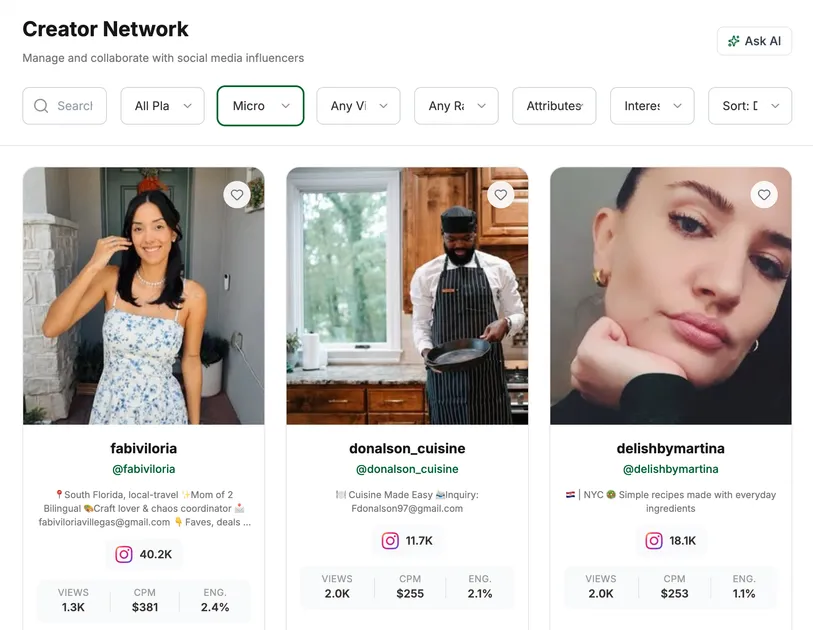
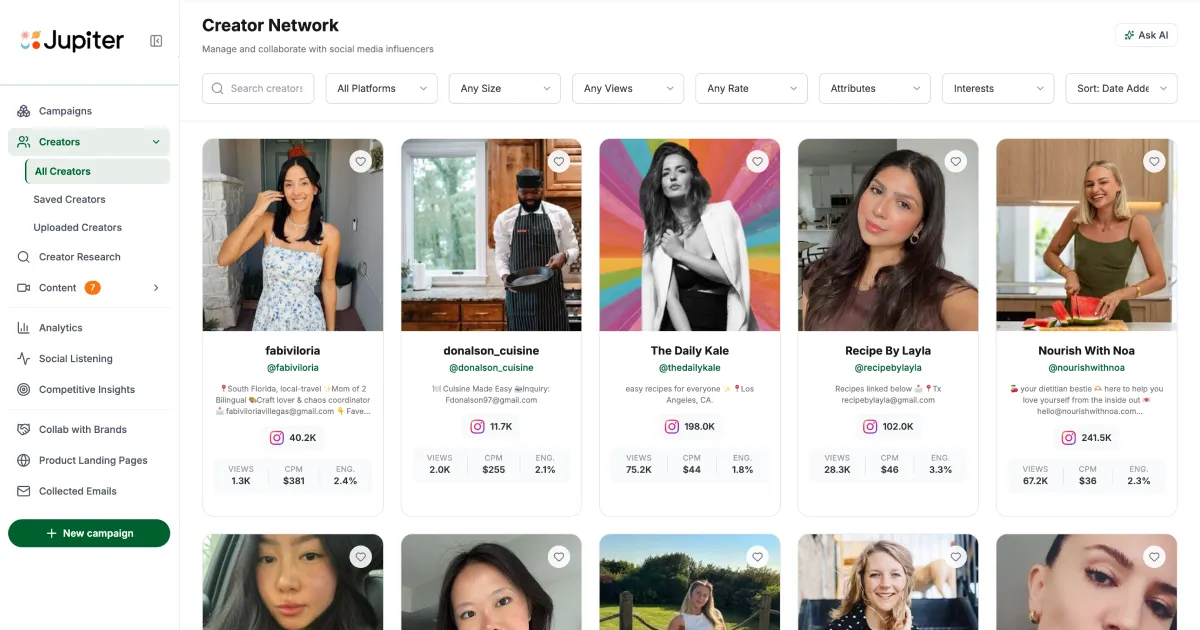
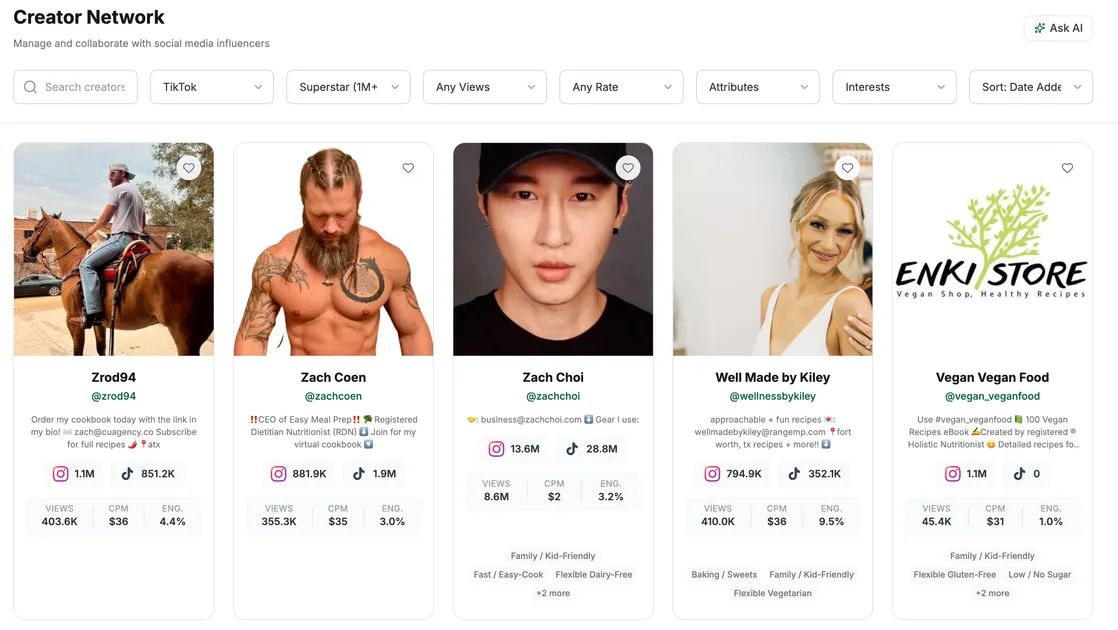
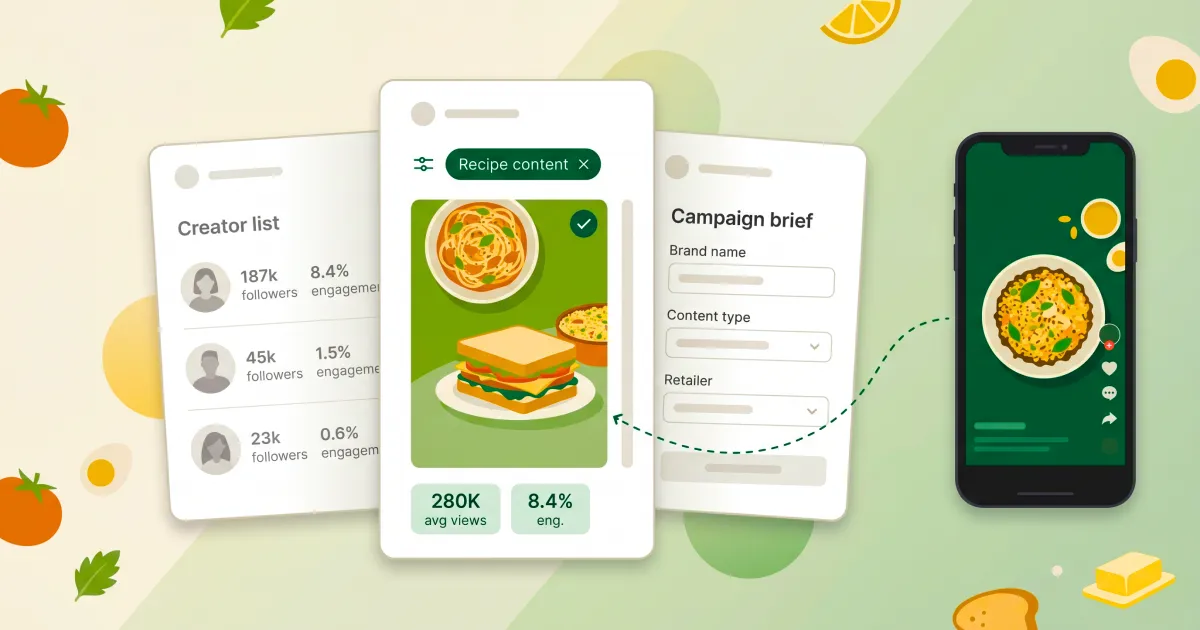
The most reliable source for food CPG influencer hiring is a vetted creator network with CPG-specific data. Jupiter maintains a network of 1,000+ food and recipe creators on Instagram and TikTok, each profiled with content interest scores, retailer proximity data, credibility scores, past brand collaboration history, and platform-specific pricing. When you search for creators on Jupiter, you are not searching a generic influencer database. You are searching a pool that has been curated specifically for food and beverage brand campaigns.
The difference matters because food influencer hiring requires category specificity. A general influencer platform might show you a creator with strong engagement in the "food" category, but that category includes everything from restaurant reviews to meal prep to cocktail content. Jupiter's content interest scoring distinguishes between recipe creators, health-focused food creators, beverage-forward creators, and grocery haul creators, so you can match the right content angle to your product and campaign goal.
For brands with existing creator relationships outside any platform, those creators can be imported directly and enriched with the same performance data. You are not locked into any single network. See our guide to food influencer discovery for more on finding the right creators.
How to Vet Influencers Before Hiring Them
Vetting is where most CPG brands lose time and money. The manual process involves pulling analytics screenshots, checking audience demographic decks, reading through recent posts, and making judgment calls with incomplete data. It is slow, inconsistent, and easy to game.
A structured vetting process for food CPG influencer hiring should evaluate six things in this order: content interest alignment with your product category, posting recency (are they actively creating?), retailer proximity to your target retail locations, past brand collaboration history in adjacent categories, creator attribute match (are they a home cook, a nutritionist, a meal prep creator?), and audience attribute match (does their audience profile match your target customer?).
Jupiter's 12-signal campaign optimizer runs this evaluation automatically for every creator against your specific campaign parameters. You set your targeting criteria, the optimizer scores every eligible creator in the network, and you see a ranked list with projected impressions and estimated CPM before you commit any budget. The guesswork is removed. You know what you are buying before you spend.

See Which Creators Jupiter Would Select for Your Campaign
Jupiter's 12-signal optimizer scores every creator against your product, retailer, and audience targets — and shows you projected impressions before you spend a dollar.
How to Brief and Pay Influencers for CPG Campaigns
Once you have selected creators, the brief is the most important document in the campaign. A weak brief produces content that misses the product angle, skips the key messages, or delivers creative that would work for any brand in any category. A strong brief gives creators enough direction to produce content that feels native to their channel while hitting every commercial requirement.
For food CPG campaigns, a brief needs to cover more than a standard influencer brief. It needs product description and retail price, recipe concepts or usage scenarios, taste experience points, creative hooks tied to the product's specific attributes, the key retail message (available at Whole Foods, now on Instacart), and deliverable specifications by platform. Jupiter's brief creation tool includes all of these fields and supports AI-assisted brief generation from a plain-language description of your campaign.
On creator payment, rates for food creators on Instagram and TikTok vary by tier and platform. Mid-tier food creators on Instagram typically charge between $500 and $2,500 per post. TikTok rates for the same tier run lower.
For ambassador programs, where you hire the same creators for a sustained period rather than single posts, rates are structured differently. Jupiter's ambassador program framework requires a 6-month minimum commitment with 2 posts per month per creator, and rates reflect the long-term nature of the relationship. La Tourangelle and Banza both run active ambassador programs through Jupiter.
How to Measure Results After You Hire Influencers
Measurement is where food CPG influencer programs most consistently underperform their potential. Most brands track impressions and engagement and stop there. That data tells you what happened on social. It does not tell you whether anyone bought the product.
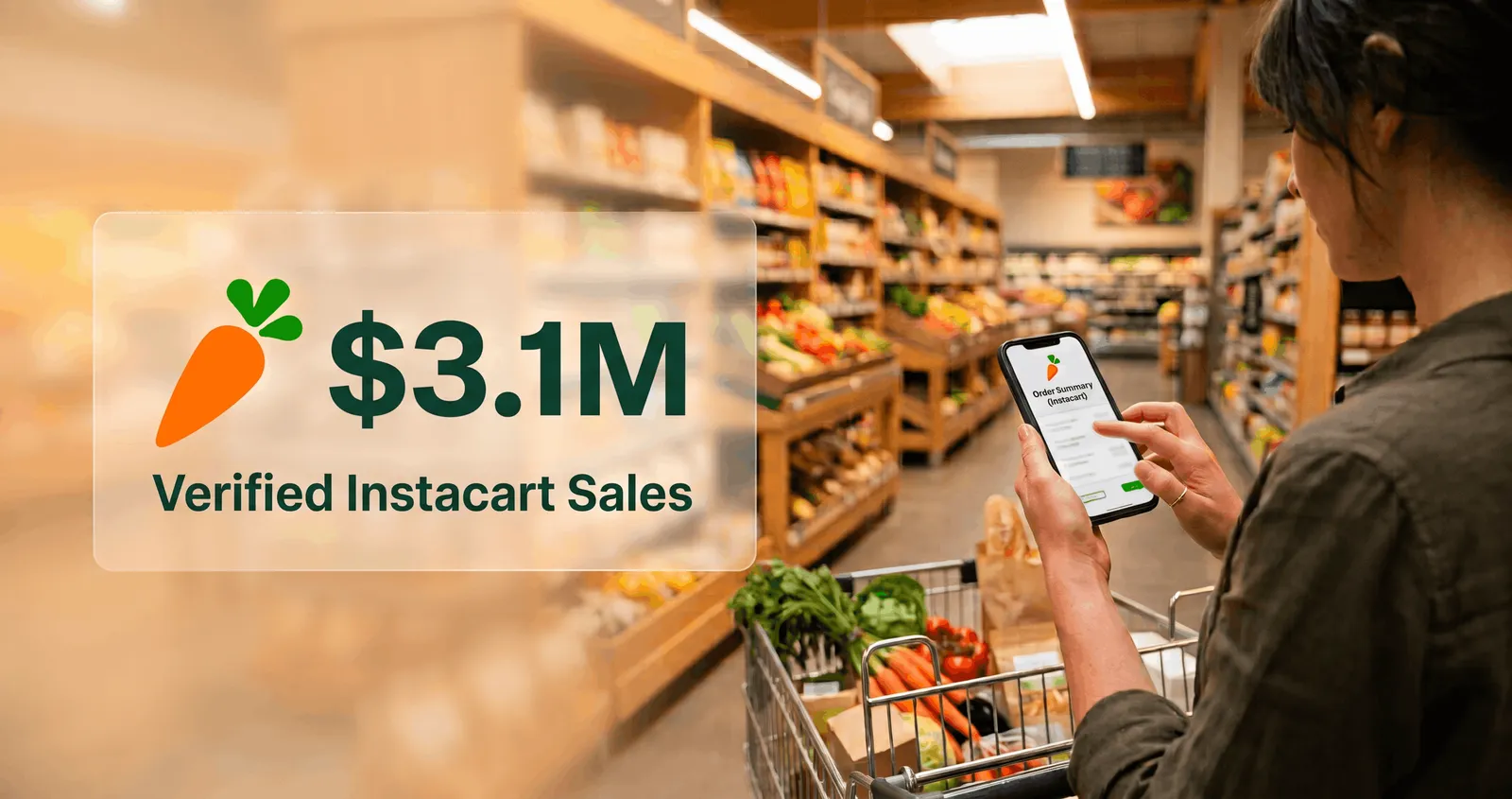
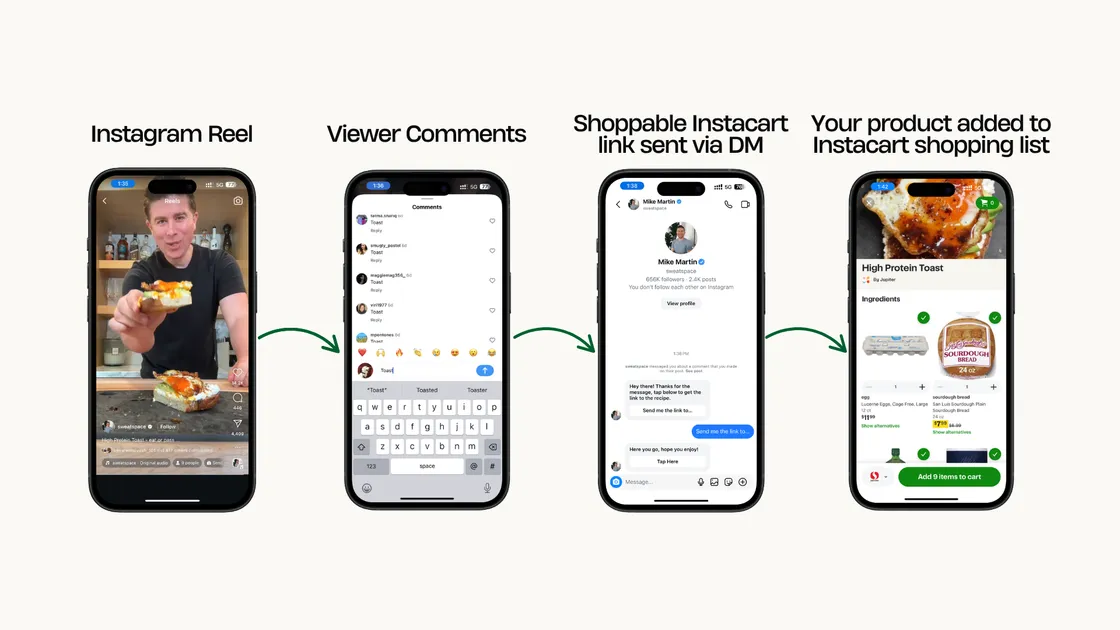
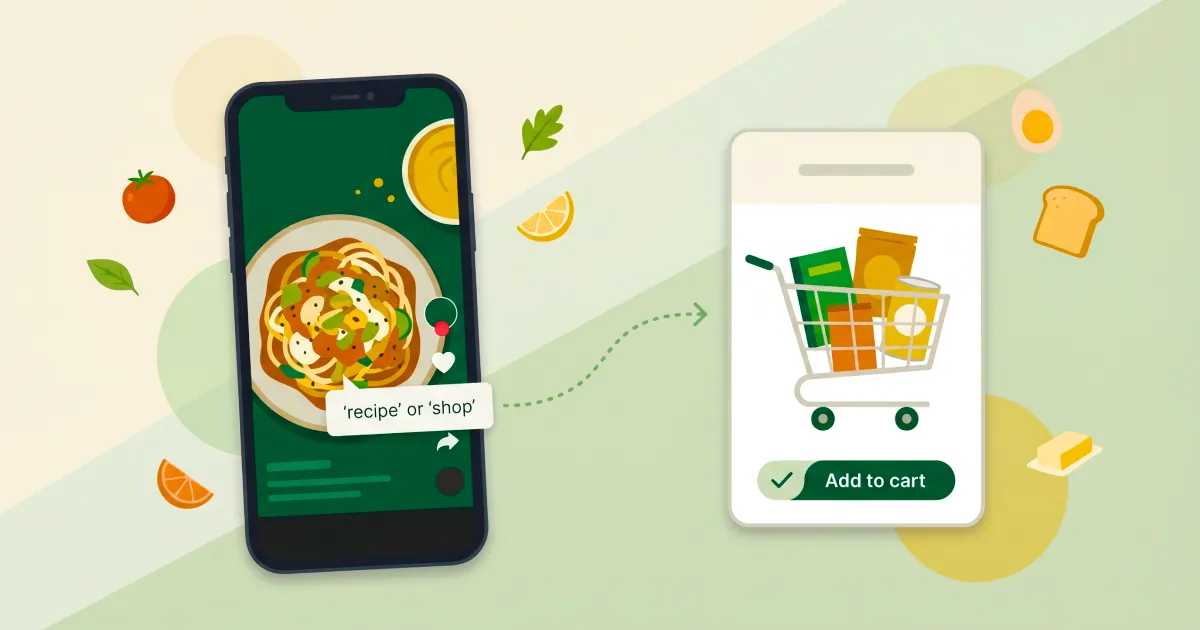
For food CPG brands selling through grocery retail and Instacart, the measurement question that matters is: did the creator's content drive a purchase? Jupiter's Instacart attribution mechanic answers this directly. When a viewer comments on a creator's post with a specific keyword, they automatically receive a DM with a unique shoppable Instacart link tied to that creator and that post. Cart adds attribute back to the specific creator and post. One plant-based yogurt brand running this mechanic through Jupiter saw a single Instagram Reel generate 6.5 million views and over 1,000 Instacart cart adds.
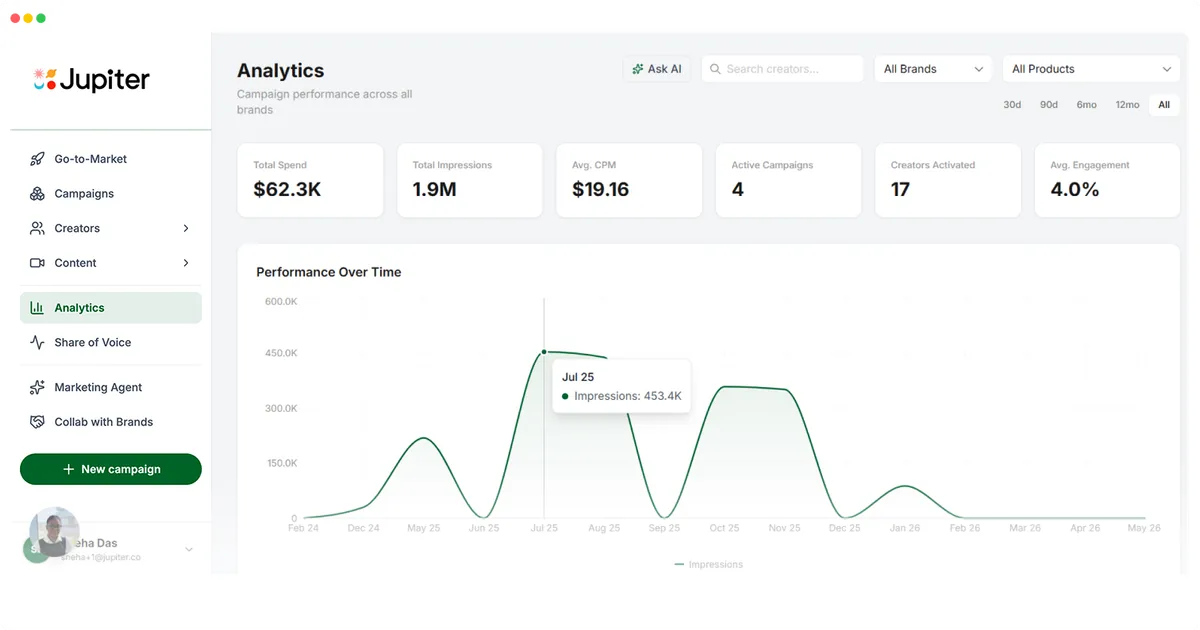
Beyond Instacart attribution, Jupiter's analytics dashboard tracks estimated versus actual impressions per creator, CPM, engagement rate, and campaign health status. A green campaign (achieving 80% or more of estimated impressions) tells you the creator selection and brief were right. A yellow or red campaign flags where to adjust before you renew. See our guide to influencer campaign reporting for a full breakdown.
Hiring Influencers Without a Vetting System Is a Coin Flip
If you are selecting creators from spreadsheets and gut instinct, you are probably overpaying for underperformance. Jupiter shows you projected CPM before any budget is committed.
How Jupiter Handles Influencer Hiring for Food CPG Brands
Jupiter was built specifically for the workflow described in this post. The platform handles every step from creator discovery to post-campaign reporting without requiring external tools, agency intermediaries, or manual spreadsheet management.
Creator discovery uses filters for platform, follower count, engagement rate, content interests, specific hashtags, geographic location, retailer proximity, and credibility score. The 1,000+ vetted food and recipe creators in Jupiter's network are available immediately, and brands can also import their own existing creator relationships. Once you select creators and set a budget, Jupiter's 12-signal campaign optimizer runs automatically, selects the highest-performing creator mix for your specific parameters, and shows projected impressions and CPM before launch.
Campaign operations run through Jupiter's content review workflow, where creators submit content for approval before posting, and the posted content feed tracks live performance from Instagram and TikTok after content goes live. The AI marketing agent, which includes 20 specialized tools, can answer campaign performance questions, pull creator analytics, and draft new briefs in natural language.
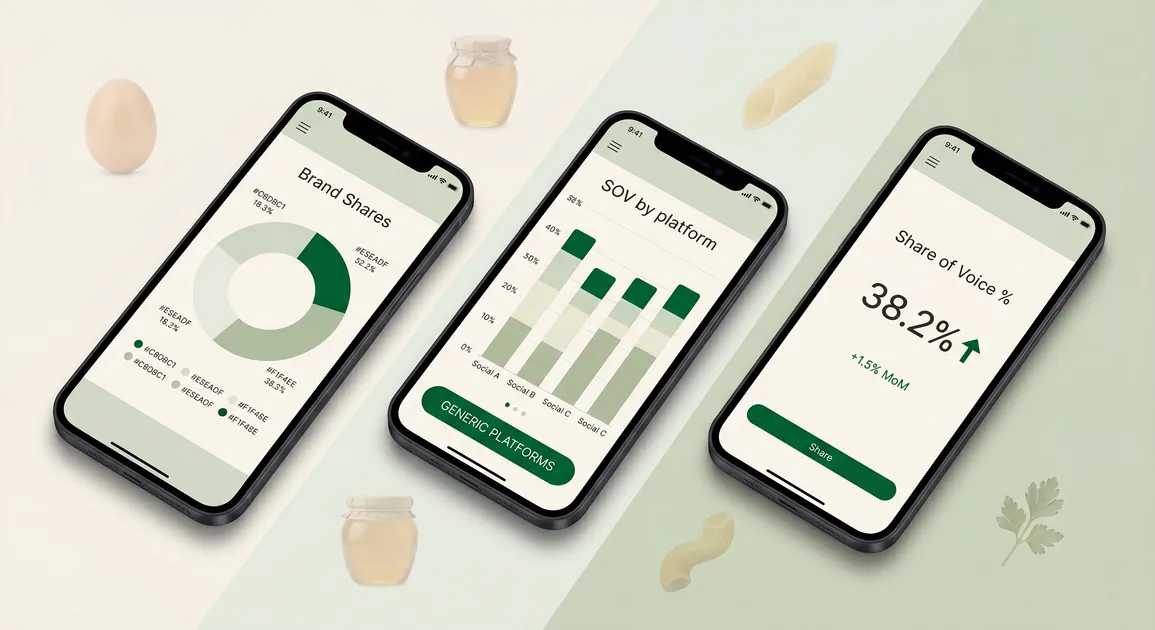
For brands that want to understand competitive positioning alongside their own campaign performance, Jupiter's share of voice tracking monitors brand mentions across Instagram, TikTok, YouTube, and X, so you can see how your creator activity compares to competitors in the category.
Used by 58+ leading CPG brands including Banza, Pete & Gerry's, and Kettle & Fire, Jupiter is the platform built for the grocery retail purchase journey, not the DTC funnel. Read our food influencer marketing complete guide for the full platform overview.
Ready to Hire Influencers the Right Way for Your CPG Brand?
Jupiter gives food and beverage CPG brands a vetted creator network, a 12-signal optimizer, and Instacart attribution in one platform. Used by 58+ brands including Banza and Kettle & Fire.
FAQs
Quick answers to common questions.
How do I hire influencers for a food CPG brand?▼
Hiring influencers for a food CPG brand starts with identifying creators whose content, audience, and geographic reach align with your product category and retail distribution. The most efficient approach is to use a platform with food-specific creator data, filter by engagement quality, credibility score, and retailer proximity, and evaluate projected performance before committing budget. Jupiter's 12-signal campaign optimizer automates this process for food and beverage brands specifically.
How much does it cost to hire influencers for CPG campaigns?▼
Food creator rates on Instagram and TikTok vary significantly by follower tier. Mid-tier food creators (50,000 to 250,000 followers) typically charge between $500 and $2,500 per post on Instagram, with TikTok rates generally lower for the same tier. Nano creators (under 10,000 followers) can be engaged for product seeding with no or minimal cash payment. CPM across Jupiter's network averages between $1.25 and $7.50 depending on campaign type and creator tier.
What is the difference between hiring influencers and running an ambassador program?▼
Hiring influencers for a standard campaign means a one-time or short-term paid post arrangement. An ambassador program is a long-term creator relationship, typically 6 months or longer, with a consistent posting cadence. Ambassador programs build stronger brand association and allow creators to develop genuine familiarity with the product. Jupiter's ambassador framework requires a 6-month minimum with 2 posts per month per creator, and rates reflect the reduced per-post cost that comes with longer commitments.
How do I vet influencers before hiring them for CPG campaigns?▼
Vetting food influencers for CPG campaigns requires evaluating content interest alignment with your category, posting recency, audience credibility score (percentage of real vs. bot followers), geographic proximity to your target retail markets, and past brand collaboration history. Jupiter profiles every creator in its network across all six of these dimensions and runs a composite fit score against your specific campaign parameters before any budget is committed.
Can I measure whether hiring influencers actually drove grocery sales?▼
Yes, with the right attribution mechanic in place. Jupiter's Instacart comment-to-cart mechanic links a viewer's comment on a creator post to a unique shoppable Instacart link, attributing cart adds back to the specific creator and post. This gives food CPG brands direct visibility into which creators drove purchase intent, not just impressions. One Instagram Reel using this mechanic generated over 1,000 Instacart cart adds from 6.5 million views.
Should I hire influencers directly or use a platform?▼
Hiring influencers directly works for brands with existing creator relationships and internal bandwidth to manage outreach, contracts, briefs, content review, payment, and performance tracking manually. Platforms become the better option when you are running multiple campaigns, need to evaluate many creators at once, want purchase attribution data, or need to scale without adding headcount. For food and beverage CPG brands specifically, a platform built for the category offers creator data and attribution capabilities that general tools and direct hiring cannot match.
Related Posts
Browse more from our blog.