Jupiter Creators Have Driven $3.1M in Verified Instacart Grocery Sales
Most influencer reports end with an impressions number. This one ends with a sales number, and every dollar of it is traceable to a specific creator post.
Trusted by leading CPG brands














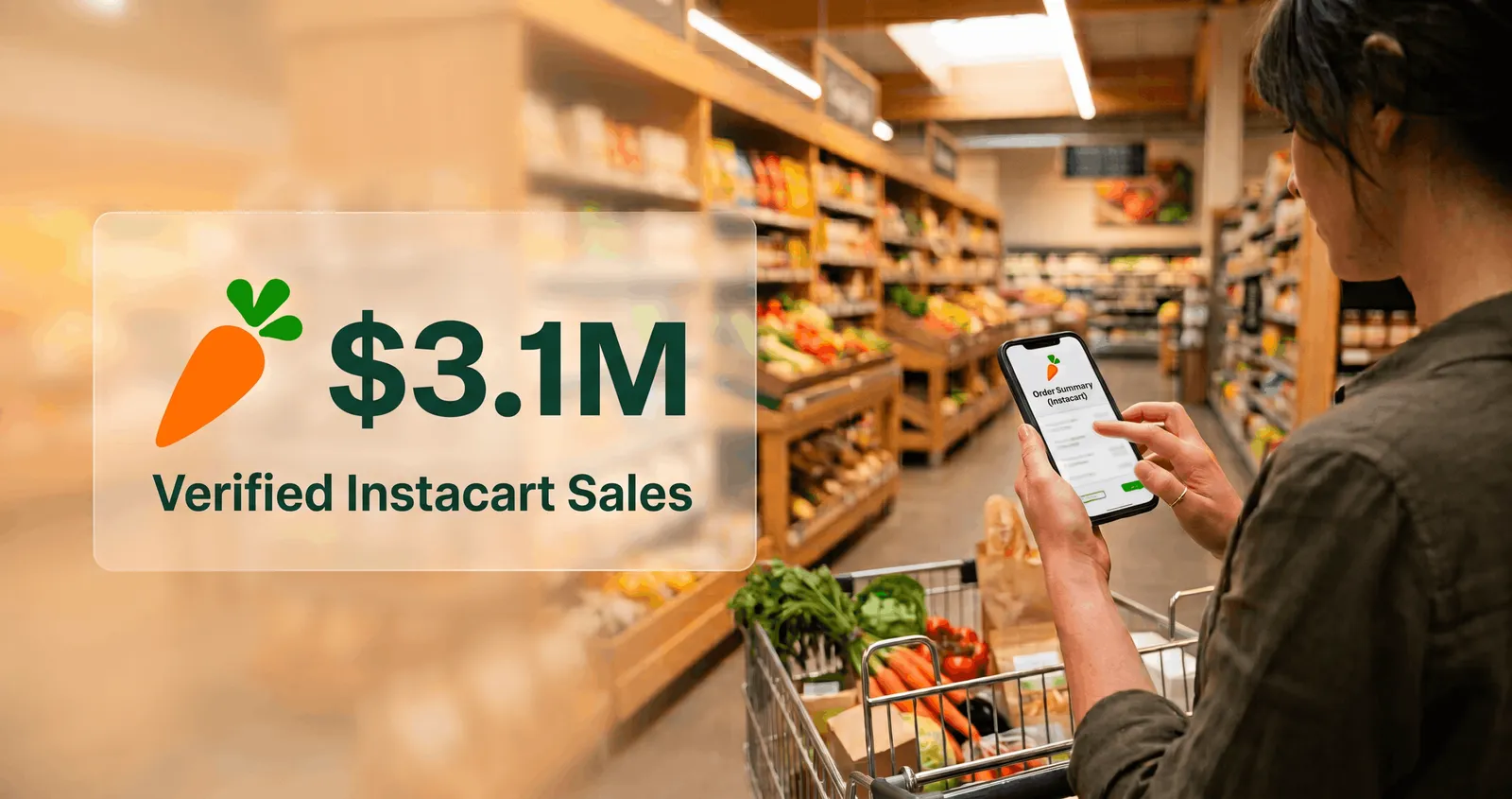
Most influencer marketing reports end with an impressions number. This one ends with a sales number: $3.1 million in verified grocery purchases, driven through Instacart, by creators on Jupiter.
Not modeled. Not estimated. Not attributed through a multi-touch formula with assumptions baked in. Verified, meaning every dollar traces back to an actual Instacart cart, tied to an actual creator post.
The grocery attribution gap is why this number is rare
Most CPG brands cannot show you this number because most attribution models cannot produce it. A creator posts a recipe on Tuesday. Someone buys the product at Kroger, or through Instacart, days later. There is no checkout pixel connecting those two events, no affiliate link click to close the loop. Standard attribution, built for DTC brands with owned checkouts, has nothing to measure.
We have written before about why AI attribution is the only practical way to close the grocery gap, and about the four-layer framework for measuring influencer ROI without a DTC checkout. The $3.1M figure is what is left after you solve that problem instead of reporting around it.
Comment-to-cart is the mechanic behind the number
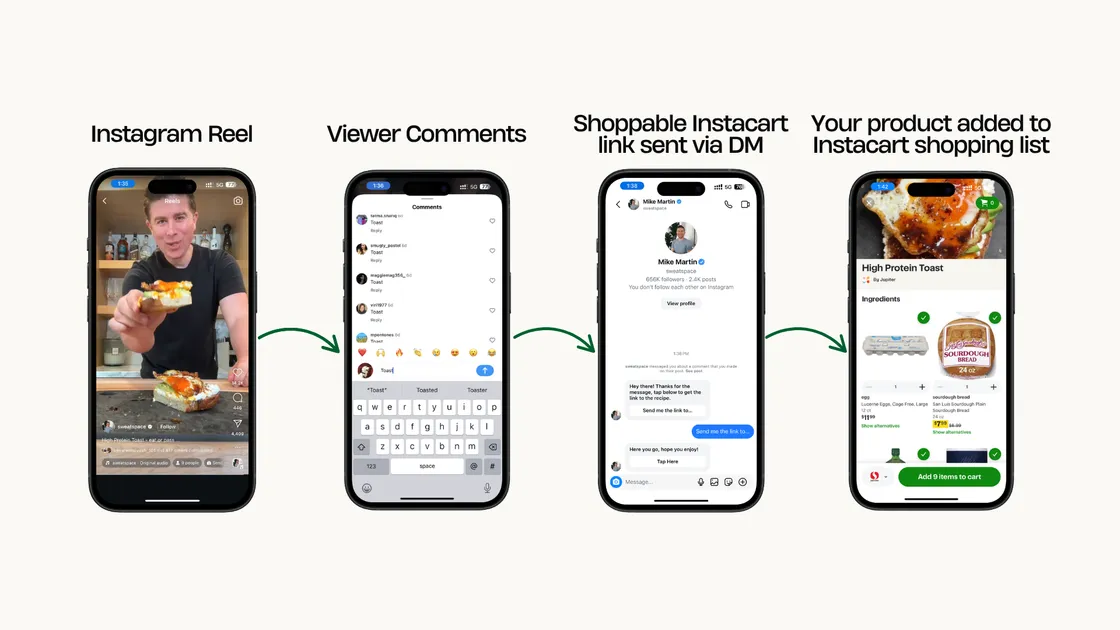
Jupiter's comment-to-cart mechanic is the connective tissue. When someone comments on a creator's post with a specific keyword, they receive a DM containing a shoppable Instacart link tied to that exact creator and that exact post. Every cart add from that link is tracked back to its source.

See verified Instacart attribution running on your campaigns
Jupiter connects creator content to Instacart cart adds automatically, with no manual attribution work required.
That is the difference between an impressions report and a sales number. One tells you how many people saw something. The other tells you how many people bought it. It is also why the benchmark that matters is shifting from cost per impression to cost per cart add.
Why post-level resolution changes the reporting
The mechanic matters because it resolves attribution to the individual post. A campaign-level sales total tells a brand the program worked. A post-level total tells them which creator, which content angle, and which platform produced the result, which is the difference between a report and a decision.
Find out what your creator budget is actually driving
See cart adds, cost efficiency per creator, and campaign health against projections in a single view.
What to ask when a platform only reports reach
If a platform's case studies stop at reach, views, or engagement rate, it is worth asking why. Usually reach is what is measurable inside their model, not what matters most to a brand selling through grocery retail. The end-to-end playbook for running an Instacart-attributed campaign covers what closing that loop actually requires operationally.
Ask whether reported sales are verified transactions or modeled estimates
Ask which specific mechanic connects a post to a purchase
Ask whether attribution resolves to an individual creator and post, or only to a campaign total
Ask whether the platform can report cost per cart add, not just CPM
Reach-only reporting is not dishonest, but it is incomplete in a specific way. It measures the top of the funnel and stops there, leaving the brand to assume the rest. In grocery, where the purchase happens outside the brand's own systems, that assumption is doing an enormous amount of unexamined work.
Verified numbers change how brands allocate budget
When attribution resolves to the individual creator level, reinvestment decisions stop being guesswork. Creators who consistently drive cart adds relative to their impression delivery are worth rebooking and expanding. Creators who deliver reach without conversion are worth replacing. Without verified attribution, those two groups look identical on a standard performance report.
The number is a floor, not a projection
$3.1M in verified Instacart sales is not an estimate of what creator marketing could do for a CPG brand. It is what it already did, tracked transaction by transaction. For brands weighing whether creator campaigns can move product at grocery rather than just generate awareness, that distinction is the entire argument.
Attribution built for the grocery purchase journey
Jupiter tracks Instacart cart adds, creator cost efficiency, and campaign health across every campaign, built exclusively for food and beverage CPG brands.
FAQs
Quick answers to common questions.
What is verified Instacart attribution for CPG brands?▼
Verified Instacart attribution connects a specific creator post to an actual cart add on Instacart, tracked through a unique shoppable link rather than a modeled estimate. Every sale counted is traceable back to the creator and content that drove it. This is different from attribution models that distribute credit across touchpoints using assumptions.
How much does Instacart-attributed influencer marketing cost for a food brand?▼
Cost varies by creator tier, campaign size, and content volume rather than by a fixed platform rate. Because attribution is tied to cart adds rather than impressions, brands can measure cost per cart add instead of only cost per thousand impressions. That makes it possible to compare spend efficiency across campaigns directly.
Is the $3.1M figure verified or estimated?▼
It is verified. The figure reflects actual Instacart cart adds tracked through Jupiter's comment-to-cart mechanic. It is not a projection, a modeled attribution, or an extrapolation from engagement data.
Does the figure represent one brand or all Jupiter brand partners?▼
It is an aggregate figure across Jupiter's creator network and brand partners. Individual brand results vary based on category, campaign size, and creator mix.
Why can most influencer platforms not report a sales number like this?▼
Most platforms were built for direct-to-consumer brands where a link click leads straight to an owned checkout. Grocery purchases happen at a retailer, so there is no native click-to-purchase path. Connecting creator content to a grocery sale requires a purpose-built attribution mechanic rather than standard last-click tracking.
How is this different from an impressions-based case study?▼
Impressions measure how many people saw a piece of content. This measures how many people added the product to a cart and completed a purchase. The two numbers answer different questions, and only one of them tells a brand whether product moved.
More in Attribution & Measurement
More from Attribution & Measurement.