How One Marketer Can Run a Full Influencer Program With AI
7/3/2026 - 1 min read
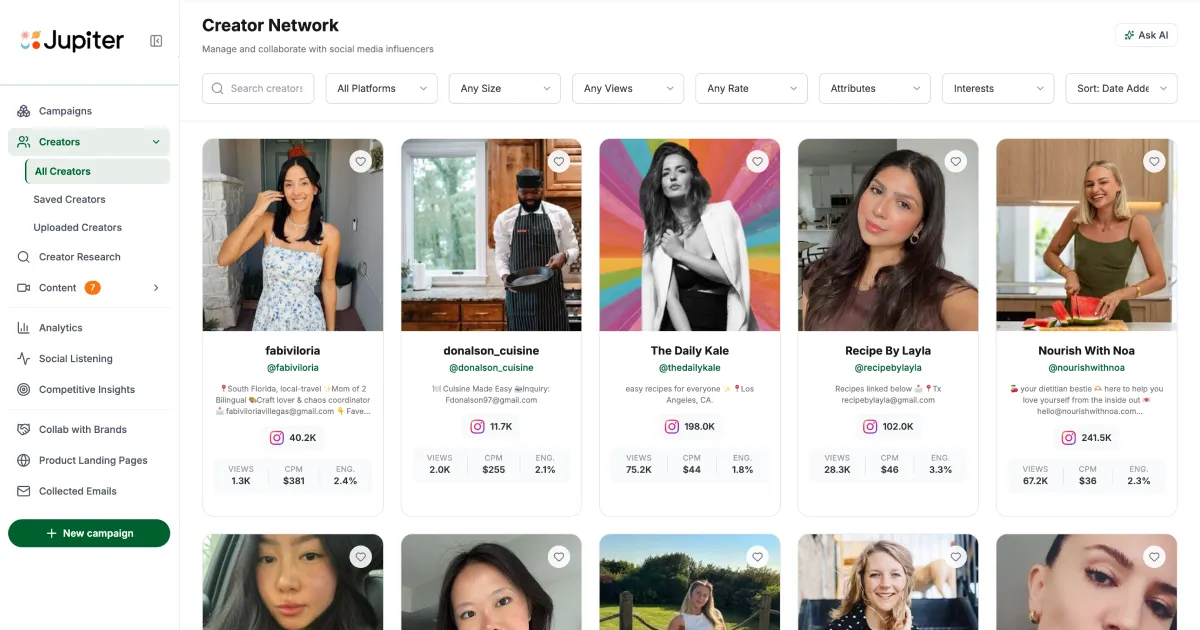
A single marketer with the right AI-native platform can run a full influencer program, from sourcing to reporting, without adding headcount or an agency.
Read post
7/3/2026 - 1 min read
A single marketer with the right AI-native platform can run a full influencer program, from sourcing to reporting, without adding headcount or an agency.
Read post
7/3/2026 - 1 min read
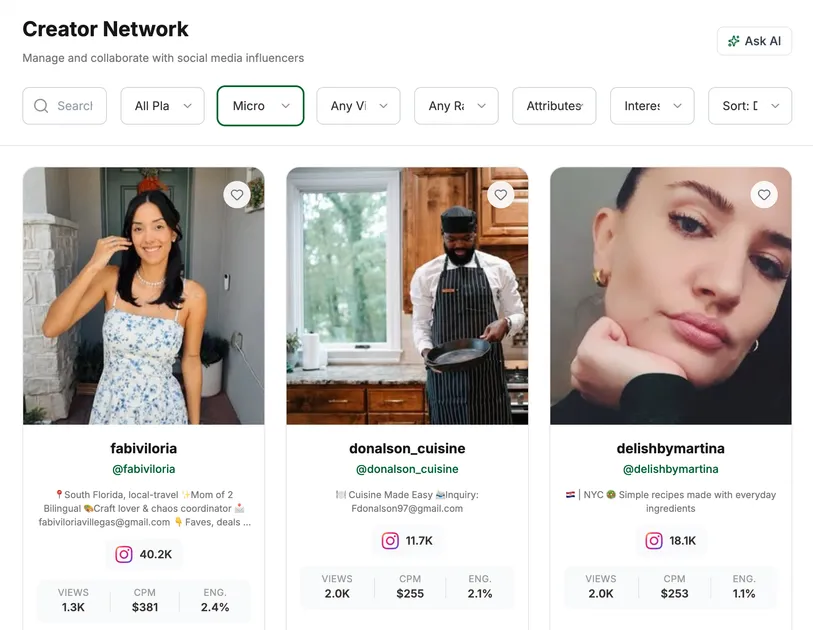
Finding food creators who actually fit your brand used to mean hours of manual scrolling. Here's how a 12-signal AI matching system does it in minutes.
Read post
7/2/2026 - 1 min read
Three thousand dollars isn't a small budget for micro-influencer marketing, it's a normal one. Here's what it actually buys a food CPG brand and how to allocate it.
Read post
7/2/2026 - 1 min read
Most influencer marketing CPMs aren't priced on media, they're priced on human hours. AI-native platforms remove those hours. Here's what that actually looks like for a food CPG brand.
Read post
6/24/2026 - 1 min read
Influencer affiliate marketing usually means commission and promo codes. For food CPG brands selling through grocery and Instacart, the model needs to work differently, and the attribution needs to be sharper.
Read post
6/24/2026 - 1 min read
CPM tells a food brand how cheaply it bought attention. It says nothing about whether anyone bought the product. As grocery attribution improves, the benchmark that matters is shifting from cost per impression to cost per action.
Read post
6/24/2026 - 1 min read
Most influencer reporting stops at impressions and engagement. For a food CPG brand, the only number that matters is whether the product actually left the shelf, and that requires a different kind of campaign design.
Read post
6/24/2026 - 1 min read
Modash and Jupiter both help brands run influencer campaigns, but they're built for opposite ends of the retail spectrum. Here's how they actually compare for food and beverage CPG teams.
Read post
6/18/2026 - 1 min read
Food and beverage CPG brands evaluating influencer marketing agencies face a structural choice: pay for full-service creative management, or use an AI-powered platform built for the grocery retail purchase journey. Here is how to think through it.
Read post
6/16/2026 - 1 min read
Hiring influencers for a food CPG brand is not the same as hiring influencers for a DTC brand. The creators you need drive purchase behavior at Whole Foods, Kroger, and Instacart — not just engagement on a feed.
Read post
6/16/2026 - 1 min read
CPG influencer marketing is how food and beverage brands use social media creators to drive product discovery and purchase at grocery retail. This guide covers everything: creator selection, campaign structure, attribution, and what separates brands that get results from brands that waste budget.
Read post
6/16/2026 - 1 min read
Influencer marketing for CPG brands is not the same discipline as influencer marketing for DTC companies. The purchase journey is different, the creators are different, and the measurement question is different. This guide covers what actually works for food and beverage brands selling through grocery retail.
Read post
6/12/2026 - 1 min read
Most food CPG brands start creator discovery the same way: Instagram hashtag search and crossed fingers. That method finds creators, but it does not find the right creators at the right cost structure with the right audience for your brand. Here is the complete discovery playbook with free and paid methods, vetting criteria, and outreach templates that work.
Read post
6/12/2026 - 1 min read
Cost per engagement measures the real efficiency of influencer campaigns beyond vanity metrics. Here's how CPG brands calculate CPE, interpret benchmarks by platform and creator tier, and optimize campaigns to improve performance.
Read post
6/12/2026 - 1 min read
A creator marketing platform manages discovery, campaigns, content rights, and attribution for performance-focused creator programs. Here's how CPG brands evaluate features, pricing, and vendor fit to choose the right platform for their team size and vertical.
Read post
6/11/2026 - 1 min read
CPG marketing is not DTC marketing applied to grocery. It has a different funnel, different attribution logic, different channel mix, and different success metrics. This is the complete guide for food and beverage brands building marketing programs that move product off grocery shelves.
Read post
6/11/2026 - 1 min read
The shift from traditional CPG advertising to creator marketing is structural, not tactical. It has been building since 2019 and it accelerated through 2026. Here is what the data shows, what creator delivers that TV cannot, and what an honest modern CPG media mix actually looks like.
Read post
6/11/2026 - 1 min read
Statusphere automates micro-influencer product seeding at volume for consumer brands broadly. Jupiter runs full-cycle influencer campaigns with Instacart attribution for food CPG brands specifically. These are different platforms with different jobs. Here is how to choose.
Read post
6/10/2026 - 1 min read
The way food CPG brands run influencer campaigns is changing faster than most marketing calendars can keep up with. These eight trends define where the category is heading and what to do about each one.
Read post
6/9/2026 - 1 min read
Micro influencer brand ambassadors deliver sustained engagement and cost efficiency for CPG brands. This guide covers recruitment, contract structure, performance tracking, and retention strategies for building long-term partnerships with creators in the 10K-50K follower range.
Read post
6/9/2026 - 1 min read
Large food CPG brands have media budgets that small brands cannot match. They do not have the founder story, the brand authenticity, or the audience trust that small brands carry natively. Here is how small CPG brands use those advantages in creator marketing.
Read post
6/9/2026 - 1 min read
A brand collaboration campaign is not a compromise. When the product complementarity is right, two CPG brands co-funding one creator campaign produce content that is more useful to the consumer and more efficient for both brands than anything either could run alone.
Read post
6/8/2026 - 1 min read
Knowing your share of voice vs. competitors answers a different question than knowing what is being said about your brand specifically. Most social listening platforms do not make that distinction. For food CPG brands, the cost of conflating them is real.
Read post
6/8/2026 - 1 min read
Paid creator posts disclose a partnership. Gift box posts do not have to. That distinction, the choice to share versus the obligation to share, is what separates authentic creator content from brand advertising wearing a creator's face.
Read post