How Siete Foods Built a $1.2 Billion Exit on Family Story, Not Just Product
Siete Foods didn't start with a marketing plan. It started with one family member's autoimmune diagnosis and a kitchen experiment. The brand's entire creator and community strategy still runs through that same honest origin.
Siete Foods grew into a $1.2 billion PepsiCo acquisition by making the Garza family’s real story its core marketing asset. It paired that founder story with values-aligned creators, authentic Latino representation built into its casting, and patient growth that established product-market fit and community before raising major outside capital.
Key takeaways
- Founder story beats manufactured narrative. Siete built its marketing around Veronica Garza’s real health journey and the Garza family, giving it credibility a hired creator roster has to work much harder to earn.
- Cast creators for values, not reach. Siete partnered with wellness advocates, food bloggers, and lifestyle creators aligned with grain-free, dairy-free, heritage-inspired eating, which made content feel authentic rather than transactional.
- Representation works best as strategy. Featuring Latino creators and cultural storytelling as part of the core brand (not a side initiative) helped Siete expand beyond its health-motivated base into a wider, culturally connected audience.
- Build community before scaling spend. Siete raised its $90M Stripes Group investment in 2019, five years in, after proving demand, which let it grow on its own terms.
- Use benchmarks for paid programs. Blended organic and community content resists clean CPM comparison, but for paid creator programs the food CPG range of $1.25 to $12.67 CPM remains the planning reference.
Trusted by leading CPG brands








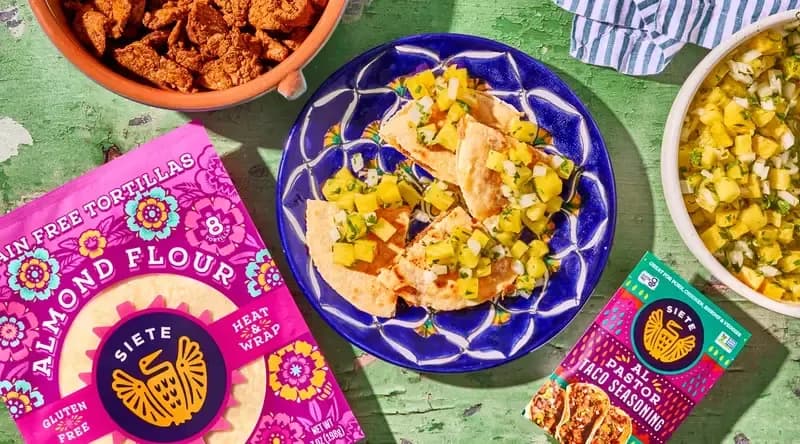
Siete Foods began with a health problem, not a business plan. Veronica Garza had lived with autoimmune conditions since her teenage years, and adopting a grain-free, low-inflammation diet meant giving up tortillas, a genuine loss for a close-knit Laredo, Texas family for whom the food carried real cultural weight. She started making almond flour tortillas in her mother's kitchen so she could keep eating a food that mattered to her family. That kitchen experiment became a company that PepsiCo acquired for $1.2 billion in a deal announced in October 2024, and the marketing strategy that got Siete there was built almost entirely around telling that same honest family story rather than manufacturing a separate brand narrative on top of it.
The family as the actual brand asset
Co-founder and CEO Miguel Garza has been direct about this in interviews: Siete's marketing didn't start with data or a formal plan, it started with a real problem and a family determined to solve it together. That family, the Garzas, became the brand's most consistent and credible content asset. Campaigns like "Juntos es Mejor," meaning "together is better," featured real stories and imagery of the Garza family and their community sharing meals, run across social media, the company's own channels, and in-store promotions, built specifically to create an emotional connection around family and togetherness rather than a product feature list.
This matters structurally, not just emotionally. A hired creator roster, however well-cast, has to work to earn the kind of trust a genuinely close, camera-comfortable founding family brings by default. Siete's marketing built outward from that family credibility rather than trying to manufacture an equivalent from scratch, which is a meaningfully different starting position than most CPG brands have. For a parallel founder-story-as-content-asset approach, see Fishwife's influencer marketing breakdown.
Influencer partnerships built around shared values, not just reach
Siete's broader creator strategy centers on health and wellness advocates, food bloggers, and lifestyle influencers specifically chosen for alignment with the brand's values, grain-free, dairy-free, heritage-inspired eating, rather than creators selected primarily for follower count. Instagram has been the central platform for this work, with the brand showcasing visually strong food content and using interactive formats like stories and polls to keep the relationship with both creators and everyday followers active rather than one-directional.
This values-first casting approach is consistent with the brand's origin story: Siete wasn't trying to reach the broadest possible food audience with generic content, it was trying to reach people who shared the same specific dietary and cultural motivations that started the company in the first place, and then let that authentic overlap do the persuading.
Representation as strategy, not just good intention
Siete's marketing has also deliberately used Latino creators and cultural storytelling as a core part of its broader content strategy, not a separate diversity initiative layered on top of a generic campaign. Video content featuring the Garza family alongside Latino creators, built around the idea that culture itself is an ingredient worth celebrating, has run across platforms like YouTube and paid social specifically to broaden the brand's reach beyond its earliest, most health-motivated customer base into a wider, culturally connected audience.
This is a genuinely useful lesson in what representation-driven creator casting can accomplish when it's built into the brand's actual founding story rather than added afterward. A brand whose origin is authentically tied to a specific culture or community has an opportunity, and arguably an obligation, to build its creator strategy around genuine voices from that same community, and Siete's growth suggests that approach can meaningfully expand a brand's audience rather than narrow it.

Creator selection built around genuine shared values and community
Find creators whose real motivations already overlap with why your brand exists, not just their follower count.
Patient capital and patient growth
Siete raised a $90 million minority investment from Stripes Group in 2019, five years after founding, well after the brand had already established real product-market fit and a genuine community around its story. That sequencing, building authentic demand and brand credibility before raising significant outside capital, gave Siete leverage to grow on its own terms and timeline rather than being pushed to scale a marketing story that hadn't yet been proven.
This is a useful parallel to the broader creator marketing lesson already visible across other Week 3 brand teardowns: brands that let genuine community and content credibility develop before scaling paid spend heavily tend to build a more durable foundation than brands that try to buy scale before the underlying story and audience relationship are established.
What food CPG brands can actually copy
The founder-story-as-content-asset lesson is the most broadly applicable takeaway, and it's genuinely available to almost any founder-led brand, not just one with as compelling an origin as Siete's. Building marketing and creator content around a real, specific, honestly told founding story creates a credibility foundation that a purely hired creator roster has to work much harder to establish on its own.
The values-first creator casting lesson translates directly. Selecting creators based on genuine alignment with a brand's specific mission and audience, rather than primarily on reach, tends to produce content that reads as authentic rather than transactional, and it's a casting discipline any brand can apply regardless of category or budget.
Does your brand's real story have more marketing power than your current content admits?
A genuine origin story, told honestly through the right creator voices, builds credibility a hired roster alone can't replicate.
The representation-as-strategy lesson deserves serious consideration from any brand with a genuine cultural or community story to tell. Building creator casting around authentic voices from that same community, rather than treating representation as a separate initiative, can meaningfully expand a brand's reach in a way that feels earned rather than performative.
How this compares to the food CPG benchmark
Siete's community and values-driven creator approach doesn't map neatly onto a single CPM figure the way a straightforward paid campaign would, since much of the brand's most effective content, family storytelling, in-store promotions, community events, blends organic and paid elements in ways that resist a clean cost-per-impression comparison. For a food CPG brand building a more conventional, paid creator program on top of a genuine story foundation, the $1.25 to $12.67 CPM range documented across food CPG creator campaigns remains the right planning reference, with values-aligned, community-rooted casting generally supporting stronger engagement and trust than reach-first casting at a comparable cost. Full category and platform context lives in the 2026 food CPG influencer benchmark.
Used by 58+ leading CPG brands including Banza, Pete & Gerry's, and Kettle & Fire
See how Jupiter builds a values-aligned, story-first creator program for your brand.
FAQs
Quick answers to common questions.
What is Siete Foods' influencer marketing strategy?▼
Siete Foods builds its marketing around its own founding family story, using campaigns like "Juntos es Mejor" to center family and togetherness, and pairs that with influencer partnerships selected for genuine alignment with the brand's grain-free, heritage-inspired values rather than primarily for reach.
How did Siete Foods start, and how does that story factor into its marketing?▼
Co-founder Veronica Garza began making almond flour tortillas in her mother's kitchen after autoimmune conditions required a grain-free diet, wanting to preserve a food central to her family's culture. That authentic origin became the foundation of the brand's marketing, with the Garza family serving as an ongoing, credible content asset rather than a one-time founding story.
Did Siete Foods get acquired, and by whom?▼
Yes. PepsiCo announced a definitive agreement to acquire Siete Foods for $1.2 billion in October 2024, with the deal expected to close in the first half of 2025. Co-founder Miguel Garza has said the family plans to remain involved to help preserve the brand's authenticity.
How does Siete Foods use representation in its creator strategy?▼
Siete has deliberately featured Latino creators alongside the Garza family in its broader video and social content, built around the idea that cultural authenticity is a core brand asset, helping the brand expand beyond its earliest health-motivated customers into a wider, culturally connected audience.
How much outside funding did Siete Foods raise before scaling significantly?▼
Siete raised a $90 million minority investment from Stripes Group in 2019, five years after the company's 2014 founding, after the brand had already established real product-market fit and community credibility.
Can a smaller CPG brand copy Siete Foods' story-first strategy?▼
The core lesson, building creator and content strategy around an honest, specific founding story and casting creators for genuine values alignment, is broadly replicable at any scale. It works best when a brand's real origin story has genuine emotional or cultural substance to build from, rather than being manufactured after the fact.
More in Strategy & Guides
More from Strategy & Guides.