The Real Numbers Behind Olipop's $1.85 Billion Creator-Led Growth
Olipop turned off paid advertising in 2021 and bet the entire brand on creators. The bet worked, and the numbers behind it are specific enough for any food CPG brand to actually learn from.
Olipop's influencer marketing strategy was to cut nearly all paid social advertising in 2021 and put that budget into TikTok creator partnerships, leaning heavily on micro-influencers paid through gifting plus sales commission, which helped it reach a $1.85 billion valuation and an affiliate program driving about 12 percent of sales.
Key takeaways
- Olipop moved its paid social budget into creator partnerships in 2021, generating over a billion views at a blended CPM well under $1.
- Micro-influencers grew from about 3 percent to about 20 percent of Olipop's creator-attributed sales.
- Macro creators can cost $15,000 to $49,000 per post, while micro and nano partnerships can start around $500.
- A hybrid gifting-plus-commission model lets brands run far more creator relationships on the same budget and ties pay to sales.
- Concentrate on one platform where your audience is strongest; for most food CPG brands Instagram leads on impressions, with TikTok close behind.
- Running hundreds of small creator partnerships requires tooling to source, vet, brief, and track them.
- Don't copy the ad shutdown unless creator content has already proven it can carry awareness on its own.
- Plan paid creator budgets against the $1.25 to $12.67 food CPG CPM range, and treat Olipop's sub-$1 CPM as long-term organic upside.
Trusted by leading CPG brands




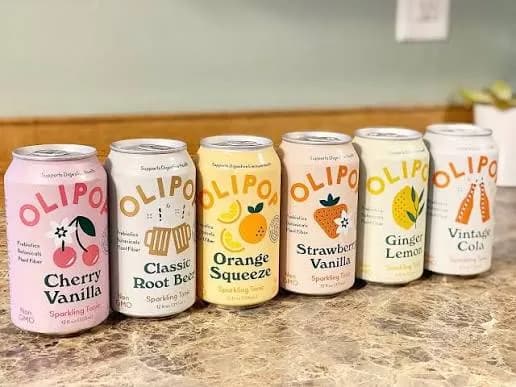
In 2021, Olipop made a decision most CPG brands would consider reckless: it shut down paid advertising across social platforms and put its marketing budget almost entirely into creator partnerships, concentrated on TikTok. At the time, Olipop was a niche prebiotic soda brand most of the country had never heard of. Four years later, it's a $1.85 billion functional soda company that helped force Coca-Cola and PepsiCo to launch their own prebiotic sodas in response. The decision to bet on creators over ads is a big part of why.
This breakdown looks at what Olipop actually did, the specific numbers behind it, and what's genuinely replicable for a food and beverage CPG brand without a nine-figure marketing budget.
The 2021 decision that defined Olipop's strategy
Olipop's leadership made a specific, calculated bet: traditional paid advertising was getting more expensive with worse returns, especially against the CPM inflation happening across paid social, while creator-driven content on TikTok was cheap, authentic-feeling, and converting. Rather than splitting budget across both channels, Olipop cut paid ads almost entirely and reallocated that spend into creator partnerships, ranging from macro influencers down to true micro and nano creators.
The results are documented and specific. Shutting down paid advertising in favor of creator partnerships generated over a billion views at a blended cost per thousand impressions well under a dollar, a fraction of what comparable paid media would have cost for that same reach. That's the headline number, but the more instructive numbers are what happened underneath it.
The micro-influencer shift, and why it matters
The single most useful data point in Olipop's strategy for a food CPG brand to study is this: micro-influencers went from driving roughly 3 percent of Olipop's creator-attributed sales to roughly 20 percent. That's not a marginal shift, it's a fundamental restructuring of where the brand's creator budget actually produces revenue.
The economics explain why. Macro influencers and celebrities routinely charge $15,000 to $49,000 per post. A single underperforming partnership at that price point is a real financial hit, and it limits how many partnerships a brand can run concurrently. Nano and micro-influencer partnerships, by contrast, can start from as little as $500 per post, and in Olipop's case, much of the program runs on a hybrid model combining product gifting with a performance-based commission tied to attributable sales, not a flat fee at all.
Olipop's dedicated creator affiliate program, launched in 2021, now drives roughly 12 percent of the brand's total sales with a reported 982 percent return on investment. That figure is specific to Olipop's program and shouldn't be treated as a universal benchmark, every brand's numbers will differ, but the structural lesson holds: a hybrid gifting-plus-commission model gives a brand exposure to a much larger number of creator relationships than a flat-fee model would support at the same budget, and it aligns creator incentive directly with actual sales rather than just content delivery. For the category rivalry context, see the sparkling water influencer marketing playbook.
Building a creator program with Olipop's economics, not its budget
Micro and nano creator selection, hybrid compensation modeling, and platform-focused strategy, built for food CPG specifically.
Platform focus: why TikTok, and why not everywhere at once
Olipop concentrated its creator strategy almost entirely on TikTok rather than spreading thin across every platform. Instagram was used differently, largely for in-house, aesthetically produced brand content rather than creator partnerships, while TikTok carried nearly the entire creator relationship and organic discovery engine. This wasn't an accident. The brand found that TikTok's algorithm and content format rewarded authentic, creator-native content in a way that translated into real discovery and purchase intent, while spreading the same budget across multiple platforms would have diluted both the creative focus and the relationship depth with any single platform's creator community.
For a food CPG brand without Olipop's scale, this is a genuinely useful lesson in constraint. Concentrating a creator budget on the platform where the brand's actual audience and content format are strongest tends to outperform a thin, multi-platform spread, particularly for a brand still building its first real creator community.
The tools behind the operation
Olipop doesn't run this program manually. The brand uses a stack of creator-relationship and campaign management tools to source, vet, and manage partnerships at scale, including networks specifically built around niche creator communities, such as one connecting brands with micro-influencer networks often centered on moms in the Midwest, and a separate platform for connecting with college athletes through Name, Image, and Likeness partnerships for hyper-local marketing. This isn't a brand running influencer outreach out of a spreadsheet. It's an operating system for creator relationships, purpose-built to source and manage the volume of smaller partnerships the strategy depends on.
That infrastructure detail matters because it's the part most breakdowns of Olipop's strategy skip. Getting to 20 percent of creator-attributed sales from micro-influencers isn't just a casting decision, it's an operational one. A brand trying to run hundreds of small creator relationships without the right tooling to source, vet, brief, and track them will struggle to reach the same scale, regardless of how good the underlying strategy is.
Trying to build the micro-influencer economics without the manual overhead?
Sourcing, vetting, and managing hundreds of small creator relationships is an operational problem as much as a strategic one.
What food CPG brands can actually copy
The platform concentration lesson translates directly: pick the platform where a brand's content format and audience are strongest, and go deep rather than spreading thin. For most food CPG brands, per Jupiter's own production data, that split leans Instagram for raw impression volume, though TikTok's share of category conversation runs close behind, so the right platform focus depends on category and audience specifics rather than a blanket TikTok-first assumption.
The micro-influencer economics lesson translates directly as well, and it's consistent with where the broader creator economy is heading regardless of Olipop's specific example. Nano and micro creators are on track to represent a substantial and growing share of total influencer marketing spend industry-wide, which means the shift Olipop made isn't a brand-specific quirk, it's ahead of a trend most of the category is now following.
The hybrid compensation lesson is worth real consideration for any brand still running purely flat-fee creator deals. Tying at least part of a creator relationship's compensation to attributable performance, rather than paying a flat rate regardless of results, aligns incentives in a way that a pure gifting or pure flat-fee model doesn't.
What doesn't translate cleanly is the ad shutdown itself. Olipop's decision to cut paid advertising almost entirely was a bet made from a specific position, a brand with strong organic content-market fit and a genuine underlying product story that traveled well in creator hands. A brand without that same organic traction risks losing awareness entirely by cutting paid spend too aggressively before creator content has proven it can carry that weight on its own.
How this compares to the food CPG benchmark
Olipop's blended creator campaign cost, well under a dollar CPM at the top-of-funnel awareness stage, sits below the $1.25 to $12.67 CPM range documented across food CPG creator campaigns in Jupiter's production data, though that comparison isn't quite apples to apples. Olipop's headline figure reflects organic, largely unpaid or product-gifted content at massive scale over several years, not a single measured paid campaign. A food CPG brand planning next quarter's budget should anchor expectations to the documented $1.25 to $12.67 range for paid creator partnerships, while treating Olipop's broader organic multiplier as the long-term upside case that compounds once a strong creator community and content library are established. Full category and platform context lives in the 2026 food CPG influencer benchmark.
Used by 58+ leading CPG brands including Banza, Pete & Gerry's, and Kettle & Fire
See how Jupiter builds a micro-influencer-weighted, hybrid-compensation creator program for your brand.
FAQs
Quick answers to common questions.
What is Olipop's influencer marketing strategy?▼
Olipop shut down paid advertising in 2021 and concentrated its marketing budget on creator partnerships, primarily on TikTok, using a hybrid model combining product gifting with performance-based commission. The strategy shifted heavily toward micro-influencers over time, who now drive roughly 20 percent of the brand's creator-attributed sales, up from about 3 percent.
How much does Olipop's influencer program cost per creator?▼
Olipop's program spans a wide range, from macro influencer and celebrity partnerships costing $15,000 to $49,000 per post, down to micro and nano creator partnerships starting from around $500 per post, often structured as a hybrid of product gifting plus commission rather than a flat fee.
What is Olipop's return on investment from influencer marketing?▼
Olipop's dedicated creator affiliate program has reported a 982 percent return on investment and now drives roughly 12 percent of total sales, according to case studies of the program. These figures are specific to Olipop and shouldn't be treated as a universal benchmark for other brands.
Why does Olipop focus almost entirely on TikTok for creator partnerships?▼
Olipop found that TikTok's algorithm and content format rewarded authentic creator-native content more effectively than a multi-platform approach would, and concentrating budget and creative focus on one platform outperformed spreading the same resources thin across several.
Can a smaller CPG brand copy Olipop's strategy?▼
The micro-influencer economics and hybrid compensation model translate well to smaller brands and are genuinely replicable. The full ad-spend shutdown is riskier to copy directly, since it depends on already having strong organic content-market fit, something a newer brand may not yet have established.
How does Olipop's creator cost compare to typical food CPG benchmarks?▼
Olipop's top-of-funnel organic and gifted content ran at a blended cost well under $1 CPM, below the $1.25 to $12.67 CPM range documented across paid food CPG creator campaigns generally. That comparison reflects years of organic compounding rather than a single paid campaign, so it represents a long-term upside case more than a typical near-term budget expectation.
More in Strategy & Guides
More from Strategy & Guides.