How Graza Turned a Squeeze Bottle Into Its Entire Content Strategy
Graza didn't hire influencers to sell olive oil. It sent a genuinely funny product to people who cook on camera and let the bottle write the jokes. That single decision explains most of the brand's growth.
Graza stood out in the confusing olive oil category by designing its green squeeze bottle as a built-in content format, then seeding unscripted samples to food creators with no contracts or briefs. It sold out its January 2022 launch inventory in one week, reportedly passing $100,000 in revenue, and later put paid spend behind top-performing organic creator posts.
Key takeaways
- Graza's green squeeze bottle worked as content architecture, not just design, because squeezing premium olive oil like a diner condiment gave every creator a repeatable visual gag to film without a script or brief.
- Graza launched in January 2022 by DMing dozens of food creators a free sample with no paid contract, creative brief, or approval process, and sold out its initial inventory within the first week, reportedly crossing $100,000 in revenue.
- Graza monitored unprompted creator posts and put paid amplification only behind content already performing organically, which helped cut marketing spend from roughly 12.5 percent to around 5 percent of gross revenue during an olive oil cost spike.
- Graza built its visual identity, including the color and product names "Sizzle" and "Drizzle," around a home cook who already photographs and shares their kitchen, showing that packaging should match how the buyer presents their life on camera.
- Unscripted product seeding costs far less than the $1.25 to $12.67 CPM range in Jupiter's paid food CPG campaign data, making it a low-cost way to validate organic content potential before scaling into a structured paid creator program.
Trusted by leading CPG brands







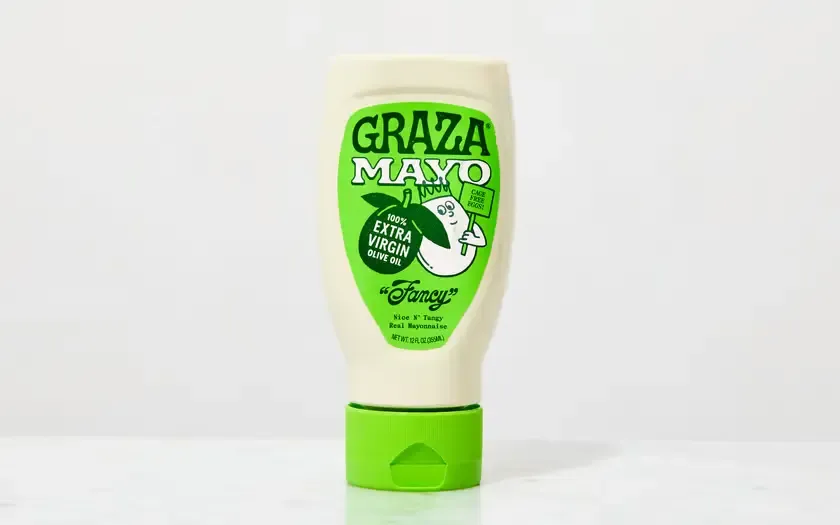
Olive oil is one of the hardest categories in a grocery store to market. Extra virgin, refined, smoke points, region, price tiers that don't obviously track quality, most shoppers stand in front of the shelf mildly confused and grab whatever looks familiar. Graza didn't try to educate its way out of that confusion with better labeling or a longer ingredient story. It changed the container. A bright green squeeze bottle, the kind associated with diner ketchup, not a finishing oil that can run $200 a liter, gave the product something almost no other olive oil brand had: a built-in visual joke that worked the moment a camera pointed at it.
That single packaging decision explains more of Graza's creator marketing success than any campaign tactic layered on top of it, and it's the starting point for understanding why the rest of the strategy worked as well as it did.
The launch strategy: no scripts, no contracts, just samples
Ahead of Graza's January 2022 launch, the brand's early marketing lead reportedly DM'd dozens of food creators directly, with a quirky one-liner and no paid contract attached, simply offering a sample and letting each creator decide whether to post about it at all. There was no creative brief, no required talking points, no approval process. The instruction was closer to "here's something useful, show us how you actually use it" than any kind of managed campaign.
That approach worked because the product itself did the persuading. Creators who received the bottle found it functioned differently, and looked different, than anything else in their pantry, and the squeeze format alone gave them something worth filming without needing to be told what to say about it. Graza sold out its initial inventory within the first week of launch, reportedly crossing $100,000 in revenue in that same window, driven almost entirely by this unscripted seeding rather than any paid media spend.
Packaging as content architecture, not just design
The squeeze bottle wasn't simply attractive design that happened to photograph well. According to Graza's own team, it functioned as the actual architecture of the brand's content strategy. Squeezing oil like a diner condiment is inherently a little funny in a kitchen context, especially applied to something normally treated as a precious, glass-bottled luxury item, and Graza leaned into that dissonance rather than trying to smooth it over with a more traditional, premium presentation.
This is a genuinely different way of thinking about product design than most CPG brands use. Instead of designing packaging and then asking creators to make content about it, Graza treated the packaging itself as a repeatable content format, one visual gag that any creator could riff on without needing a script. That's a much lower creative bar for a creator to clear than "come up with something interesting to say about olive oil," and it's a meaningful part of why so much of the brand's content came from creators who weren't being paid or directed at all. For the shared format-first theme, see the sauce and condiment influencer marketing playbook.
Reposting and amplification, not just seeding
Graza's own social feeds became largely built from user-generated content rather than produced brand assets, unpolished, platform-native, and reposted directly rather than reshot with better lighting. But the brand didn't just passively wait for organic content to appear. It actively monitored unprompted creator content and put paid amplification behind the posts that were already performing well organically, rather than commissioning everything from scratch or guessing in advance what would land.
This whitelisting-style approach, finding what's already working and putting budget behind it, is a meaningfully different resource allocation than a traditional campaign model where spend is committed before any content exists. It lets a brand's paid budget follow proven performance instead of predicting it, which is a lower-risk way to deploy a limited marketing budget, and it was reportedly efficient enough that Graza's marketing spend as a share of gross revenue actually fell from roughly 12.5 percent to around 5 percent during a period when olive oil input costs spiked, with the brand leaning harder into organic and community channels rather than increasing paid spend to compensate.
Creator selection built to find and amplify what's already working
Surface genuine organic traction first, then put budget behind the content that's already proving itself.
The buyer Graza actually understood
Graza's creator strategy worked because it was built around a specific, well-understood buyer: a home cook for whom cooking is partly private pleasure and partly public identity, someone who follows recipe creators, plates food meant to be photographed, and treats a visible, well-designed pantry the way an earlier generation treated a bookshelf. For that buyer, a distinctive bottle sitting on the counter isn't just storage, it's part of a kitchen that's meant to be seen. Graza's entire visual identity, the color, the playful product names like "Sizzle" and "Drizzle," was built for a buyer who was always going to photograph their kitchen anyway.
This matters as a lesson beyond olive oil specifically. Understanding not just who buys a product but how that person already presents their life on camera changes what kind of packaging, naming, and content format will actually travel through creator content. A product built for a buyer who never photographs their kitchen needs a completely different content strategy than one built for a buyer who already does.
What food CPG brands can actually copy
The core lesson is about designing for content before designing for shelf presence alone. Before committing to final packaging, it's worth asking whether the product has one genuinely camera-friendly, repeatable quirk, a color, a format, a use case, a visual gag, that a creator could build a piece of content around without needing a script or a brief. Graza had the squeeze bottle. Most CPG products have some equivalent waiting to be identified and leaned into rather than smoothed away in the name of looking more premium or conventional.
The unscripted seeding approach translates directly and cheaply. Sending product to a genuinely well-matched creator with no script and no contract, and simply seeing what they make of it, costs very little and produces content that reads as authentic precisely because it wasn't directed. This isn't a replacement for a structured paid creator program at scale, but it's a strong, low-cost way to validate whether a product has real organic content potential before investing heavily in a broader campaign.
The amplify-what-works model is worth building into any brand's paid strategy, regardless of category. Rather than committing paid budget to content before it exists, monitoring organic creator posts and then putting spend behind the ones already proving themselves is a lower-risk, more efficient way to deploy a limited marketing budget.
Does your product have a camera-friendly quirk nobody's leaning into yet?
The most efficient creator content often comes from a genuine product detail, not a manufactured campaign concept.
How this compares to the food CPG benchmark
Graza's early, unscripted seeding approach, product cost only, no creator fees, no formal contracts, sits well below the $1.25 to $12.67 CPM range documented across paid food CPG creator campaigns, because it wasn't a paid campaign at all in the traditional sense. That approach is a genuinely useful, low-cost validation strategy for any brand testing whether a product has organic content potential, but it depends on the product actually having something visually distinctive to offer, the way Graza's bottle did. Once a brand moves into a structured, scaled creator program with paid partnerships, the standard benchmark range becomes the more realistic planning reference. Full category and platform context lives in the 2026 food CPG influencer benchmark.
Used by 58+ leading CPG brands including Banza, Pete & Gerry's, and Kettle & Fire
See how Jupiter builds a seeding-first, amplify-what-works creator program for your brand.
FAQs
Quick answers to common questions.
What is Graza's influencer marketing strategy?▼
Graza launched by DMing food creators directly with free samples and no script or contract, letting the product's distinctive squeeze bottle format generate organic, unscripted content. The brand then actively monitored and amplified the organic posts that performed best with paid spend, rather than committing budget to content before it existed.
Why did Graza's squeeze bottle packaging matter so much for its marketing?▼
The squeeze bottle format created an inherent visual joke, squeezing oil like a diner condiment applied to a premium finishing oil, that gave creators something camera-friendly and shareable to film without needing direction. This turned the packaging itself into a repeatable content format rather than just product design.
How much did Graza spend on paid advertising?▼
Graza reportedly reduced its marketing spend as a share of gross revenue from roughly 12.5 percent to around 5 percent during a period of rising olive oil input costs, leaning more heavily into organic and community-driven channels rather than increasing paid spend.
How fast did Graza grow after launch?▼
Graza reportedly sold out its initial inventory within the first week of its January 2022 launch, crossing $100,000 in revenue in that same window, driven largely by unscripted creator seeding rather than paid media.
Can a smaller CPG brand copy Graza's strategy?▼
The unscripted, no-contract seeding approach is genuinely low-cost and replicable for any brand, but it depends on the product having a real, camera-friendly distinguishing quality worth filming. A brand should honestly assess whether its product or packaging has an equivalent to Graza's squeeze bottle before expecting the same organic response.
How does Graza's approach compare to typical food CPG creator benchmarks?▼
Graza's early seeding strategy, product cost only, no formal creator fees, sits below the $1.25 to $12.67 CPM range documented across paid food CPG creator campaigns, since it wasn't a paid campaign in the traditional sense. It's a strong low-cost validation approach, with the standard benchmark range becoming the more realistic reference once a brand scales into a structured, paid creator program.
More in Strategy & Guides
More from Strategy & Guides.