What Poppi's Rise and One Costly Misstep Teaches Food CPG Brands
Poppi built a $2 billion exit largely on founder-led TikTok content and creator partnerships. It also produced one of the most widely discussed influencer marketing missteps in recent CPG history. Both halves of that story matter.
Poppi grew from a Dallas farmers market table to a near $2 billion PepsiCo acquisition by building on co-founder Allison Ellsworth's TikTok origin story, then scaling into a creator mix of micro-creators and celebrity investors. Its 2025 Super Bowl vending machine backlash and $8.9 million gut-health claims settlement show the risks of poor optics and loose health claims.
Key takeaways
- Poppi co-founder Allison Ellsworth built the brand's credibility on TikTok by sharing her personal gut-health story, and that first origin-story video reportedly reached over 17 million views and drove a $100,000 sales increase within 24 hours.
- Poppi scaled its creator program from founder-led content into a mix of micro-creators for authenticity and reach efficiency plus celebrity investor-creators, whose financial stake in the brand produced more durable advocacy than one-off paid placements.
- Poppi's 2025 Super Bowl pre-launch campaign, which sent branded vending machines to already-prominent influencers, drew sharp public backlash because lavish gifting contradicted the brand's scrappy, relatable founder narrative, showing that reach and brand fit are separate measures of success.
- Poppi settled a gut-health class-action lawsuit for $8.9 million, which shows that functional food and beverage brands carry legal risk from informal creator claims like "this fixed my gut health," not just formal ad copy.
- Poppi's viral founder video is an outlier compared to the $1.25 to $12.67 CPM range in Jupiter's food CPG campaign data, so brands should plan around the replicable creator mix structure rather than expecting organic virality on demand.
Trusted by leading CPG brands










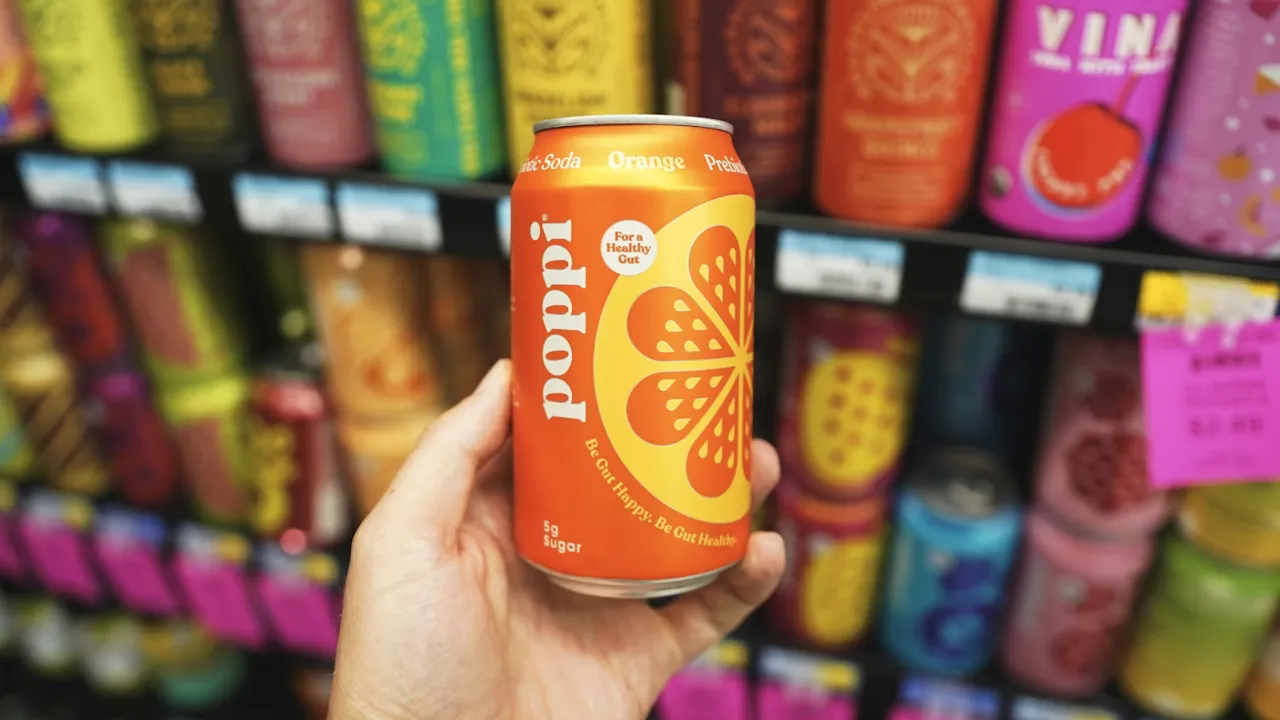
Poppi's origin story is almost aggressively small: a Dallas kitchen, apple cider vinegar mixed with sparkling water and fruit juice, a folding table at a local farmers market. By the time PepsiCo acquired the brand for close to two billion dollars, Poppi had become one of the clearest examples in recent CPG history of what founder-led, creator-first marketing can build, and also, in the same year as that acquisition closed, one of the clearest examples of what happens when a creator campaign badly misreads its own audience. Both halves of that story are worth understanding, because most breakdowns only tell one.
The founder-led foundation that built the brand
Co-founder Allison Ellsworth didn't hand her brand's story to a marketing agency or a roster of hired creators first. She became the face of it herself. On TikTok, she posted taste tests, behind-the-scenes looks at product development, and, most importantly, the honest story of why the product existed at all, her own struggle with gut health issues that led her to start experimenting with apple cider vinegar in her kitchen. That first viral video telling the brand's origin story reportedly reached over 17 million views, and within 24 hours of it posting, Poppi's sales reportedly increased by $100,000.
That founder-led content did something a hired creator roster couldn't have done as convincingly at that stage: it established the emotional and personal credibility the rest of the brand's creator strategy could then build on top of. Before Poppi ever paid a single influencer, its founder had already proven the story itself was compelling enough to drive real, measurable sales on its own.
Scaling from founder story to creator ecosystem
Once that foundation was established, Poppi built outward from it. The brand became known for a wide creator mix, from smaller creators genuinely integrating the product into everyday content like get-ready-with-me routines and fridge restocks, up to recognizable names and, notably, celebrity investors with a real financial stake in the brand's outcome rather than a one-off paid placement. That investor-creator structure matters: someone who has actually put money into a brand's success brings a different, more durable kind of advocacy than a single sponsored post, and it signals product conviction in a way that pure paid endorsement can't fully replicate.
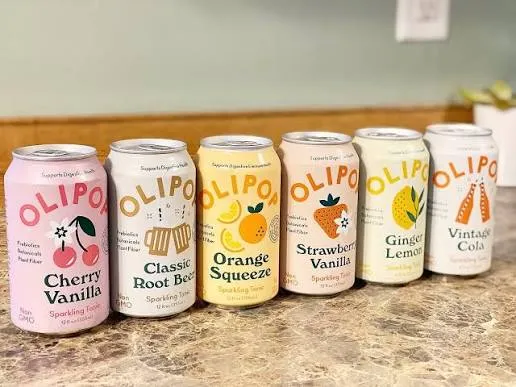
By the time of Poppi's 2025 Super Bowl campaign, the brand's creator strategy had matured into a full mix spanning micro-creators up through recognizable investor-creators appearing in the national ad spot itself. That range, small creators for authenticity and reach efficiency, larger names and investor-creators for cultural validation, is a genuinely reusable structure for a food CPG brand thinking about how to build a creator program that scales without losing its founder-story credibility. For the category rivalry and shared claims context, see the sparkling water playbook and Olipop's influencer marketing breakdown.

Creator campaigns built to match your brand's actual story
Fit and scale matter as much as reach. Get creator selection that reinforces your brand narrative instead of contradicting it.
The vending machine campaign, and what went wrong
Ahead of that same 2025 Super Bowl ad, Poppi sent large branded vending machines to a group of already-prominent influencers as part of the campaign's pre-launch activation. The influencers posted about the gifts, the content got millions of views, and the public reaction turned sharply negative. Critics argued the gesture read as excessive and disconnected from Poppi's own everyday customer, pointing out that the same investment could have gone to places like hospitals, schools, or community centers rather than to creators who were, by most measures, already well-resourced. A direct competitor amplified the criticism in real time, commenting on the viral posts and inflating cost estimates, turning what was meant to be a moment of brand celebration into a widely discussed cautionary example.
The specific failure here wasn't the use of influencers, it was a mismatch between the campaign's scale and optics and the brand's own foundational story. Poppi built its credibility on a scrappy, relatable, founder-led narrative. A campaign that reads as lavish gifting to an already-privileged group of creators works against that exact narrative, regardless of how many views it generates. Reach and brand fit are not the same measure of success, and this campaign optimized hard for the former while damaging the latter.
The claims scrutiny that followed success
Poppi's growth also invited a different kind of scrutiny: its gut-health marketing claims became the subject of a class-action lawsuit, which the company ultimately settled for $8.9 million. The core argument was that the fiber content in a single can couldn't reasonably support the breadth of gut-health benefits implied in the brand's broader marketing. This is a documented, real consequence, not a hypothetical risk, and it's directly relevant to how any functional beverage or functional food brand should think about the specific wording used in its own creator briefs, not just its official advertising.
The lesson generalizes cleanly: as a brand's visibility and claims grow, so does the scrutiny applied to those claims, including claims made informally by creators rather than in official brand copy. A creator saying "this fixed my gut health" in an unscripted, enthusiastic post can create the same legal exposure as a formal ad claim, even though it feels more casual and less controlled.
What food CPG brands can actually copy
The founder-led credibility lesson is the most broadly applicable takeaway here, and it doesn't require a founder as telegenic as Allison Ellsworth to work. A brand's own origin story, honestly and specifically told, whether by a founder or by early, genuine customers, builds a foundation of credibility that a purely hired creator roster starts without. Establishing that foundation first, before scaling into a wider paid creator program, gives the wider program something authentic to build on.
Balancing founder-led credibility with a scaled creator program?
Get the mix of authentic small-creator content and broader reach right, without losing the story that built trust in the first place.
The investor-creator structure is worth real consideration for brands with the right kind of early supporter relationships. A creator with genuine financial or personal stake in a brand's success brings a different quality of advocacy than a standard paid placement, and it's a structure more brands could use deliberately rather than treating investor relationships and creator relationships as entirely separate categories.
The optics lesson from the vending machine campaign is the one every brand planning a high-visibility creator activation should internalize directly: before greenlighting a large-scale, high-cost creator gesture, stress-test it against the brand's own foundational story. Does this reinforce the narrative that built trust with our actual customers, or does it contradict it for the sake of reach.
The claims-discipline lesson applies to every creator brief a food or functional beverage brand writes, not just formal advertising copy. Specific, factual claims hold up. Broad, implied health outcome claims, even said casually by an enthusiastic creator, carry real legal risk.
How this compares to the food CPG benchmark
Poppi's earliest viral moment, a single founder-led video generating $100,000 in sales within 24 hours off organic reach alone, sits well outside what a typical paid campaign in the $1.25 to $12.67 CPM range documented across food CPG creator campaigns would predict, because organic virality of that specific kind is rare and not reliably reproducible on demand. A food CPG brand should treat that kind of outcome as evidence of what a genuinely compelling founder story can do at its best, not as a realistic planning assumption. The steadier, more replicable comparison point is Poppi's broader creator mix strategy, small creators for volume and authenticity, larger names for validation, which aligns directionally with efficient campaign structures documented across the broader food CPG creator benchmark. Full category and platform context lives in the 2026 food CPG influencer benchmark.
Used by 58+ leading CPG brands including Banza, Pete & Gerry's, and Kettle & Fire
See how Jupiter builds a founder-credible, claims-safe creator program for your brand.
FAQs
Quick answers to common questions.
What is Poppi's influencer marketing strategy?▼
Poppi built its early growth through founder-led TikTok content from co-founder Allison Ellsworth, then scaled into a broader creator mix spanning small creators, celebrity investor-creators with genuine financial stakes in the brand, and, eventually, a national Super Bowl campaign featuring several of those creator-investors.
What happened with Poppi's vending machine influencer controversy?▼
Ahead of a 2025 Super Bowl ad, Poppi sent branded vending machines to a group of prominent influencers, which drew backlash for appearing excessive and disconnected from the brand's everyday customer base. A competitor amplified the criticism publicly, and the campaign became a widely discussed case study in creator marketing risk.
Did Poppi face any legal issues over its marketing claims?▼
Yes. Poppi's gut-health marketing claims drew a class-action lawsuit, which the company settled for $8.9 million, centered on the argument that a single can's fiber content couldn't reasonably support the breadth of gut-health claims in the brand's broader marketing.
How did Poppi's founder-led content contribute to its growth?▼
Co-founder Allison Ellsworth's early, personal TikTok content telling the brand's origin story reportedly reached over 17 million views on a single video, with sales reportedly increasing by $100,000 within 24 hours of it posting, establishing a foundation of authentic credibility before the brand scaled into a wider paid creator program.
Can a smaller CPG brand copy Poppi's strategy?▼
The founder-led storytelling approach and the investor-creator structure are genuinely replicable at smaller scale and don't require Poppi's specific budget. The high-visibility, high-cost activation that produced the vending machine backlash is riskier to copy, and any brand considering something similar should stress-test the campaign's optics against its own brand story first.
How does Poppi's strategy compare to typical food CPG creator benchmarks?▼
Poppi's viral founder-led moments significantly outperform what a typical paid campaign in the $1.25 to $12.67 CPM range documented across food CPG creator campaigns would predict, though that kind of organic virality isn't reliably reproducible. The brand's broader, mixed-tier creator roster is a more realistic and replicable comparison point.
More in Strategy & Guides
More from Strategy & Guides.