How Chomps Turned a Gas Station Snack Into a Category Through Creators
Meat sticks had a real image problem before Chomps existed. The brand didn't fix that with a bigger ad budget, it fixed it with thousands of ordinary creator posts showing a use case nobody had put on camera before.
Chomps grew to roughly $500 million in sales by the end of 2024 by using creator content instead of performance ads to reverse the meat stick's "gas station snack" stigma. Its Partner Program favored many micro-creators with specific use cases over macro-influencers, organically built a large female audience, and stayed DTC-first until repeat purchase hit the high 40 percent range.
Key takeaways
- Chomps used creator content rather than performance advertising to reposition meat sticks as a modern high-protein snack, because changing how people feel about a category requires authentic, real-life use cases that scripted ads struggle to make credible.
- The Chomps Partner Program found that micro-creators outperformed macro-influencers, spreading budget across many smaller creators tied to specific use cases like workouts, meal prep, road trips, and kids' lunchboxes, at a pace of over 100 sponsored collaborations per month.
- Chomps built a substantial female audience organically, without a women-targeted campaign, by casting a broad creator roster based on content and use-case fit instead of a fixed demographic target.
- Chomps stayed primarily e-commerce and direct-to-consumer for roughly a decade before entering mass retail, proving repeat purchase rates in the high 40 percent range before scaling distribution.
- Food CPG creator campaigns run between $1.25 and $12.67 CPM in Jupiter's production data, and programs weighted toward many smaller creator partnerships tend to land at the more efficient end of that range.
Trusted by leading CPG brands







On this page
▼
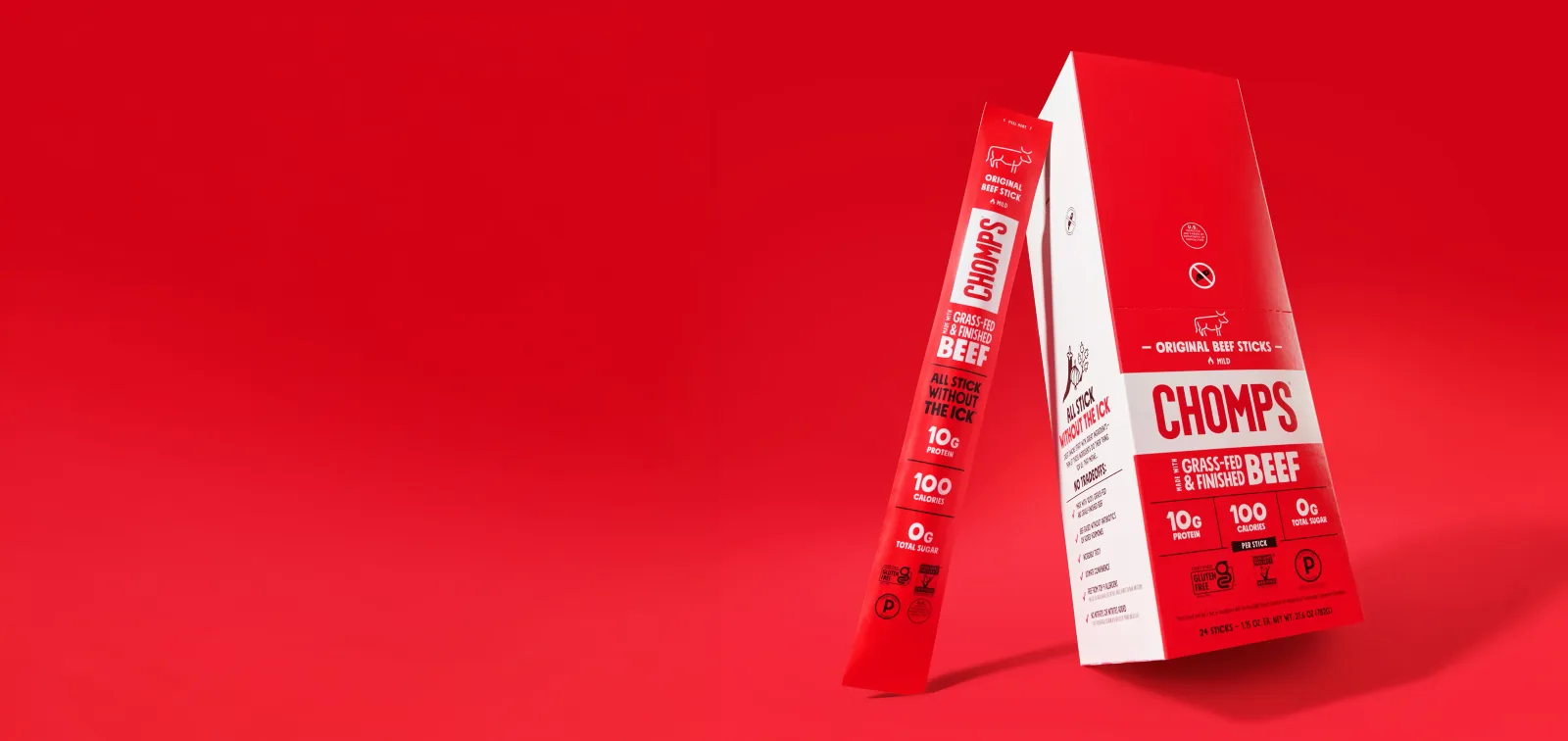
Before Chomps, the meat stick had a specific, stubborn reputation problem: gas station impulse buy, road trip snack, not exactly a food anyone built an identity around. Chomps' founders, Pete Maldonado and Rashid Ali, didn't try to out-advertise that reputation. A performance ad campaign can tell people a product tastes good. It's much worse at changing how people feel about an entire category. So Chomps built its growth almost entirely on creator content and word of mouth, and by the end of 2024 the company was, by its own account, roughly halfway to a billion dollars in sales, with about half of that growth happening in that single year and the vast majority of it coming from consumers new to the category entirely.
This breakdown looks at the specific mechanics behind that growth and what's genuinely reusable for another food CPG brand.
The stigma-reversal problem, and why creators solved it better than ads could
Chomps' core marketing challenge wasn't awareness, meat sticks already existed on shelves everywhere. It was repositioning: convincing people that a meat stick could be a modern, high-protein snack choice rather than a convenience-store afterthought. That's an emotional and cultural shift, not a features-and-benefits argument, and it's exactly the kind of shift that scripted advertising struggles to make credible. A stranger in an ad telling you a meat stick is actually a smart snack choice doesn't land the same way as watching dozens of ordinary people already living an active, health-conscious life reach for one on camera, unprompted, in their own words.
That's the structural reason creator content outperformed traditional advertising for Chomps specifically. Instead of one expensive celebrity endorsement, the brand generated thousands of authentic creator posts across TikTok and Instagram, producing millions of impressions at a fraction of what a comparable paid, celebrity-led campaign would have cost, and each post carried the specific, believable context of a real person's actual routine rather than a scripted pitch.

Creator selection built to find audiences you didn't know you had
Fit-first casting across content interests and use cases, not just a fixed demographic target.
The Partner Program: betting on volume over star power
Chomps built a dedicated Partner Program specifically to formalize this at scale, and the brand's own team has been explicit about the lesson it proved: micro-creators outperformed macro-influencers for their specific goal. Rather than concentrating budget in a handful of large placements, the program spread partnership opportunities across a large number of smaller creators, each bringing a real, specific use case, a workout, a meal prep routine, a road trip, a kid's lunchbox, rather than a single generic celebrity endorsement asked to cover every use case at once.
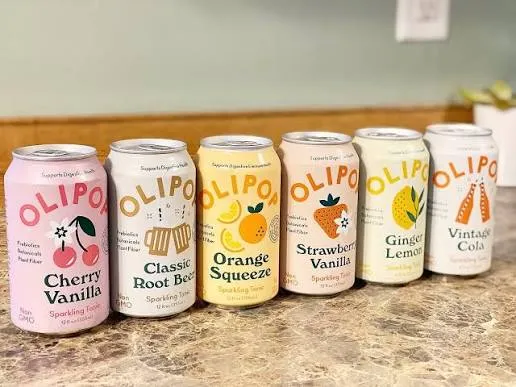
This mirrors a documented pattern that shows up across other brands that had to invent or reposition a category rather than compete inside an already-understood one: prioritizing creator fit over raw reach. A creator whose existing content and audience already overlap with a brand's actual use case produces content that reads as a genuine part of that creator's life, not an inserted ad, and that authenticity is what did the actual work of dismantling the "gas station snack" perception one post at a time. For a parallel micro-influencer economics story, see Olipop's influencer marketing strategy breakdown.
The female-audience repositioning nobody expected
One of the more specific and underappreciated parts of Chomps' creator strategy is who it ended up reaching. High protein snacking had long been marketed almost exclusively to men, built around a "build big muscles" framing that implicitly excluded a huge share of potential customers. Chomps didn't launch a separate campaign targeting women specifically. According to the brand's own team, it gained a substantial female following organically, largely by letting a broad, diverse set of creators use and talk about the product in their own authentic contexts rather than forcing a narrow, gendered brand voice onto the content.
That's a genuinely instructive lesson in what a wide, fit-first creator roster can surface that a narrower, top-down campaign brief would likely have missed. A brand that only casts creators who fit its current assumption of who the customer is will only ever confirm that assumption. A brand that casts more broadly, based on genuine content and use-case fit rather than a fixed demographic target, can discover an entire audience segment it wasn't deliberately pursuing.
Trying to shift how people feel about your category, not just build awareness?
Creator content does work a features-focused ad campaign structurally can't. Casting the right volume and fit is what makes it work.
Patience as a strategic choice
Chomps waited roughly a decade after founding before moving aggressively into mass retail, staying primarily e-commerce and direct-to-consumer for an extended period first. That patience let the brand build a genuine creator-driven community and prove real repeat purchase behavior, reported in the high 40 percent range, before scaling distribution, rather than flooding shelves nationally before the demand and brand story were fully established. Brands that rush into big-box retail too early often struggle afterward with pricing pressure and brand dilution precisely because the underlying demand wasn't built first.
This has a direct parallel in creator strategy: building genuine creator relationships and content proof points before scaling spend tends to produce a more durable foundation than scaling creator spend broadly before knowing which content, creators, and use cases actually convert.
What food CPG brands can actually copy
The core lesson is about matching the marketing tool to the marketing problem. If a brand's biggest obstacle is a category perception problem, not a simple awareness gap, creator content built around real, specific, authentic use cases does work that a features-focused ad campaign structurally can't, because it changes how people feel about the category rather than just what they know about the product.
The volume-over-star-power lesson translates directly and is broadly consistent with where the influencer marketing industry has been heading. A large number of smaller creator partnerships, each bringing a specific, credible use case, tends to out-convert a small number of expensive, generic placements, particularly for a brand trying to establish a new category behavior rather than compete for share within an already-understood one.
The audience-discovery lesson is worth real consideration for any brand confident it already knows exactly who its customer is. A broader, fit-first creator roster can surface real demand in places a narrower campaign brief would never have looked.
How this compares to the food CPG benchmark
Chomps' broader creator program, spanning Instagram, TikTok, and YouTube, reportedly runs at a volume of over a hundred sponsored collaborations per month on average, a scale consistent with a brand that has built creator partnerships into an ongoing operational program rather than a periodic campaign. That volume-first approach is directionally consistent with the $1.25 to $12.67 CPM range documented across food CPG creator campaigns in Jupiter's production data, where campaigns weighted toward a larger number of smaller creator partnerships, rather than a handful of expensive placements, tend to land toward the more efficient end of that range. Full category and platform context lives in the 2026 food CPG influencer benchmark.
Used by 58+ leading CPG brands including Banza, Pete & Gerry's, and Kettle & Fire
See how Jupiter builds a volume-and-fit-first creator program for your brand's category repositioning.
FAQs
Quick answers to common questions.
What is Chomps' influencer marketing strategy?▼
Chomps built its growth primarily through a high-volume creator program called the Partner Program, prioritizing a large number of micro-creators showing authentic, specific use cases over a small number of expensive celebrity placements. The strategy was built to reposition meat sticks from a convenience-store snack into a modern, high-protein lifestyle choice.
How did Chomps grow into a nearly billion-dollar brand primarily through creators?▼
By the end of 2024, Chomps reported being roughly halfway to a billion dollars in sales, with about half of that growth occurring in that single year, the vast majority from consumers new to the meat stick category. The brand credits authentic creator content, rather than traditional advertising, with driving that category-level shift.
Why did Chomps prioritize micro-influencers over celebrities?▼
Chomps' own team found that micro-creators outperformed macro-influencers for their specific goal, since a large number of smaller creators each showing a real, specific use case produced more credible, relatable content than a single large placement could, and did so at a fraction of the cost.
How did Chomps gain a strong female customer following?▼
Rather than running a separate campaign targeting women, Chomps let a broad, diverse set of creators use and talk about the product in their own authentic contexts. This organic, fit-first approach surfaced a substantial female following that a narrower, male-focused protein marketing campaign would likely have missed.
How long did Chomps stay direct-to-consumer before moving into mass retail?▼
Chomps stayed primarily e-commerce for roughly a decade after founding, using that time to build genuine creator-driven demand and prove strong repeat purchase behavior before scaling into big-box retail distribution.
How does Chomps' creator strategy compare to typical food CPG benchmarks?▼
Chomps runs a high-volume creator program averaging over a hundred sponsored collaborations per month across platforms, an approach directionally consistent with the more efficient end of the $1.25 to $12.67 CPM range documented across food CPG creator campaigns generally.
More in Strategy & Guides
More from Strategy & Guides.