Why Frozen Meal Content Should Start With the Air Fryer, Not the Microwave
The freezer aisle is having a genuine image moment, restaurant-quality frozen food reheated in an air fryer instead of a microwave. Creator content that still leans on old "quick fix" framing is missing the actual reason this category is growing.
Trusted by leading CPG brands











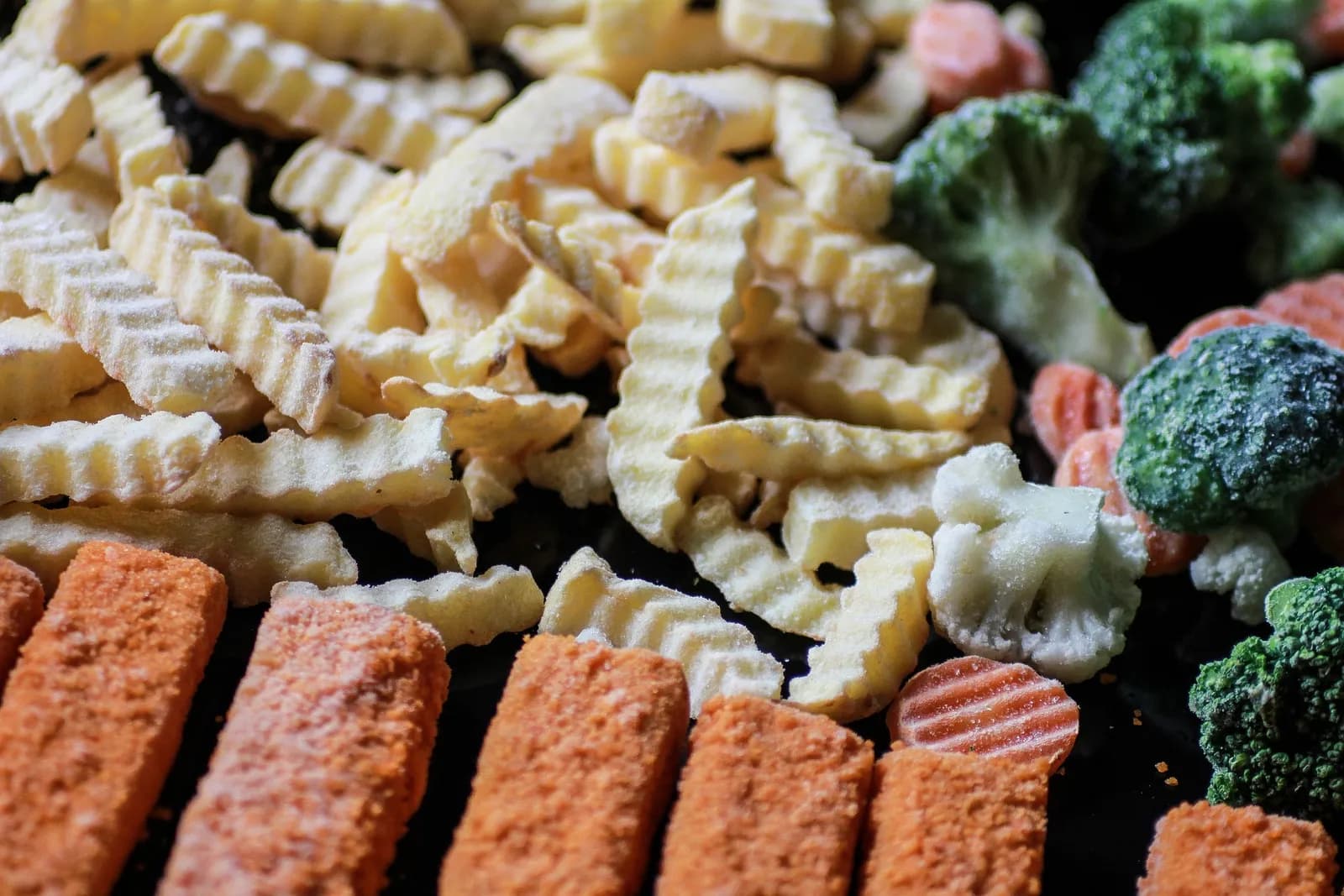
For years, frozen food creator content defaulted to one framing: fast, easy, good enough when you don't have time to cook. That framing isn't wrong exactly, but it's increasingly out of step with how the category is actually being marketed and consumed in 2026. Whole Foods' own trend forecasting team named it directly in their 2026 predictions, calling out a wave of frozen arancini, pupusas, and other chef-inspired items that taste like they came out of a restaurant kitchen, prepared not in a microwave but in an air fryer. Conagra's Future of Frozen Food 2026 report, built from Circana retail data and social trend analysis, independently identified the same shift: protein-packed meals, restaurant-inspired favorites, and family-style solutions as the categories actually driving growth.
Two major players in this space, a retailer and a manufacturer, arrived at the same conclusion from different data sets. That's a real signal, not a marketing narrative. Creator content for frozen meal brands should be built around it.
Why frozen meals need a category-specific playbook
The frozen food category is large and growing steadily, with the US market alone valued well over $100 billion and continued mid-single-digit annual growth projected through the mid-2030s. But the interesting story isn't the size, it's the composition shift happening inside it. Legacy "microwave and done" framing is losing ground to a genuinely different positioning: frozen food as a shortcut to a restaurant-quality meal, not a compromise on one.
The air fryer is the mechanical center of that shift. It produces a texture, crisp, browned, genuinely appetizing, that a microwave never could, and that difference is exactly what's driving the current wave of frozen content across TikTok and Instagram. A brand still briefing creators to show a product coming out of a microwave is working against the format that's actually generating engagement in this category right now.
This matters most for brands whose products are genuinely positioned at the premium or "restaurant-inspired" end of frozen, but it matters for value-tier brands too. Even a straightforward frozen entree looks and performs differently out of an air fryer than out of a microwave, and creator content that shows that difference is doing real, honest work for the brand, not just following a trend for its own sake. Companion Week 2 category angles live in the oat milk, kombucha, and snack bar playbooks.
Creator selection for frozen meal campaigns
Air fryer content creators are the single most relevant casting pool this category has right now, more relevant in most cases than general recipe or meal-prep creators. These creators have built dedicated followings around a specific cooking method, and their audience already trusts their judgment on what does and doesn't come out well from that method, which is exactly the credibility a frozen meal brand needs.
Convenience-and-quality creators, the "restaurant food at home" or "elevated quick meal" niche, are a second strong casting pool. This content style already frames convenience food as something to be excited about rather than something to apologize for, which aligns directly with where the category's own positioning is heading.
Family and weeknight-meal creators remain relevant, particularly for family-style frozen products, but should be briefed with the same air fryer and quality-forward framing rather than the older, purely convenience-first angle. A creator showing a family dinner solution is still valuable content, but "here's how to make this taste like it came from a restaurant" performs differently than "here's the fastest way to feed your kids."
Content and brief strategy for frozen meal content
Brief creators to prepare and show the product via air fryer wherever the product supports it, and to say so explicitly rather than leaving the cooking method ambiguous. This single change in brief instruction reflects the biggest shift happening in this category's content right now, and skipping it means missing the exact visual and credibility signal audiences currently respond to.
Where a product genuinely delivers on a "tastes like a restaurant" or "chef-inspired" positioning, that comparison should be the headline of the content, not a footnote. Global and restaurant-style items specifically, arancini, dumplings, global street-food formats, are seeing real momentum right now, and creators briefed to lean into that specific angle rather than a generic "easy dinner" framing produce content that reads as a genuine discovery rather than an ad for a convenience product.
For value-tier and family-format products where a restaurant comparison doesn't fit honestly, lean instead into the protein-forward or portion-solution angle that Conagra's own research identified as a real growth driver, rather than forcing a premium positioning that doesn't match the product.

Creator selection built for air fryer and quality-forward content
Filter for content interest alignment with air fryer and elevated-convenience creators, not just general recipe tags.
Attribution and measurement for frozen meal campaigns
Standard engagement and impression tracking applies here, with air fryer and quality-forward content generally showing strong completion and save rates, since viewers often want to reference the cooking method and timing later rather than acting immediately. Track saved-content behavior alongside standard metrics as a meaningful secondary signal for this content type.
Where the brand's distribution includes Instacart-covered retailers, the standard comment-to-cart mechanic applies well, particularly for restaurant-style and global-flavor items where a viewer's reaction to seeing an unfamiliar or elevated product often translates into an immediate "where do I get this" comment. Standard food CPG creator campaign CPM, $1.25 to $12.67 depending on category and structure, applies to frozen meal campaigns as well. Full category and platform context lives in the 2026 food CPG influencer benchmark.
Still briefing microwave content for a category that's moved to the air fryer?
The freezer aisle's biggest growth categories right now are the ones leaning into restaurant-quality positioning, not convenience alone.
How Jupiter handles frozen meal influencer marketing for CPG
Jupiter's creator network is filterable by content interest, making it possible to build a frozen meal roster around air fryer and quality-forward convenience creators rather than defaulting to general recipe creators unfamiliar with where this category's content has actually shifted. The optimizer's 12 signals, including content interest alignment and posting recency, help surface creators actively producing the kind of content driving engagement in this space right now, not just creators with strong historical numbers in an older content format.
Campaign budgets for a frozen meal launch or seasonal push fall within the same $1.25 to $12.67 CPM benchmark range that applies across food CPG creator campaigns, with restaurant-style and global-flavor positioning generally supporting stronger organic engagement given current category momentum.
Used by 58+ leading CPG brands including Banza, Pete & Gerry's, and Kettle & Fire
See how Jupiter builds an air fryer and quality-forward creator roster for your next frozen meal campaign.
FAQs
Quick answers to common questions.
How do I run a frozen meal influencer campaign?▼
Cast air fryer and quality-forward convenience creators ahead of general recipe creators, brief them to prepare the product via air fryer and to lean into a restaurant-quality or global-flavor positioning where the product supports it, rather than defaulting to older "fast and easy" framing.
What does a frozen meal creator campaign cost?▼
Food CPG creator campaigns in production data range from $1.25 to $12.67 CPM depending on category and structure. A frozen meal campaign's cost falls within that same range, with restaurant-style positioning often supporting stronger organic engagement.
Why does the air fryer matter for frozen meal creator content?▼
The air fryer produces a crisp, browned texture a microwave can't, and that difference is central to the current shift in how frozen food is positioned, moving away from a purely convenience framing toward a restaurant-quality one. Both retail and manufacturer trend research have independently identified this shift as a real growth driver in the category.
What kind of creators work best for frozen meal content?▼
Air fryer content creators and "restaurant food at home" convenience creators generally outperform general recipe creators for this category right now, since their existing content already frames convenience food as something to be excited about rather than something to apologize for.
Is the frozen meal category still growing?▼
Yes. The US frozen food market is valued well over $100 billion with continued mid-single-digit annual growth projected through the mid-2030s, and the fastest-growing segments within it are protein-forward, restaurant-inspired, and global-flavor items rather than traditional convenience-only formats.
How do I measure a frozen meal creator campaign?▼
Track saved-content behavior alongside standard engagement and impressions, since air fryer and quality-forward content tends to be referenced later for cooking method and timing. Where Instacart coverage exists, the comment-to-cart mechanic performs especially well for unfamiliar or elevated global-flavor items.
More in Retailer & Category Playbooks
More from Retailer & Category Playbooks.